

Use The 'Upside-Down' Method To Finally Declutter Your Kitchen
We may receive a commission on purchases made from links.
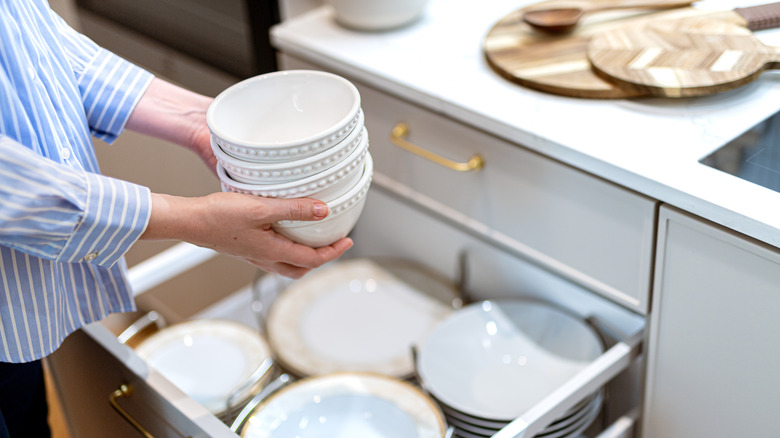
A messy house — and in particular, a messy kitchen — can cause cortisol levels to spike in our bodies, which is the hormone released when we're stressed out. This can have a negative effect on our overall health — bet you didn't think it was that serious! However, the kitchen is often a high-traffic, high-use room, and it's easy to accumulate, well, stuff that you just don't need or use (especially if you're a constant Aldi Finds aisle peruser). If you've tried everything from using overstock bins to Dollar Tree lazy Susans in your pantry, but your counters and cabinets are still awash in clutter, consider the "upside-down" method. To begin with this method, you'll turn plates, bowls, glasses, mugs, and even stored appliances, you guessed it, upside-down.
This might sound a little kooky, but bear with us here. The idea is that you'll set a time limit — one or two weeks is likely your best bet — and as you use items, you'll turn them right-side-up. Then, at the end of the time period, take a look at your kitchen through new eyes and see, based on what has been turned over to its correct side, what is essential, and what can likely go.
Of course, you should take into account the fact that some items, like a large roaster for turkey, may not be used in those two weeks, but they are 100% necessary throughout the year. In this case, try and place it in deeper storage, out of the way, once you've edited your cookware down and made room.
A variation on the upside-down method, plus what to do with extraneous items

If the idea of moving everything upside-down in order to achieve a clutter-free kitchen stresses you out more than the clutter itself, no worries. It's less about doing the method exactly as stated and more about indicating to your brain what you actually use and what you can get rid of. So instead of flipping everything over, you could instead place colorful sticky notes or flags, like these ones from Post-It, on items, and then when you use something, remove the note. When your time is up, you can look around and easily spot what cookware, mugs, or plates are no longer needed in your kitchen based on which still have sticky notes attached (and if you don't have sticky notes on hand and you don't want to buy any, you can just cut up paper into pieces and use tape to affix them).
As for what to do with the kitchen items you no longer need, the very best thing you can do is keep them out of landfills and donate your items to a local Goodwill, Salvation Army, or other thrift store. Or you can post it up on a community Facebook "buy nothing" page or your neighborhood's NextDoor. You'd be surprised how many people move into new apartments or their first homes and need literally everything kitchen-related.