

9 Mistakes To Avoid With Homemade Fried Rice
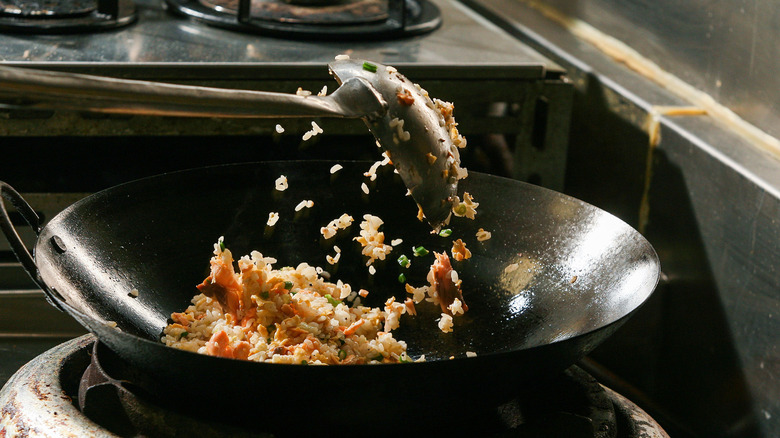
Oh, fried rice. There's just something about it, right? It's a beloved classic of Chinese, Japanese, Vietnamese, and Thai cuisines, among many others. It's got it all: a gorgeous golden color and a deep, savory flavor that's perfect for pairing with chicken, beef, onions, scallions chili crisps, and whatever your heart desires.
And yet, when you try to make it yourself, fried rice doesn't always work. Something about homemade fried rice misses the mark, and it can be hard to tell why it doesn't quite compare to your favorite restaurant's. The problem might just be some of the most common mistakes when making fried rice. And with the right knowledge, the right techniques, and the right ingredients, you can easily avoid them. After this, you'll be making homemade fried rice that will have you excited to not order delivery. That's something special.
Not bringing enough heat
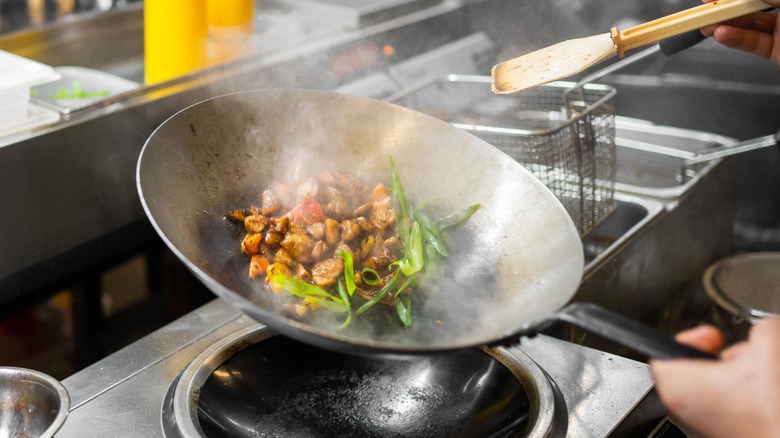
In this case, this isn't just slang for not bringing the passion to your cooking. You absolutely need a lot of heat to bring out the best in your homemade fried rice. Much more heat, in fact, than you might expect.
That's the advice Maricel Gentile, owner of Maricel's Kitchen and author of "Maricel's Simply Asian Cookbook," shared recently. Fried rice has a subtle but delectable smoky flavor that can only be obtained by subjecting it to a (figurative) inferno. Of course, restaurants have the benefit of much more powerful burners than you'll have at your home (presumably). Thankfully, you can still avoid this mistake with a couple of quick fixes.
First, you'll want to find your very widest pan or your wok if you have one. You'll also want to season it using very hot heat and vegetable oil before you start cooking with it for the best results. And then, you'll want to set your stove-top burner to the highest setting and preheat your pan. That should get your fried rice nice and smoky.
Forgetting the butter
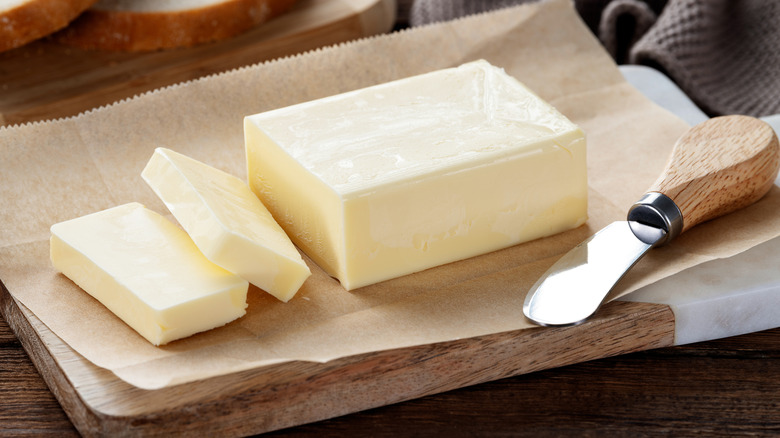
As with so many other things in the culinary world, butter solves your flavor problems. Here, it takes your homemade fired rice and elevates in the way only butter can.
Butter adds moisture and richness to each grain of rice, and, more importantly, it actually coats the rice. The grains will gain color, creaminess, and glossiness that actually sticks to them. You'll still want to cook your vegetables, proteins, and rice in oil originally and only add the butter during the seasoning stage. Cooking butter in the intense heat required for amazing fried rice could result in burnt butter, which is the opposite of what you want.
Ideally, you could use a compound (flavored) butter for your fried rice. A simple garlic butter can do wonders, but you can also experiment with lemon juice, black pepper, and soy sauce, combinations of all three, or go spicy with sriracha. Choose whatever you think will pair well with the fried rice's flavors.
Using fresh rice
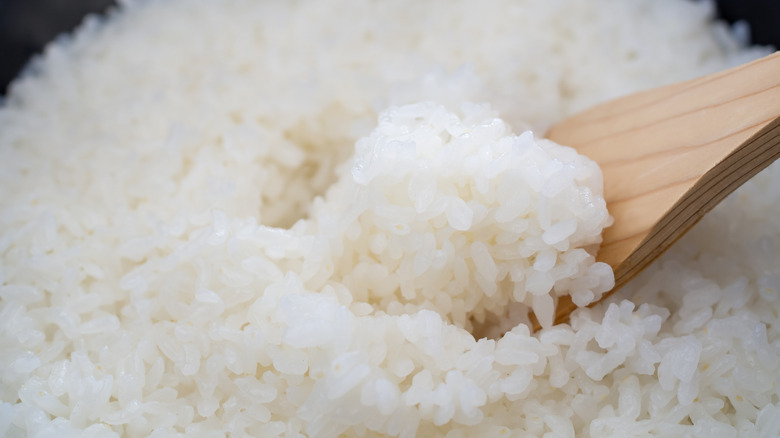
If you ask any fried rice aficionado, chef, or restaurateur, they will consistently tell you the same thing: It is colossal mistake to use fresh rice to make fried rice. No question, no debate, no disagreements. It's old rice, or nothing.
There are a lot of reasons fresh rice is anathema to the frying process. First, fresh rice clumps together, which makes it borderline impossible to make sure the rice is fried evenly and that each grain gets the right flavor. The clumping also does some unfortunate things to the rice's texture; it'll end up mushy and soft, when it should be toasty and just slightly crisp. In a perfect world, you'd make your rice the day before and leave it in an open container in the refrigerator so it's dried out by the time you're ready to cook.
Now, there are a few tricks you can use to get fresh rice into the right condition to fry. Namely, take your fresh rice, spread it out evenly on a baking sheet, and pop in the fridge until completely cooled. This should enable to be safely dried sufficiently to get you to at least very good homemade fried rice.
Not selecting the right variety of rice
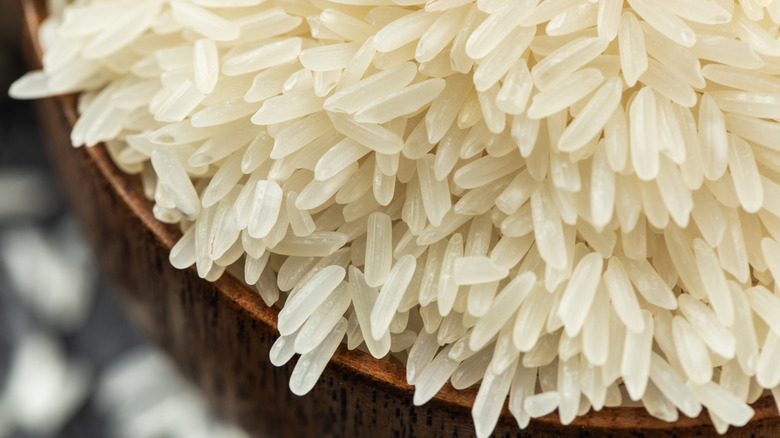
Not all rice is created equal, and not every rice is suited to every rice-related task or dish. The same is true of fried rice, and it's a common mistake to assume that you can just throw any rice in a wok and get a tasty result.
The problem is the blazingly-hot pan-fried rice needs to be its most delicious self: A lot of rice varieties literally can't take the heat and become a mush within minutes. Not long grain rice. Long grain rice has a structure that enables it to get toasty and not become a horrifying goop. You should also seek out a fragrant long grain rice like jasmine rice; this adds a subtle sweetness and an undeniable floral scent to your homemade fried rice. There is probably no faster way to make sure you get restaurant-quality from your own kitchen, and literally at the beginning of the cooking process to boot.
Adding too much moisture
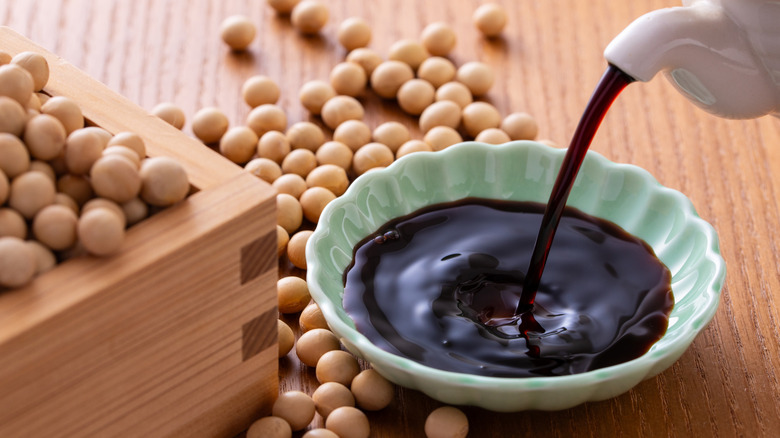
There are just so many additions to make your homemade fried rice phenomenal. Soy sauce and butter are natural additions, but you simply must consider adding mirin to your fried rice and vegetables. Sounds delicious, right? Well, if you aren't careful with how much you add, you'll end up committing one of the most common and irreversible mistakes.
Adding too much moisture to your fried rice (or vegetables that release moisture during the cooking process) leaves you with a soggy and very much not delicious mess. Instead, you'll want to limit how much soy sauce and butter you add to your rice. You'll also want to time when to add it to the rice; you'll want to wait towards the end of the frying, when the rice has already become toasty, so that the moisture coats the rice rather than being absorbed by it. A light touch goes a long way to create the best taste.
Making it boring
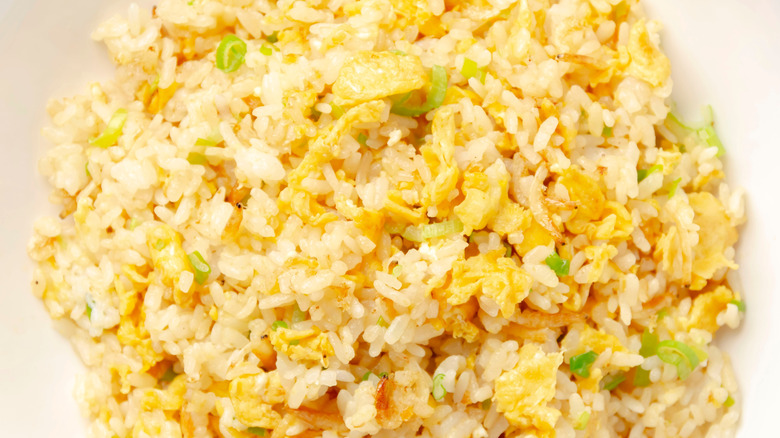
Think about your favorite fried rice. Most likely, it came loaded with vegetables, a distinct spice blend, and some savory meats. Now look at your homemade version. Is it possible the latter has something... lacking?
If you're going to make your own fried rice, why not go all out? You can absolutely go with the classics of soy sauce, scallions, eggs, and chicken, beef, or pork, but why not try something new? Fried rice is a very good culinary canvas, after all. Why not throw in some chili sauce or crispy fried onions? Or go for perhaps a more unconventional meat option like Chinese sausage or SPAM? You can even go in a completely different direction and add ingredients like kimchi or spicy mayo. The world really is your oyster with fried rice. Oh, oysters! They're also a tasty addition if you're into seafood.
Not cooking ingredients separately
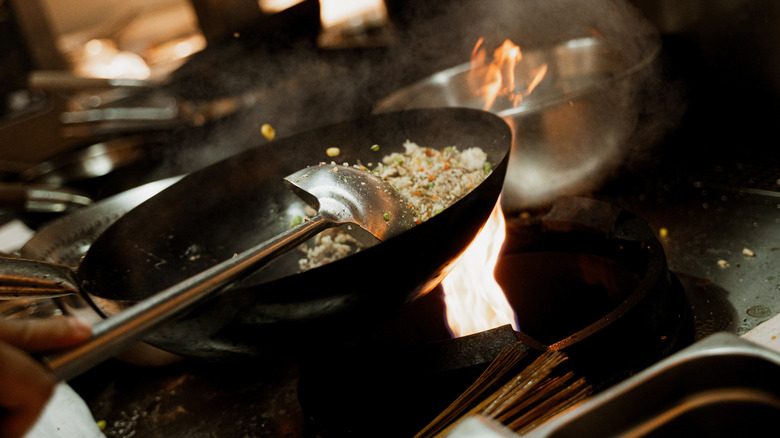
It's easy to become impatient when cooking your own fried rice. The fact is that, because you can whip it up quickly (provided you have leftover rice waiting and ready), going fast seems like the optimal path. Yet, trying to rush the cooking can lead to an unappetizing final dish.
Meats, vegetables, eggs, and rice all cook at different rates, so do your best to respect that. Find a workflow that allows each ingredients some independent time in the wok before you mix everything together for the finale. It's recommended you do the eggs first, then the meats, and then the vegetables, transferring each to a separate plate after they finish cooking. Wipe the pan clean and add a little fresh oil before adding each new ingredients. Then, when everything is ready, add the rice, get it toasty, and then add everything back for a final mix and seasoning. You'll find that this ensures each ingredient gets the right attention and seasoning, and the moisture is limited for the right texture.
Overcrowding the pan
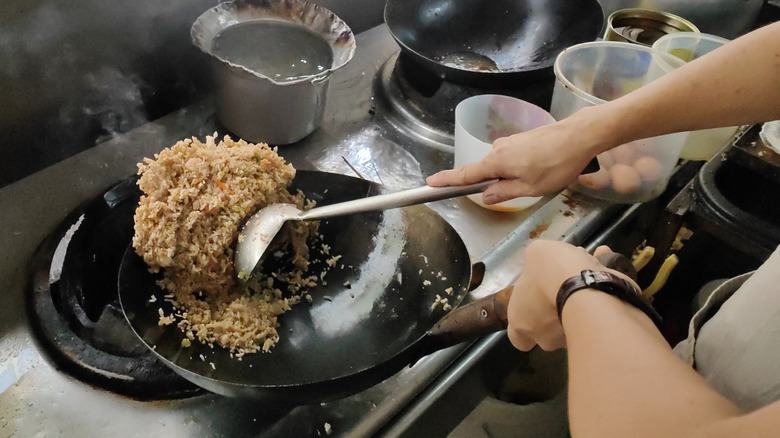
This one is a bit of a classic cooking mistake rather just applying to your fried rice. Nevertheless, it is vital to remember, no matter how tempting it may be, to never overcrowd the pan.
The reason why is that too much in the pan makes it so steam builds up in the ingredients, since it has no place to escape. That means dreaded moisture builds up which results in, you guessed it, sogginess. You also end up with fried rice that lacks the gorgeous golden color that is the envy of home chefs everywhere. So you want to make sure you give yourself a lot of room to stir your ingredients and allow them to breathe while they fry up. If you need to, try cooking the rice in batches so each portion gets the right amount of space. It might take up a little extra time, but the taste boost you get from frying it right certainly makes up for it.
Not respecting your leftovers
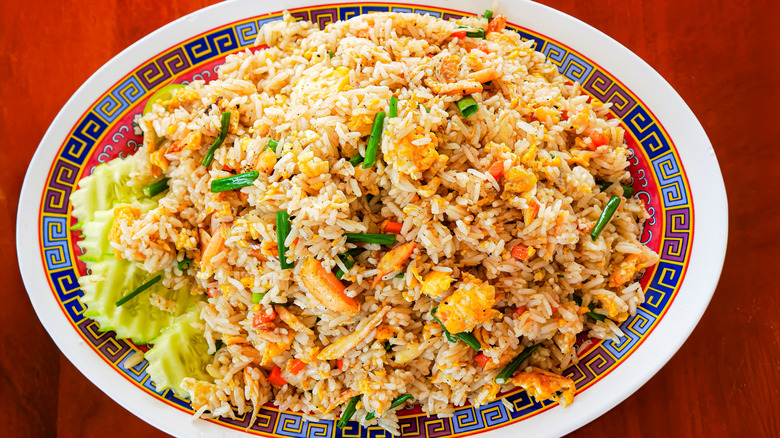
You've done it! You've made homemade fried rice that rivals that of your favorite restaurant. Now that you've eaten your fill, you're going to save your leftovers, right? Because it would be a true mistake to waste them.
It might seem hard to revive your fried rice in the abstract after it's already been in the fridge. But all it takes is a little love and a secret ingredient to get it back to its beautiful delicious original self. That ingredient is bacon grease. Bacon grease adds the moisture the rice normally loses in the refrigerator and adds a new layer of umami and saltiness to the premade fried rice, which is always a plus. Oh, and you definitely want to reheat your leftover fried rice in a pan or a wok rather than the microwave, since that helps prevent sogginess and poor color, too.