

Don't Overcomplicate Bechamel: This Microwave Hack Is An Easy Game-Changer
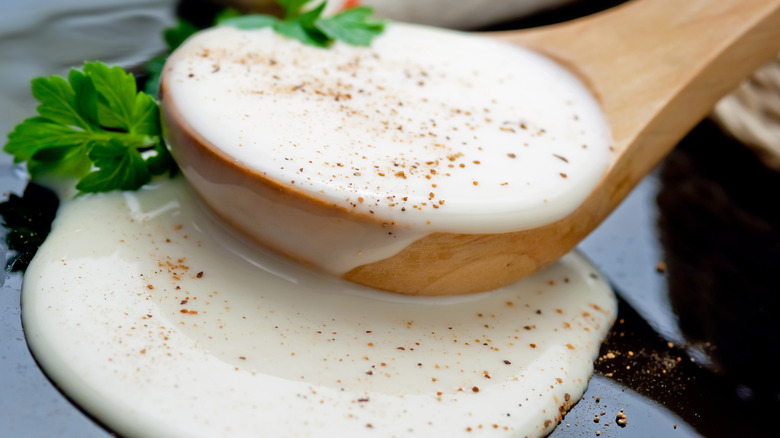
Sauces are an essential part of cooking, enhancing dishes with their own flavor and helping bring all the components together into a delicious, cohesive final result. Because of their importance, higher-end restaurants often have dedicated chefs called sauciers in the kitchen whose job is to make them. Classic French cooking has five mother sauces, named that because they're foundational recipes from which many other "daughter" versions can be derived. They are hollandaise, velouté, espagnole, tomato, and, lastly, béchamel — a creamy white sauce that includes just flour, butter, and milk, finished with salt, pepper, and a little nutmeg. It's usually made by cooking the flour and butter together to create a roux, then adding the milk and whisking at the stove while keeping a close eye on it to avoid burning. Doing it in the microwave instead is a hack that makes the process easier.
Béchamel is usually done when it reaches a consistency that clings to the spoon instead of running off. However, you may want it a little thicker or thinner depending on how you're using it. If you're making it ahead of time, or have some left over, the béchamel can be saved and stored in the refrigerator or freezer and later reheated. Placing a piece of plastic wrap directly on top will keep it from developing a skin.
How to customize and use your béchamel
Some tweaks can be made to the basic béchamel recipe to adjust its texture or add more flavor. In addition to letting it cook a little longer or shorter to achieve your desired consistency, you could use half-and-half instead of milk for a thicker mouthfeel. Another option is swapping out some of the milk for chicken broth or white wine to give the sauce more depth.
You can bring in other flavoring ingredients, too, such as herbs like thyme, dill, or parsley. A little lemon zest would add some zip, or you could include spices like onion or garlic powder, or the heat of cayenne. You could also mix in cheese like Emmental or Gruyère, which actually turns it into Mornay sauce.
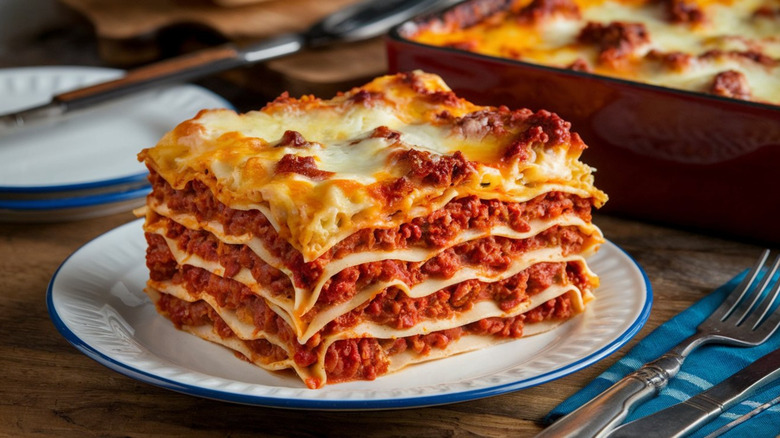
One common way to use the sauce is in lasagna Bolognese. Meat ragù and béchamel fill its layers instead of the ricotta and mozzarella commonly used in the U.S. It's traditional to top a croque monsieur sandwich with béchamel, and to mix mustard into the sauce for chicken cordon bleu. It can also serve as flavorful chicken pot pie gravy, or be mixed with cheddar as the rich sauce for mac and cheese. It works in casseroles like scalloped potatoes and Greek moussaka, as well, and can take a trip to the South poured over chicken-fried steak, or, with the addition of meat, as sausage gravy for hot biscuits.