

The Best Cocktail To Pair With Caviar
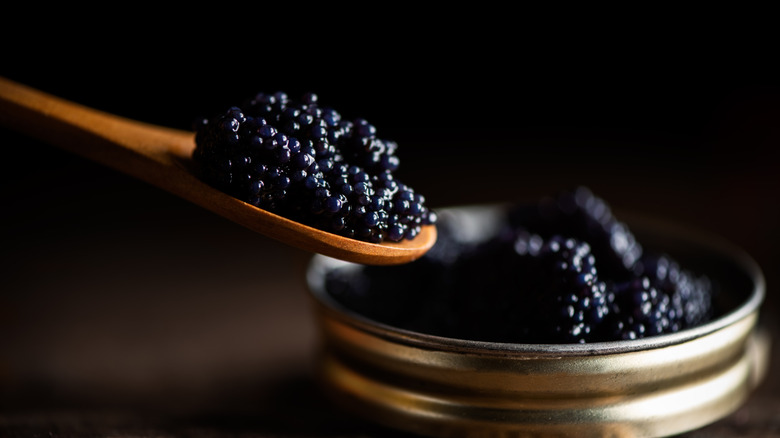
While it was once a bit more elusive, caviar has become more widely available, showing up on myriad restaurant menus and even on the shelves at Costco. While it can be served alongside anything from potato chips or ice cream to classic blinis, it also deserves a proper drink pairing. To find out what's perfect for sipping while snacking on the delicacy, Food Republic spoke with Stephanie Castaneda, Beverage Director for STK Steakhouse.
"Caviar demands restraint. Its luxury lies in texture, salinity, and nuance — so the right pairing should elevate, never overpower," she said. "A classic Vodka Martini remains the purest companion. Ice cold and barely kissed with vermouth, it amplifies the creamy texture of the roe without competing for attention." Castaneda added that vodka also acts as a palate refresher.
If you're enjoying your caviar with a cocktail at home, Castaneda had a few tips for preparing it to ensure the pairing works perfectly. First, be sure to chill the drink to the max, including keeping the glass in the freezer until you're ready to pour. Then, when mixing, use just a small amount of vermouth (or even simply rinse the inside of the glass with it), so that the martini remains vodka-forward. Finally, while you may typically enjoy the traditional olive garnish, this is a time to leave the jar in the fridge. Since many types of caviar are already fairly briny, and the focus on this pairing is precision and purity, you won't want to double down by using olives, too.
More drinks to sip with caviar
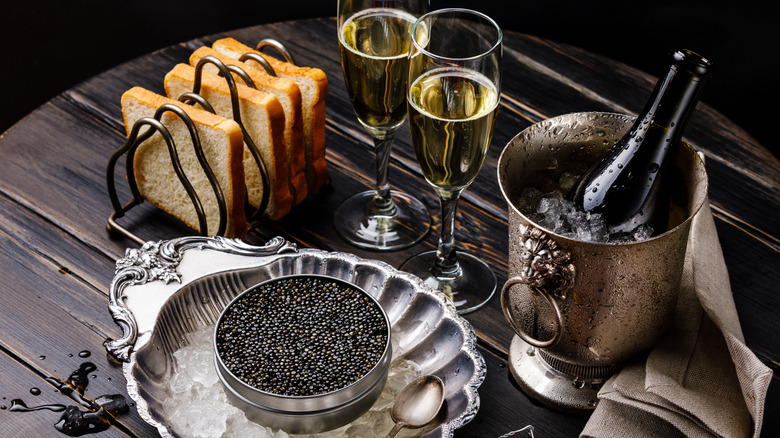
For a slightly different twist, Stephanie Castaneda suggested a martini made with gin like the one served at STK. "The Botanist gin brings soft florals and citrus lift, while olive brine mirrors the oceanic character of the caviar rather than fighting it," she explained. "A touch of Angostura and a pinch of sea salt add depth and roundness, creating a layered, mineral-driven sip that feels refined, not brash."
Just like the vodka martini, Castaneda recommended keeping the drink super chilled. For the brine and olives, she advised using high-quality options like Castelvetrano or Spanish queen olives, though she noted that the olives may be best served alongside the drink rather than with it for a refined presentation with the caviar.
Another option Castaneda proposed is a classic: Champagne. "Brut or Extra Brut styles slice through buttery richness with bright acidity, while fine bubbles lift salinity off the tongue, keeping the experience light and polished," she said. "Shared mineral notes make the pairing feel seamless, as if both were born from the same coastal air." For this one, you'll want to be mindful of the temperature, serving it at 46 to 50 degrees Fahrenheit for the perfect expression of flavor and bubbles. And instead of filling up your fancy flutes, Castaneda said using a white wine glass is a better option since its shape is better suited for experiencing the Champagne's aromatics.
Drinks to avoid pairing with caviar
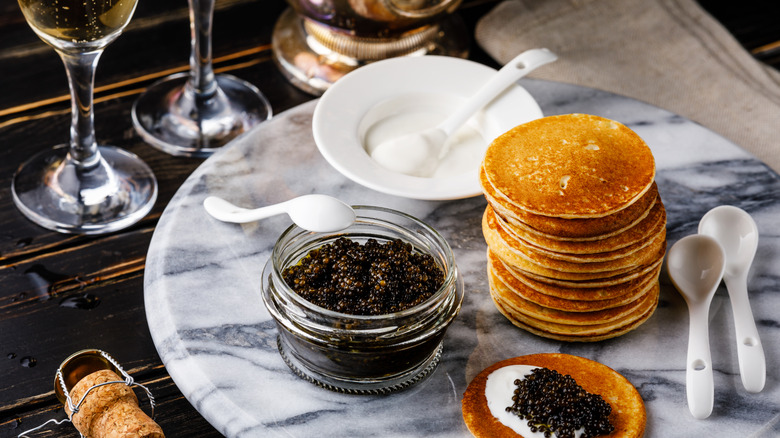
Salty and sweet combinations can work well for desserts, but when it comes to caviar, you'll want to steer clear of sweetness. Castaneda suggested "letting the salt shine" by avoiding sugary cocktails. Similarly, she warned against beverages with bold flavors like espresso martinis or mezcal-based drinks that can mask caviar's flavors rather than complement them. Old-fashioneds and other whiskey-driven sips are also best reserved for later in the meal or after dinner, as they have the potential to drown out the delicate fish eggs.
If you're looking for a fizzy choice that isn't Champagne, beer may be an option, but stay away from heartier ones, like stouts and porters. Instead, reach for lighter varieties like pilsners and lagers. Or, a saison, with its dryness and high level of carbonation, can work as well.
Finally, when it comes to wine, save most reds for another time — they tend to be too full-bodied, with the exception of some Cabernet Sauvignons or Pinot Noirs. If you're a wine enthusiast, your best bet is to reach for unoaked whites like Chablis, Chenin Blanc, or Sauvignon Blanc. Or, for a twist, try sipping sake — just be sure to chill it first.