

How To Make Perfect Diner Scrambled Eggs Like Waffle House
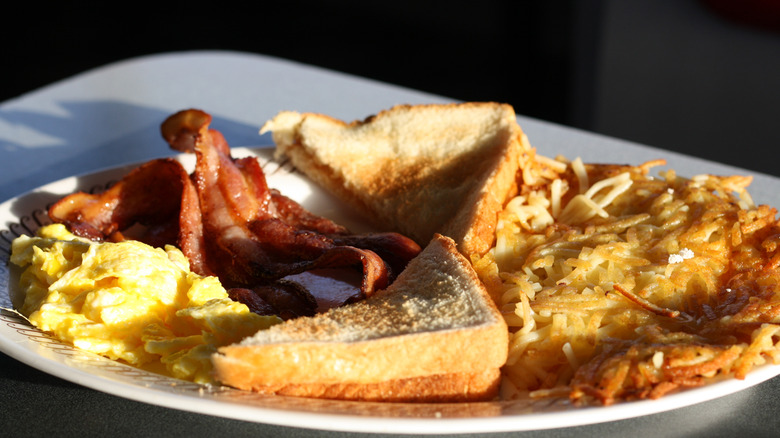
Waffle House is beloved for many things: friendly service, round-the-clock operation, and — naturally — waffles. Yet in terms of both economics and consumer enthusiasm, it's scrambled eggs that steal the show. The chain sells hundreds of millions of eggs per year, which means they've got cooking the protein down to something of a science. Order the breakfast item, and the eggs taste airy and light, not runny, all encased in a rich layer of cheese. A delicate assembly coming from a no-frills diner, it's a way to cook scrambled eggs that is replicable at home.
Rather than one savvy swap-up, the chain's scrambled eggs combine several crucial steps. It all starts with the fat — a critical impact on egg texture – as it absorbs into the eggs. Waffle House usesa soybean-based shortening, likely of the Wesson Lo Melt brand. Reminiscent of butter but with a higher melting point and less flavor, the foodstuff aids consistency in a restaurant environment.
While shortening heats, a Waffle House cook mixes the eggs in a bowl. Then, they pour the mixture into the pan and let it settle over medium heat. Simultaneously, one slice of American cheese per egg melts in a separate cast-iron skillet. The eggs aren't heated for long — intentionally kept runny so as not to overcook — before being mixed into the cheese pan off the burner. Here, they firm up into a perfect texture, thereby creating the iconic diner dish.
Other ways to enhance Waffle House scrambled eggs
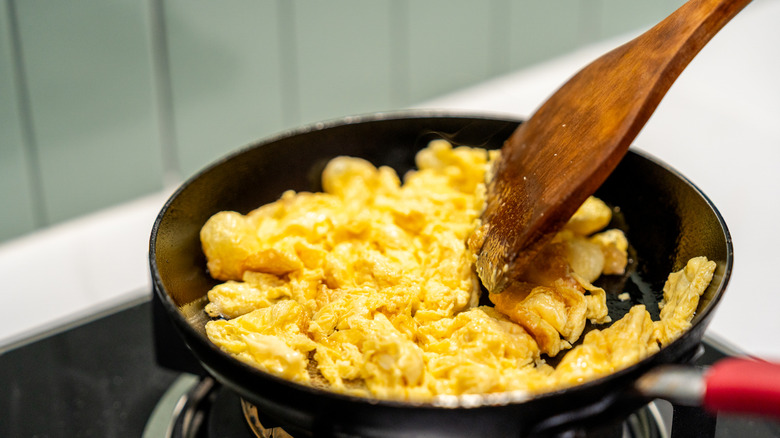
Crafting restaurant-quality scrambled eggs at home doesn't mean identically replicating Waffle House's technique — the recipe is optimized for a food chain, after all. When it comes to the cornerstone fat, for example, feel free to swap to similar margarine or even butter (just take care not to let it brown). Furthermore, utilizing two pans can seem excessive, so feel free to integrate small slivers of cheese during the initial cooking, mixing to melt.
Speaking of the cheese, there's nothing wrong with the ooey-gooey delights of American cheese, but feel free to swap to another meltable type, too. A light shaving of parmesan adds salty and savory notes; Gruyère brings nuttiness while cheddar adds a more dairy-heavy creaminess. To create a Mediterranean-inspired bistro twist, you could even use a salty feta or tangy goat cheese in the dish.
No matter your choice, make sure to keep the eggs soft for the unmistakable Waffle House style. During the last few minutes of cooking, turn the stove off, letting the eggs firm up — and the cheese to melt — with only residual heat. Serve with toast or waffles, and you can enjoy diner-quality eggs in the comfort of home.