

The Common Olive Oil Brand That's Now Owned By The Chinese Government
We may receive a commission on purchases made from links.
Think of Chinese cuisine, and extra virgin or refined olive oil probably isn't the first ingredient that comes to mind. While the country's many complex regional foods do liberally use oil — typically soy or peanut — olive-derived fat isn't the most common cooking vessel. Yet this largely Mediterranean foodstuff has long been piquing interest in the East Asian nation, increasingly found on grocery shelves and at food conventions. The intriguing culinary connection further manifested in 2014, when state-owned Bright Food (operated by the Shanghai government) purchased a controlling stake in Italian olive oil conglomerate Salov.
You might not know the corporation, but you've likely spotted the two widely found brands: Sagra and Filippo Berio. Together, bottles of the olive oil appear in more than 70 countries, spanning North and South America, Europe, and Asia. Filippo Berio positions itself as a dependable midrange option, easy to find on physical shelves or through online retailers such as Amazon. Meanwhile, Sagra is a slightly lower-end, typically bulk-contained option, serving as a reliable pantry backup so you don't need to seek out olive oil replacements when you're on a budget. Whether marketed as a premium staple or a high-volume utility, both sell in abundance. In 2023, Salov generated more than half a billion dollars in revenue (per EFA News).
Subsequently, Bright Food's acquisition of the brand is a momentous occurrence. The company deepened its involvement in 2020, launching a China-specific subsidiary. The same year, the Shanghai-based enterprise also took the helm over Salov's global distribution, further developing a new olive oil market.
A century of savvy expansion fueled Salov's global rise
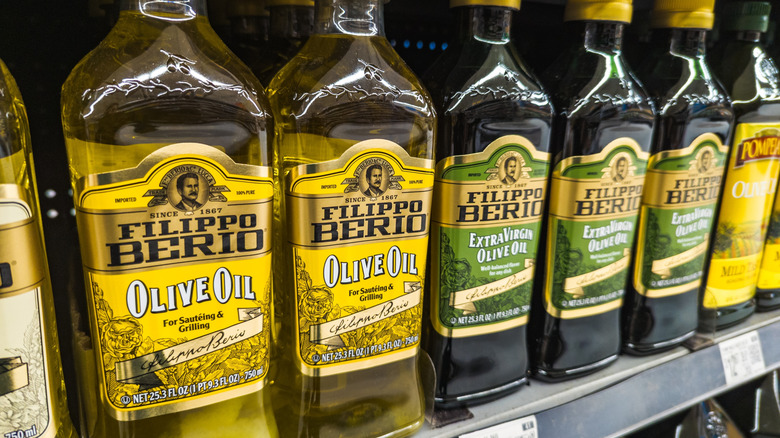
Impressively, Filippo Berio olive oil has been in circulation since 1867. Several decades later, in 1919, the daughter of founder Filippo Berio created Salov as a cooperative. To this day, the company operates under this name, an acronym for Società Anonima Lucchese Olii e Vini (Anonymous Society for Oils and Wines of the Province of Lucca). Yet despite such regional affiliation, the European enterprise set its sights on global distribution from its earliest days. Salov products appeared in the U.S. by the 1930s and continued growing into the 1950s, including the launch of the Sagra brand in 1959.
The olive oil's global momentum rarely slowed. The Salov portfolio gained a U.S. subsidiary in 1987, a United Kingdom one in 1999, and Singapore in 2011. In 2016, Salov made yet another profitable decision by opening a branch in Russia. With such a trajectory of expansion, the sale to China comes hardly as a left turn, but rather as another chapter of savvy investment.
Chinese interest in olive oil has been on the rise since 2001. Simultaneously, the country has increasingly participated in global trade — including forging strong economic ties with Italy in 2019 through the Belt and Road Initiative. Subsequently, olive oil falls in line as one of many valuable commodities traded through China. While Spain may produce the most olive oil, it's an Italian brand that defines such an impressive global network.