

Bobby Flay Skips A Step When Making Rice. Here's Why It's Controversial

Very few doubt Bobby Flay's cooking skills; his hit show "Beat Bobby Flay" — going over 20 seasons strong – serves up an abundance of evidence. Still, a few of the chef's culinary stances do generate a dash of skepticism and fervent discussion. For instance, Bobby Flay commits the common sin of washing chicken and (perhaps equally seriously) doesn't rinse his rice.
In a viral Food Network interview posted on Instagram, the chef straightforwardly replied "I do not" when asked if he did. For a food so foundational — a source of some 20% of global calories – the controversy is understandable. In many prominent rice-consuming culinary cultures like South and East Asia, the washing takes on a storied and unmissable ritual practice. Fans of the iconic food documentary "Jiro Dreams of Sushi" might recall the incredible care in rinsing the grain. So naturally, the celebrity chef's stance draws attention; "Bobby [Flay] never rinses rice[,] and it's mind boggling," noted a Redditor.
While foodies often take a passionate side, the matter of washing isn't binary. Not every type of rice grain, processing, or dish warrants rinsing. In fact, certain regions (including parts of the USA) predominantly distribute long-grain rice that turns out better sans wash. Given Flay's background in European and American Southwestern cuisine, the chef's background is largely associated with traditions where it's common to skip the prep steps.
What to know about rinsing rice
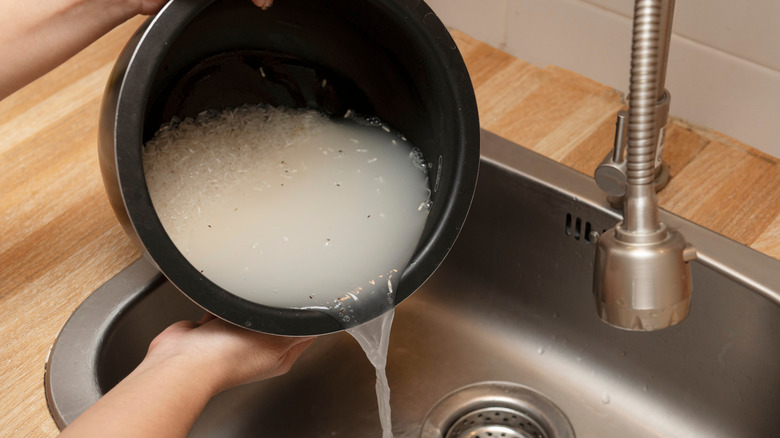
Even for a basic like cooking rice, there are lots of case-by-case intricacies, a detail not often accounted for in the rinsing debate. With so many types of rice to consider, perhaps even Bobby Flay himself would make a few exceptions. After all, several of his recipes that employ basmati rice call for rinsing, while preparations using standard long grain do not. Such a delineation falls right in line with general convention, kicking the controversy down a notch.
Originally, the practice of rinsing rice emerged primarily for cleanliness. A water bath removed both rice-derived debris, like husks or dirt caught in the container, and perhaps even microscopic environmental contaminants. With the enhanced packaging standards, such a step is largely outdated, with the focus instead on starch. An excess of it can lead to your rice clumping. This means many types of white rice, like short-grain sticky varieties, jasmine, and basmati, indeed benefit from rinsing — although the effects aren't always pronounced.
Simultaneously, you should never rinse your rice when preparing dishes like paella and risotto since the same starch melds the recipe together. Additionally, American long-grain — which comes with surface vitamin enrichment — loses nutritional value from washing. Finally, washing brown rice and whole grain varieties takes on a more contested status since the step won't affect starch; however, some still rinse for cleanliness. Given that one of Bobby Flay's most famed dishes includes perfect crispy rice – which fuses a long grain matched with paella-inspired technique — the chef's anti-rinsing stance turns clear.