

Protein-Maxxing: How Much Protein Is 'Too Much?'

If "low-fat" was the food trend of the 90s, and "low carb" is how many Americans ate in the 2000s, then the 2020s food culture has surely come to be defined by "high protein." Now that the marketing gears have really ramped up, vast amounts of protein can suddenly be found in everything from water to Starbucks foam to grocery store frozen meals, and even Pop-Tarts. But all this awareness has also led to what Angela Graham, MBA, RDN, referred to as "protein-maxxing" — g iving protein the priority at every meal (and in every snack) you eat, in higher amounts than your body may actually need.
As she explained to Food Republic, "The rule of thumb for most adults' protein needs is about 0.8 grams per kilogram of body weight per day, while adults who actively exercise will need about 1.2 to 1.6 grams per kilogram depending on the intensity level." That means someone who weighs 150 pounds requires between 55 and 110 grams of protein daily in order to get the most benefit from the macronutrient, but due to protein-maxxing, they may try to consume much more of it per day.
But Graham was quick to point out that once you have met your protein goal for the day, more doesn't mean more benefit. "Anything remaining is used for energy or stored," she said. "Ultimately, it's just extra calories at that point."
How too much protein can affect the body, and where to best source it from
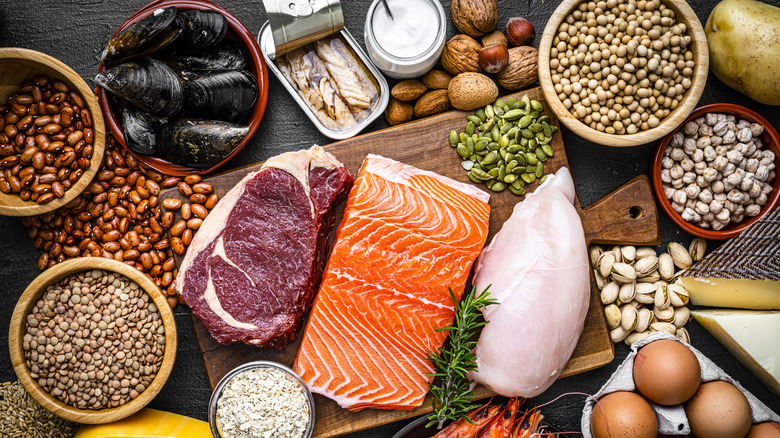
While our expert Angela Graham did acknowledge that a little extra protein typically doesn't bother the body so much, extreme amounts can cause harm, negatively affecting bodily function over time, causing digestive upset, foul-smelling breath, and even kidney issues. The latter is a serious issue, caused by too much protein, making them work harder and harder at their job — which is essentially filtering waste out through urine — to the point where they could end up damaged. Plus, if you're getting much of your protein from red meat, that can have negative repercussions on your heart, per a 2024 study for the Journal of Nutrition.
So, where should you source your protein from if you're not currently hitting the optimum amount for your body every day? Graham informed us that naturally occurring protein — in protein-rich foods — is easier for the body to absorb than synthetic, like that found in powders or added to processed foods (like the aforementioned Pop-Tarts). So she suggested, "When possible, it's best to prioritize protein from whole foods such as ... Greek yogurt, beans, lentils, and meat. These come packed with iron, zinc, B vitamins, and healthy fats that trendy protein powders and bars leave out." Further, eggs are considered the gold standard of protein for a reason, and they're super versatile. However, a one-ounce serving of peanuts contains almost as much protein as an egg, while lean meats, like poultry, are also an excellent source of the macronutrient.