
How To Make Thin Gyro-Style Meat Without A Rotisserie
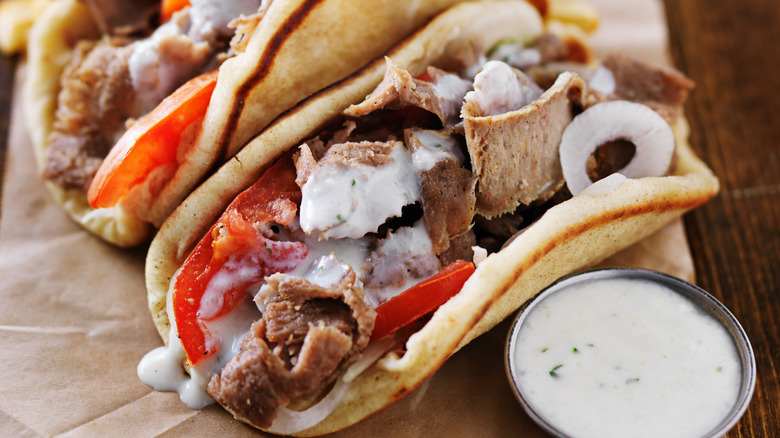
Much like giant doner kebabs, gyro cooks shave slivers of meat from a giant rotating spit. However, according to Marissa Stevens, recipe developer and founder of Pinch and Swirl, you can easily replicate the texture of gyro-style meat at home without a vertical rotisserie.
"The best way is to pulse seasoned meat in a food processor until it's very smooth, almost paste-like," says Stevens. This breaks down the little strands of ground beef into a uniform mixture and disperses additional ingredients like garlic and onion evenly throughout. It also serves to incorporate other traditional seasonings, such as rosemary, cinnamon, and marjoram, more thoroughly. While you'll still form the meat into a loaf shape, you want it to have a denser, spongier texture than traditional meatloaf. You could do this by hand, but a food processor is much easier, faster, and more efficient.
When it comes to baking, the key is to cook your loaves on a shallow tray rather than in a deep pan. This allows some of the excess fat to drain away, and Stevens says it gives the meat "a much more gyro-like texture when you free-form it into a rectangle and bake on a foil-lined, rimmed baking sheet." Just like making doner kebabs at home, slicing thin pieces off your loaf and then briefly frying them in a hot pan recreates that classic, crispy street-food texture. Stevens says, "Gyro meat is supposed to be rich and juicy," so extra fat from marbled beef or pork can help keep it moist and delicious.
Best cuts for gyro-style meat at home
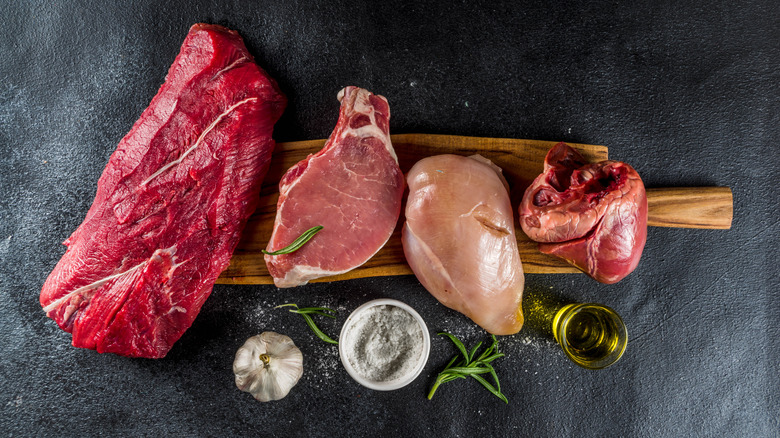
Though seasonings and preparation are the core of any great gyro's flavor, it all starts with the right type of meat. Like many traditional Greek dishes, there's some flexibility in the specific animal and cut, but as long as you have something fatty enough to keep your strips from falling apart, you should be just fine.
"I use ground lamb, ground beef, and bacon," says Marissa Stevens. "The bacon is controversial, but I stand by it because it adds just the right amount of fat and flavor." If you use bacon, you can probably scale back the fat in your other meats, like using 90/10 ground beef and lean lamb cut from the shank. Lamb provides just a touch of gamey, natural flavor, but ground lamb isn't always readily available. If you can't find any, try using grass-fed beef, as it's loaded with many of the same antioxidants that give lamb much of its distinct flavor.
If you're working with a particularly lean ground meat, like chicken breast, you may need to add some additional fat to the mix. Be sure to use something with a relatively high smoke point so it doesn't burn in the pan and mar the flavor, like peanut or refined olive oil. You can also use extra virgin olive oil as a finishing ingredient, drizzling some over the meat while you build your wrap to give it a richer, smoother mouthfeel without the worry of accidentally burning it.