

How To Prevent Takeout Fish And Chips From Getting Soggy
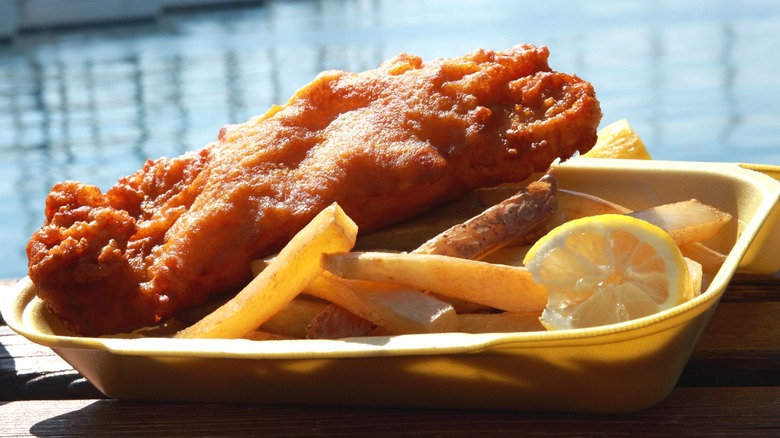
Fish and chips is beloved in the U.K., where the traditional pub dish, which you can also get at a shop called a "chippy," is as cherished as afternoon tea. It's popular elsewhere, too, including the U.S., for its combination of crowd-pleasing french fries and battered, fried mild fish like cod or haddock. Crispiness is key to its appeal, but takeout orders are often soggy by the time you get home. According to David Davidov, recipe developer and founder of The Cooking Foodie, the reason your meal loses its crunch is steam.
"When hot fried food is packed in a closed box, moisture from the fish and fries gets trapped, softening the crispy coating very quickly," Davidov explained. "The best thing diners can do right away is let the food breathe ... Slightly open the box during the ride home or, once you arrive, spread everything out on a tray instead of keeping it piled up. This helps steam escape and keeps the coating crisp longer."
Other options include poking holes in the container or asking for two boxes so the food's not tightly packed. Styrofoam containers trap steam the most, so if possible, ask for your food to be wrapped in paper instead, which you should also partially open. If you like your fish and chips British-style with malt vinegar, ask for a separate cup or use your own instead of having it drizzled on in the shop. Also, avoid ordering ahead of time so it doesn't sit out.
How to reheat fish and chips for the best result
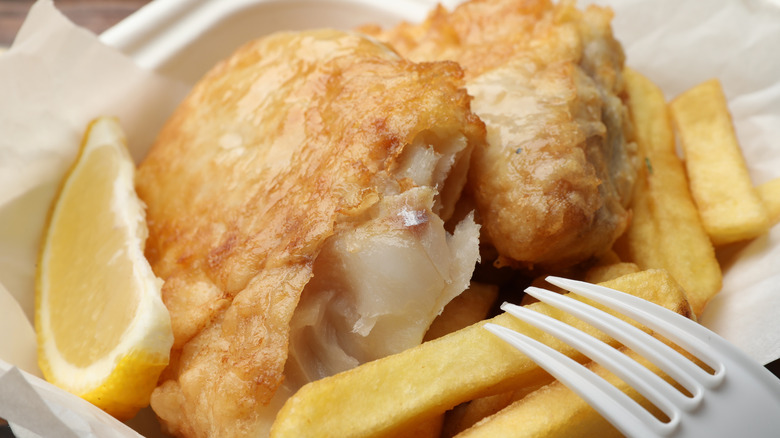
There are some best practices for reheating fish and chips, too, whether after you get home with takeout because it's cooled too much or when you're having leftovers from the fridge. "I always recommend using an oven or air fryer," David Davidov told us. Microwaves aren't good for reviving crispy fried food because they produce steam.
Davidov suggested reheating them at around "400 degrees Fahrenheit for [five to eight] minutes, placing the food on a rack, not a tray so air can circulate. This restores crispiness without drying out the fish, and the fries come back to life too." To allow for air circulation in an air fryer, arrange the pieces in one spaced layer. As an added tip for leftovers that have been refrigerated, use paper towels to remove any moisture on their surface first — it's a simple way to ensure your fried fish comes out as crispy as possible.
The same all-important rule for maintaining crunchy takeout applies when you're frying fish and chips at home: Avoid the steam. Briefly rest your fish on a wire rack immediately after it leaves the hot oil. This prevents the common mistake of draining fried food on a flat plate lined with paper towels — which traps moisture underneath — and also ensures you aren't "crowding" the pieces by stacking them on top of one another.