

Prune Your Fall-Bearing Raspberries Like This For A Faster Bounce-Back
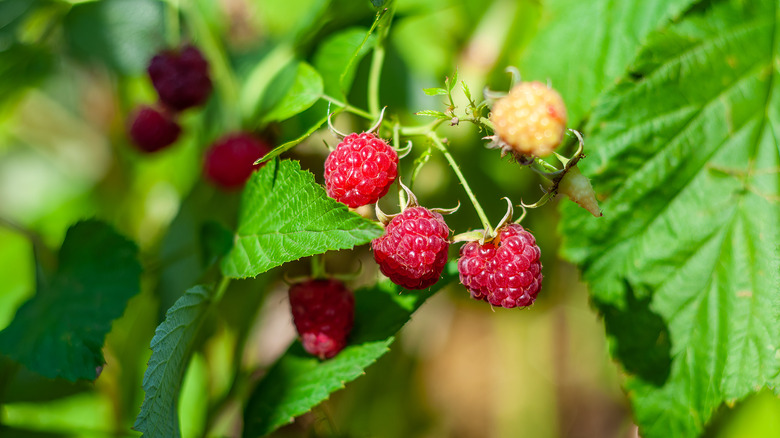
Just because raspberries are popular and in season in the summer doesn't mean you can't have a thriving harvest in the fall. But to give your plant the best chance at producing the most fruit, Gene Caballero, co-founder of Green Pal, told Food Republic that you "cut all the canes down to ground level."
"Fall bearing raspberries are typically best pruned in late winter or very early spring when the plants are dormant," said Cabellero. "The timing matters because if you prune too early, it can expose canes to the cold and ... waiting too long delays any new growth." Raspberries are a tough plant that spreads through its roots, so it has no problem being mowed down to the ground and later popping back up in the spring. Plus, many of their diseases, like gray mold and spur blight, thrive on overgrown plants that stay wet after watering due to a lack of air circulation and sunlight.
The key to a good harvest is focusing their energy, so encouraging the plant to grow new, fruitful canes that are less prone to disease gives you larger berries. Most fall-bearing varieties are technically "ever-bearing," meaning they produce fruit on their two-year-old floricanes in the summer and their one-year-old primocanes in the fall. You can often get the same amount of raspberries, or more, from a dedicated fall-bearing plant as you would from an ever-bearing one, provided you give it enough water, sun, and fertilizer.
How to care for fall-bearing raspberry plants for best results
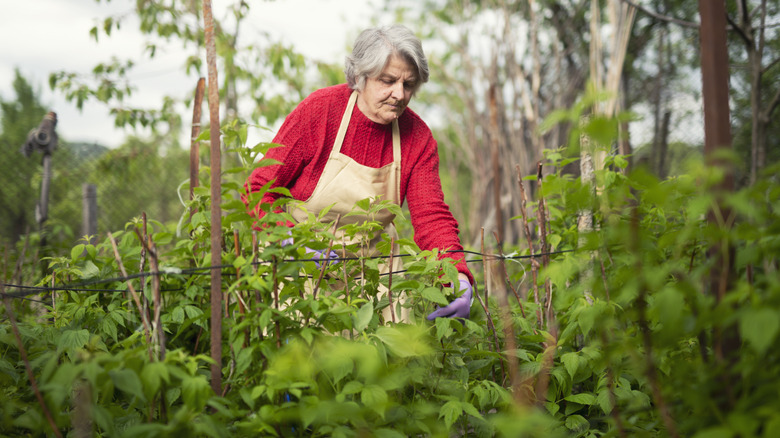
Freshly pruned, fall-bearing raspberry plants don't take much work, but enhancing your berry yield can keep you in fruit for months. Just keep in mind that the reason raspberries come in smaller containers at the store is due to their short shelf life. Whether you use them frozen for perfect muffins or cook them into shelf-stable preserves, a little work up front to maximize your harvest keeps your plants and pantry thriving.
Raspberries prefer a slightly acidic soil with a pH between 5.5 and 6.5, but their feeding needs are fairly basic. A sprinkle of 10-10-10 fertilizer or anything with nitrogen, to promote cane growth, and phosphorus, for healthy leaves, is usually all you need. You want to do this early in the spring to give the new canes time to harden and toughen up before winter. If you fertilize too late, new growth may be too tender and either die off or harm the whole plant.
A couple of raspberry plants can swiftly turn into an orchard, so controlling their growth every year is important to maximizing your harvest. A few, well-fed plants yield substantially more fruit than a ton of starving, crowded ones you may not have time to manage. If you want to encourage in-ground growth, be sure to leave about a foot and a half of space between each plant to give them the air circulation and root space they need to thrive.