

Tarnished Silverware? Use This Everyday Condiment To Polish It To Perfection
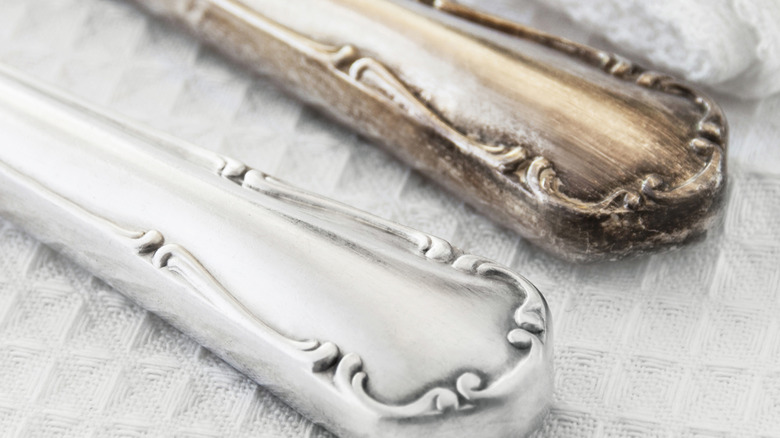
Silverware is wonderful to have. It looks elegant, and some antique pieces can even command a high price. The downside of real silver, however, is that it's prone to tarnishing, which occurs when it reacts with sulfur compounds in the air, a form of oxidation that slowly dulls its shine. Fortunately, tarnishing does not have to be permanent, and the key to getting your silverware looking sparkling new might be sitting in your refrigerator: ketchup.
That's right — ketchup is an unexpected hero when it comes to cleaning. Its effectiveness at polishing metals lies in its acidic components, primarily vinegar and tomatoes, which respectively contain acetic and citric acid. These acids work together to break down silver sulfide, the black, oxidized layer. Ketchup can be both thick and thin, and if it's the latter, we recommend mixing it with a little homemade cornstarch slurry to thicken it up, so it stays in place, ensuring the chemical reaction has time to occur.
Before you get started, check the ingredients in your ketchup. While it's generally effective at removing tarnish, some varieties contain sulfites to extend shelf life. Since sulfites are what cause tarnishing in the first place, using the wrong kind of ketchup can actually have the opposite intended effect. Luckily, many common brands, including Heinz Tomato Ketchup, contain none. Now that the boring stuff is out of the way, the method for using ketchup to remove tarnishing is actually super simple. All you've got to do is generously coat the tarnished area with ketchup, and let it sit for up to an hour (depending on the severity of the tarnishing); then, buff it dry with a cloth.
There are plenty more pantry tricks to polish silverware
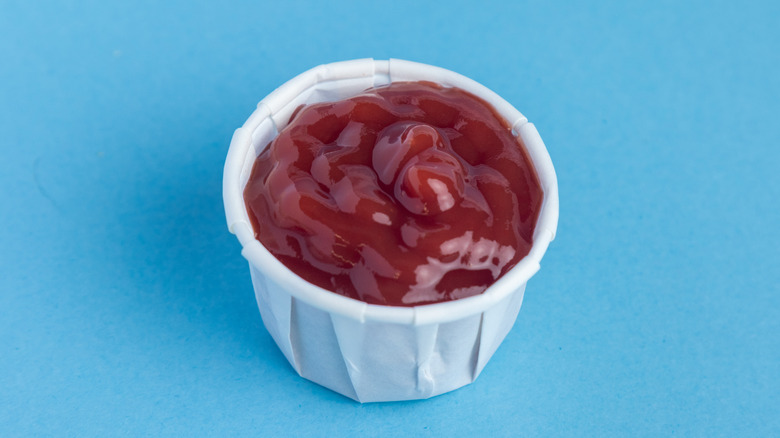
While we love ketchup, it's really the acids that deserve the credit when it comes to removing tarnish. That means this isn't a ketchup-exclusive hack, and any tangy condiment containing vinegar, tomatoes, or other acidic ingredients can also work as an effective silver polisher. Think vinegar- and tomato-based sauces like barbecue sauce or chili sauce, which can be applied in the same manner for the same results.
Or, instead of relying on acids, why not head down to the other side of the pH scale and create an alkaline cleaning solution using just baking soda and water? Baking soda is already our go-to pantry item for breaking down stubborn stains, and its gently abrasive qualities are also perfect for revitalising tarnished silver. Just mix the baking soda with a small amount of water (adding lemon juice if needed for extra power) until it forms a thick paste, apply to the affected areas using a toothbrush; let it sit for up to an hour, and wash it off with warm water.
If you want to feel like a scientist, pair baking soda with aluminum foil. This causes an electrolytic reaction — which, simply put, causes the tarnishing to transfer from the silver to the foil. To achieve this, line the bottom of a container with aluminum foil, add your tarnished silver, then cover with boiling water mixed with baking soda. Let that soak for a few minutes, and the aluminum foil should turn black-ish as it begins to tarnish while your silver looks as good as new!