

Carbonara Vs Pasta Alla Gricia: What's The Difference Between The Italian Dishes?
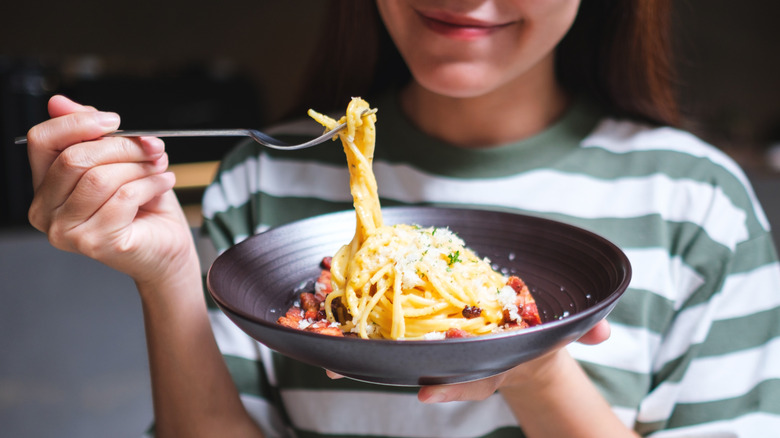
Think of the best Italian dishes, and pasta quickly comes to mind for its inherent intricacy. Italian culinary tradition is intensely regional, with the pasta shape and accompanying sauce tied to a place and era. Take carbonara and pasta alla gricia, for example. Both typically feature a long pasta shape, paired with cured pork, hard cheese, and black pepper — striking similarities. Yet, once you unravel the details, their distinct complexities are revealed.
Both dishes are part of Rome's culinary canon — known as cucina Romana in Italian — a rustic way of cooking that emphasizes bold flavors. Alongside abundant offal dishes, Roman-style pizza, and fried artichokes, the city is known for four iconic pastas: black pepper-heavy cacio e pepe, tomato-inflected amatriciana, plus carbonara and pasta alla gricia. All share similar culinary qualities, like the use of savory Pecorino Romano.
Yet the two dishes' distinct origins reveal wildly different culinary approaches. Pasta alla gricia is made using only cured pork, black pepper, and Pecorino Romano, a pairing likely devised as a hearty dish by shepherds. Meanwhile, carbonara's inclusion of egg (oftentimes exclusively yolk) first emerged in the mid-20th century. A sign of prosperity, carbonara is a decadent and comforting dish untethered to tradition — a marked distinction from pasta alla gricia's old-school appeal.
Modern carbonara is an adaptable favorite
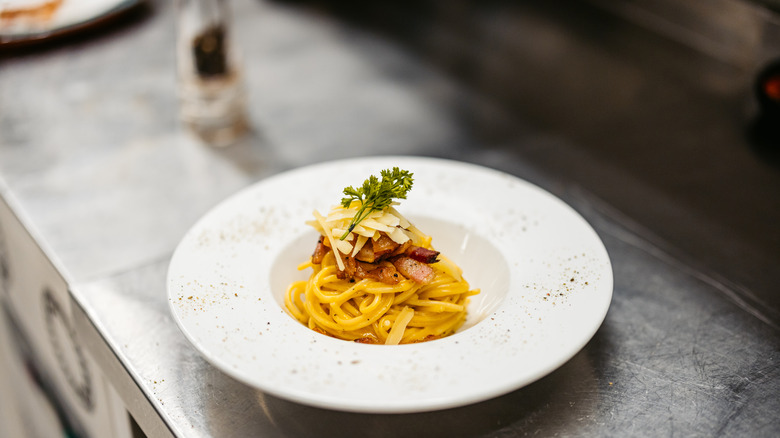
Adored both in Italy and abroad, pasta carbonara is a modern classic. The dish's most stripped-down template is a winning foundation: small bites of sauteed cured pork folded into al dente noodles, all covered in an ultra-creamy pasta sauce of eggs, Pecorino Romano, and black pepper. Most consider Roman-style spaghetti alla carbonara the definitive style, but the dish is now tweaked globally; for example, while traditionalists recoil at the thought, some versions incorporate heavy cream for stability.
Opposed to the rigid recipe preservation of pasta alla gricia, carbonara's modern origins empower creativity. The dish first appeared in print during the 1950s, with many theories explaining its synthesis. Some believe pasta carbonara took inspiration from the pairing of bacon and eggs by way of American troops during WWII. Others cite carbonari — charcoal burners — as the creators of the hearty classic. Regardless, unlike pasta alla gricia, carbonara never fit a narrative of a singular recipe.
One of the first published versions contained Gruyère and garlic alongside eggs; others later added ingredients like bell peppers, chiles, and parsley. Spaghetti serves as a common starchy vessel, but shapes like rigatoni and farfalle are used, too. Chefs perpetually innovate carbonara, whether turning the pasta vegetarian with artichokes or using bacon and Parmesan to fit American palates. Opposed to pasta alla gricia's overlooked regional ties, carbonara enjoys a level of fame on par with lasagna.
Historic pasta alla gricia adheres to traditional origins
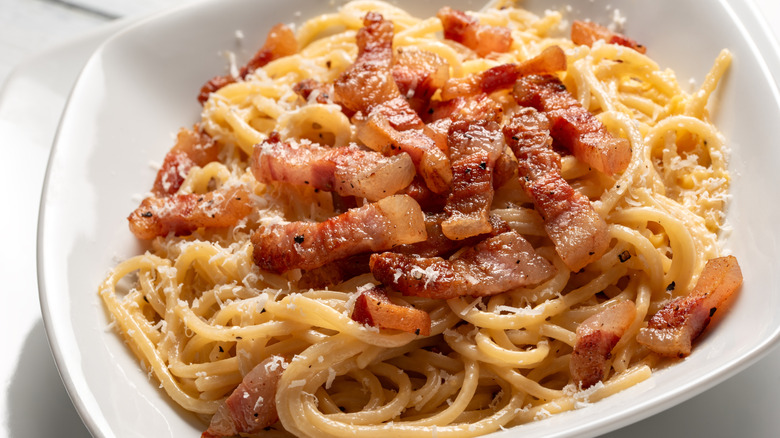
Opposed to the modern comforts of carbonara, pasta alla gricia is a storied dish with strong regional ties. The dish likely originates from outside Rome, either in the crossroads town of Grisciano or elsewhere in the mountainous Lazio region. Crafted using exclusively shelf-stable ingredients — Pecorino Romano, guanciale, black pepper, and pasta — many cite shepherds as the dish's originators. As a pasta from the Roman region, such tradition also reflects the dish's use of sheep's milk Pecorino Romano over Parmigiano Reggiano.
Pasta alla gricia's rustic charms stretch back centuries, likely functioning as a predecessor for other dishes. Many believe its salty-savory foundation later turned into amatriciana with the addition of tomatoes. Today, the dish comes together using either rigatoni or spaghetti, always pecorino romano cheese, and a light assortment of aromatic inflections. Some might blend different types of black pepper; others add a dash of white wine. Yet unlike the wide array of carbonara recipes, Roman chefs feel passionately about a minimalist composition — not even garlic and onion appear in the mix. It's a pasta reflective of Italy's highly traditional approach to cooking, a mentality that has preserved the country's cuisine for centuries.