

Skip The Salt: Use This Seasoning Blend On Fries Instead
We may receive a commission on purchases made from links.
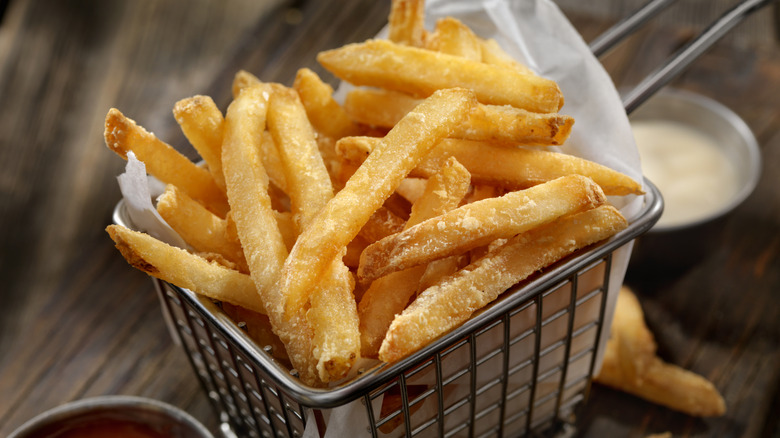
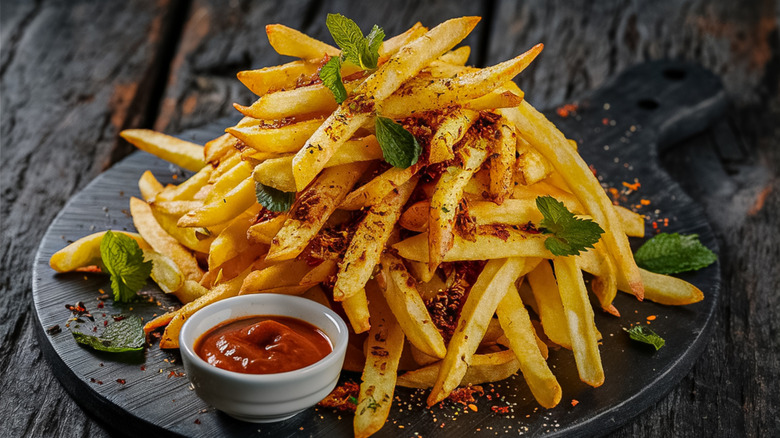
French fries are a crowd-pleaser that everyone loves, and the couldn't-be-simpler fried potatoes are delicious with nothing more than a sprinkle of salt. At the same time, they're also an ideal canvas to creatively enhance with other flavors. Among a range of tempting seasonings to try on your fries, Tajín livens them up with vibrant Mexican zest that will have you reaching for a bottle of the spice blend instead of the salt shaker.
Tajín Clásico seasoning combines two common Mexican flavors: chiles and lime. It uses a mix of dried chile peppers that includes árbol, guajillo, and pasilla, dehydrated lime juice, citric acid, and sea salt. Together they create a taste that blends saltiness, bright and sour flavors from the citrus, and the peppers' zippy, but not too spicy, heat. It can enhance fries made with other root vegetables as well, like sweet potatoes, jicama, parsnips, yuca, or turnips.
Season your fries with Tajín right after they come out of the hot oil (use a neutral, high-smoke-point oil), when it will stick to them best. You can either sprinkle it on or toss it in a bowl with the just-cooked potatoes for fuller coverage. If you're air-frying, spray a little oil on the cut potatoes first, so some of it will remain on the surface for the Tajín to adhere to after they're done. Toss the raw potatoes lightly with oil when oven-baking them for the same reason. The pre-oiling concept applies to air-frying and baking frozen fries, too.
Tajín's history and more ways to use it
Horacio Fernandez created Tajín in Mexico in 1985 after being inspired to make a seasoning based on his grandmother's seven-chiles sauce, and worked out how to best dehydrate the chiles and lime. Fernandez decided on the name after learning that "ají" means chili pepper in the Nahuatl indigenous language when he went to see the country's El Tajín archeological ruins, a pre-Hispanic Mesoamerican city.
Fernandez initially went to stores to try to get them to buy his new product, and it eventually gained traction and became popular in Mexico. It began to be sold in the U.S. in 1993, just eight years later, and now, four decades later, the company sells the seasoning blend in more than 65 countries. There's also a Reduced Sodium version, a spicier Tajín Habanero made with habanero peppers, lime, and salt, and Tajín Twist, which has a sweet "twist" from sugar added to the original's ingredients. The company has also joined forces with big brands on products like Hellmann's Chili Lime Mayonnaise Dressing with Tajín and Bud Light Chelada Tajín.
The seasoning was initially promoted for sprinkling on fruits and on veggies like cucumbers and mango, but its uses have expanded far beyond that. Just some include: on chicken, fish, red meat, grilled corn, or popcorn; in marinades, spice rubs, and salad vinaigrettes; rimming a glass for cocktails like Bloody Marys or margaritas; or even spicing up a bowl of vanilla ice cream. Some people also use it as an everyday seasoning instead of salt.