

The Retro Veggie That Dominated Before Spinach Was King
When it comes to leafy greens, spinach and kale tend to steal the spotlight. But long before they were smoothie staples and farmers' market darlings, a now-forgotten vegetable once reigned supreme: Good King Henry, also known as poor man's asparagus, which comes from the same family as beloved veggies like spinach, chard, and quinoa.
Unless you're especially horticulturally inclined, this may be your first time ever hearing of the plant, despite it being cultivated in European gardens for centuries. Originating in the Alps, Good King Henry was a staple of medieval cuisine, with evidence of cultivation in Britain going back thousands of years. Its name likely stems from Germanic folklore, meant to distinguish it from its dangerous lookalike, Bad Henry (dog's mercury), which is highly toxic. Today, unfortunately, Good King Henry is more often dismissed as a wild edible and often likened to a weed.
Luckily, Good King Henry is super easy to forage — but you must absolutely know how to spot it to not accidentally poison yourself. To spot it, look for dark green, triangular, arrow-shaped leaves. In the flowering season, it produces small, yellowish-green ball-like flowers. For those interested in gardening, you'll be glad to know that it's incredibly low-maintenance. Good King Henry is a hardy perennial, returning year after year with minimal effort. This will yield you many meals without replanting. Compare that to traditional spinach, which is an annual plant, meaning that it completes its life cycle in one season. However, despite its ease once established, its seeds are known to be tricky to germinate. Similarly to growing pistachio trees, they'll need an extended period of cold temperatures to break their dormancy.
How to use Good King Henry
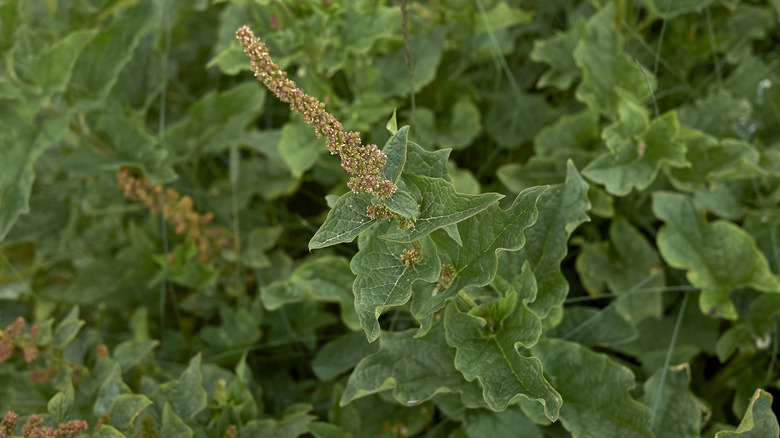
If you're on the same wavelength as us and think Good King Henry is long overdue for a comeback in mainstream cooking, you'll be glad to know it's remarkably versatile in the kitchen. To start, let's talk about flavor. The leaves are often described as an earthier spinach, while the tender shoots are commonly compared to asparagus.
The age of the leaves also affects their taste and texture. Younger leaves are mild, tender, and better suited to being eaten raw. On the other hand, older leaves are known to be more bitter and benefit from a salt-water soak, boiling, steaming, or blanching before eating. This also helps reduce oxalic acid, a naturally occurring compound that can interfere with mineral absorption and even contribute to kidney stones. This is also the same reason why spinach is often recommended to be cooked.
The easiest way to cook the leaves is to treat them exactly the same as you would spinach leaves. You could incorporate your young leaves directly into a salad, boil them for a few minutes, and serve them in a creamy polenta with white beans, or try pairing them with some common spinach add-ins.
If you're looking for more trendy, modern uses, simply swap spinach for Good King Henry in your morning smoothie. It's also notably high in iron and vitamin C, making just a small amount a great way to kick-start your day. As for the shoots, cook them how would asparagus. For example, you could sautee them in butter over a low heat until cooked through, and then finish with salt and a squeeze of lemon juice to brighten the flavors.