

How Martha Stewart Restores Marble Kitchen Counters

We may receive a commission on purchases made from links.
Martha Stewart is our go-to pro for all things lifestyle. Whether she's suggesting adding rolled oats to your soup for a thicker consistency or sharing clever strategies for a better-organized kitchen, her many nuggets of wisdom are practical, simple, and always on point. One of her most useful shared insights involves restoring one of the trickiest kitchen countertop materials: marble.
On Instagram, Stewart shared her go-to method for fixing damaged marble countertops. See, marble is a natural stone, and its beauty comes with a tradeoff. It's more susceptible to everyday wear-and-tear, as its porous surface can absorb all sorts of liquids and stains. One of its biggest foes is acids, like lemon, wine, or vinegar, which cause a chemical reaction upon contact with marble, also known as acid-etching. The result is dull, stain-like spots that disrupt its signature facade. It's also a nightmare to remove without some elbow grease.
To combat acid-etching, Stewart's restoration process involves four key components. Firstly, use acetone to clean the surface. This step essentially prepares the surface for repolishing by removing any leftover residues. The next step is to level the surface with waterproof sandpaper, which removes the acid-damaged top layer of marble and reveals the intact stone beneath. The best practice is to keep the countertop wet while sanding, as water acts as a lubricant, helping prevent scratching, overheating, and dust buildup from the coarse sandpaper. Stewart then recommends following up with a StoneTech revitalizer, which gently cleans the area while protecting the now-exposed surface. Finally, for long-term protection, apply a sealer to create a barrier that will protect your marble countertop from future spills, etches, and stains.
How to take care of your marble countertop
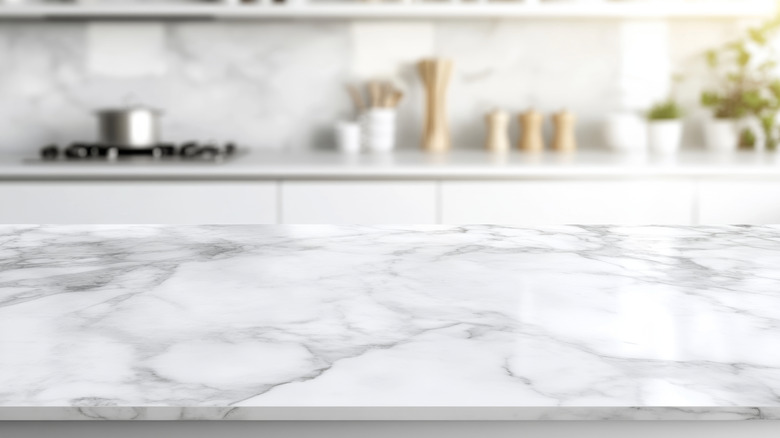
Marble countertops need a little extra care compared to some other types. This is because it's made up of calcium carbonate, which — aside from being porous — is soft and prone to chips, scratches, and aging. While these drawbacks can pose as challenges in the kitchen, marble remains effortlessly elegant. This makes it worth investing in proper care, so it can be both a functional surface as well as a design centrepiece.
For starters, you can't just clean it with any old chemical. Any cleaner you use should be pH-neutral, as harsh acid- or alkaline-based cleaning products will do more harm than good. To avoid stubborn stains, clean spills as soon as they happen. Beyond acids, other substances to avoid spilling include oil-based products like mayo or salad dressing, and pigmented products like coffee or tea. A simple step to remove these kinds of stains is to draw them out using a poultice of baking soda and water. Leave covered for over 24 hours, then remove with a damp cloth. To avoid stains from happening in the first place, invest in coasters and trivets — your marble countertop will thank you.
The durability of a marble countertop also depends on how you use your kitchen. While sealing and regular cleaning can keep it looking good, it still might not be suitable for a busy, high-traffic kitchen, which would benefit better from exceptionally durable materials like self-healing stainless steel or the super stain-resistant soapstone.