

How To Reduce The Heat In Your Kitchen So You Don't Feel Like You're In A Sauna While Cooking
No matter how much you enjoy cooking and baking, it's definitely a drag when the kitchen gets swelteringly hot, especially if it also doubles as your dining area. There are some ways to keep the heat at bay, but you'll need to first identify the source of the problem. Joanne Gallagher, co-creator and recipe developer at Inspired Taste, talked to Food Republic about the causes and solutions for heat buildup in the kitchen.
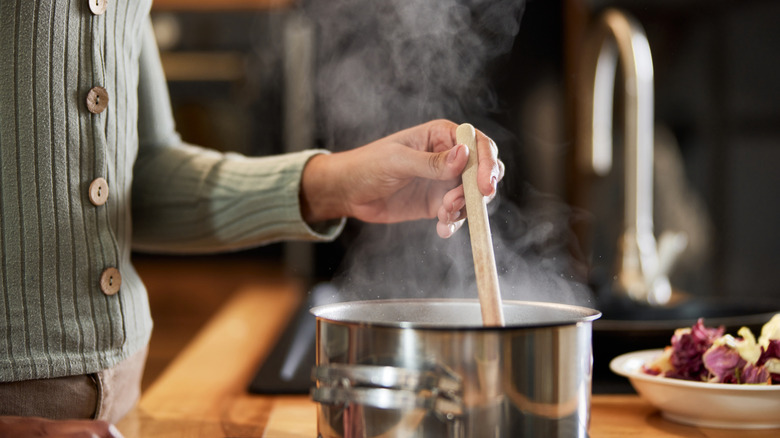
"The top culprits are ovens, long stovetop simmers, and, surprisingly, uncovered pots that let steam pour into the room," she said. "Home cooks often underestimate how much heat builds up from boiling water or braising with the lid slightly ajar. Even preheating an oven early can turn the kitchen into a sauna."
According to Gallagher, combating the warmth in your kitchen can be easy with a few simple steps. First, she suggests using lids when possible, which has a twofold effect; not only will it trap the heat, but it also helps food to cook more quickly and evenly. Just like preheating your oven, getting the fan going ahead of time will make sure it's good to go when you're ready to cook. Then, after cooking, leave it on until the room is cooled to a comfortable temperature. No vent fan? No problem! You can also pop open a window to let the heat escape.
More ways to keep kitchens cool
While Joanne Gallagher's initial advice can be implemented on the fly, she also has some tips that may require a little more planning, but offer solid results. The first is to "cook components in stages, like roasting vegetables earlier in the day, or chilling sauces before reheating gently. You'll keep in your flavors without sweating through dinner." And if you're not an early bird, you can also choose to cook in the evening. Just avoid those times of day when the heat is at its peak.
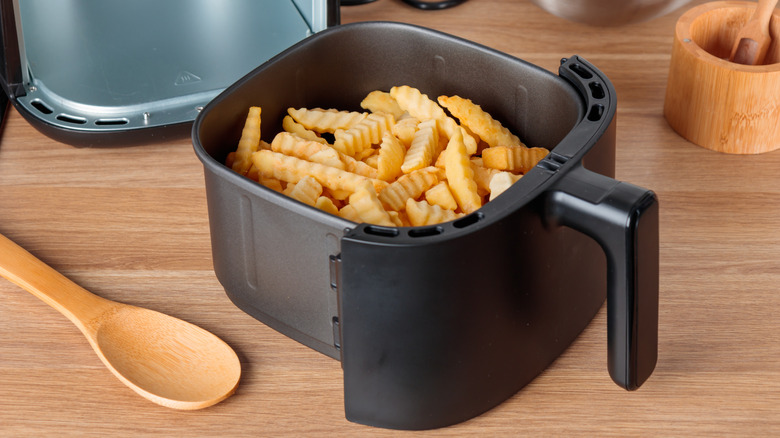
Additionally, you can switch up your cooking method. "Quick stovetop cooking, grilling, no-cook sauces, and countertop appliances like slow cookers release far less heat," Gallagher said. "Simmering soups or baking for an hour can wait, but a fast sear or grilled vegetables keep things cooler. The food stays fresh, and you stay comfortable enough to enjoy it." For example, instead of whipping up a baked mac and cheese, try a slow cooker version. Or, quickly microwave sweet potatoes instead of popping them into the oven. Also, consider all of the foods that you could be cooking in an air fryer instead of using other appliances that are driving up the temp in the kitchen.
Finally, there are a couple of investments that you can make to help prevent your kitchen from becoming unbearably hot. For a frugal solution, consider an energy-saving curtain that will prevent sunshine from contributing to your kitchen's warmth. Or, if you have a bigger budget, try replacing your traditional stove with an induction cooktop.