

The Origins Of Draft Beer Go Way, Way Back
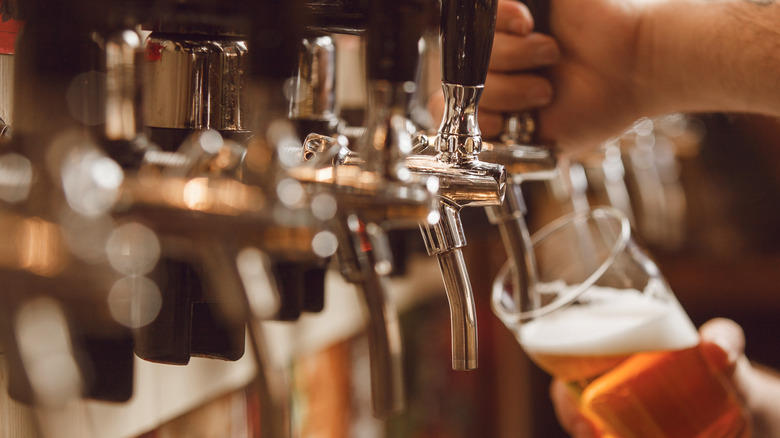
If you want to drink beer the traditional way, skip the bottles and cans and drink it straight from the keg. This method has a long history, dating all the way back to 1797. Whether your drink of choice is ale or lager, if you want it on draft, just ask for it from the pull handles lining the bar counter. These serve as the final stop in a much larger, intricate system. Behind the scenes, beer is stored in cold kegs and then pushed through insulated lines using carbon dioxide. When the handle is pulled, the pressure forces the beer from the keg, where it goes into your glass with optimal freshness and fizziness.
But before the modern system, it all started with the "beer engine," which was invented by Joseph Bramah. With repeated up and down pumps, suction would pull the cask beer from basement to bar. Today, while some old-school pubs and bars still celebrate the charm of the hand-pulled engine for traditional cask ales, most beers are delivered under gas pressure from refrigerated kegs — first done in 1936 with the introduction of artificial carbonation. Whereas beer engines draw beer that has already been fully fermented, modern beer kegs use beer that has been pasteurized with gentle heat, rendering the yeast inactive. Carbonation is then controlled by adding pressurized carbon dioxide, rather than relying on natural yeast fermentation.
Draft beer versus packaged beer
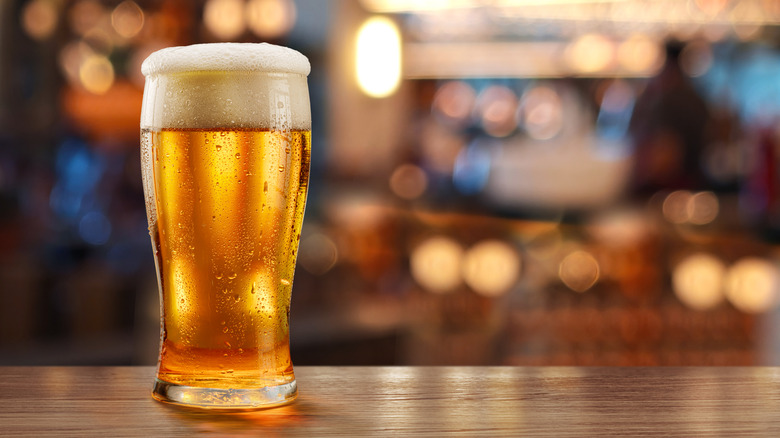
One key difference between draft beer and packaged beer (bottled or canned) is exposure to oxygen and light. Beer stored in kegs typically contains carbon dioxide, which limits oxygen exposure and maintains consistency to preserve its flavor. In contrast, packaged beer is more susceptible to oxygen exposure during bottling or canning, which can lead to flavor degradation as it ages. Also, light exposure — particularly in bottled beer — can negatively affect its flavor. To address these challenges, many breweries use cans or dark glass bottles and closely control oxygen levels during packaging to help maintain beer quality.
While draft beer offers many advantages, it also presents several challenges for both bartenders and patrons. If the beer lines aren't well-maintained, they can accumulate bacteria, yeast, or mold, which can negatively affect both its taste and carbonation. Another challenge is the pouring technique required for certain beers, which can make or break their overall taste. For example, Guinness requires a specific two-part pouring method. The glass has to first be held at a 45-degree angle, partially filled, and then left to rest for around 90 seconds before a final top-up. For other draft beers, correct pouring technique is also essential — the glass should begin at a 45-degree angle before being gradually straightened as it fills. Poor technique can result in excessive form or insufficient head, which is guaranteed to land you on the bad side of beer enthusiasts.