

What Fruit Has The Highest Amount Of Protein?
We may receive a commission on purchases made from links.
When considering vegetarian protein sources, simple ingredients like beans, nuts, and dairy come to mind. Yet, surprisingly, even some types of fruit come with the essential macronutrient, letting you increase your daily intake in unconventional ways. Among the many fruit varieties, note that it's passion fruit that comes the most protein-packed.
Get a cup of the tart fruit, and you'll get 5.2 grams of protein. Sure, that's not quite the same density as sources like meats, fish, or legumes — a cup of firm tofu contains more than 21 grams of protein. Furthermore, to accumulate enough pulp for a cup, you'll need around a dozen raw passion fruits. Still, such a protein content is worth noting, especially with creative methods of consumption.
Knowing how to eat passion fruit doesn't entail much technique; simply cut the fruit in half and scoop out the interior. Consider then freezing the flesh for bulk consumption, or even buying already frozen Passion Fruit Bite-Sized Pieces for added convenience — frozen passion fruit is good to eat for a year. To tame some of its biting flavor and abundance of seeds, pair the fruit with soft flavors for bulk enjoyment. You can employ passion fruit for an extra protein kick in a smoothie, combining with ingredients like mango and yogurt. Alternatively, mix its tropical composition into overnight oats or utilize a cup to assemble a cheesecake. For optimal nourishment, leave the seeds in for maximum fiber content. The compound lends digestive and cardiovascular health benefits, per a 2020 study published in Nutrients.
Consider other high protein fruit
Passion fruit may offer the highest protein content, but several other fruit types aren't far behind. For a more easy-to-eat protein option, consider guava — a cup (approximately one fruit) contains 4.2 grams. Learn how to eat guava, and the food delights with its flavor and texture. Integrate the fruit into a smoothie, pairing with yogurt or coconut milk, or simply cut up and eat a whole guava for a nutritious start to the day.
Furthermore, breakfast favorite avocado comes with 3 grams of protein per chopped cup, with the same serving size of pomegranate seeds containing the same amount. Like passion fruit, both contain generous servings of fiber, making them satiating candidates for a light or snack, per a 2021 study for Lebensmittel-Wissenschaft & Technologie. So keep such useful nutritional qualities in mind when whipping up an avocado smoothie, a pomegranate-topped yogurt bowl, or — for an extra mouth-watering crossover – pomegranate-seed-topped avocado toast.
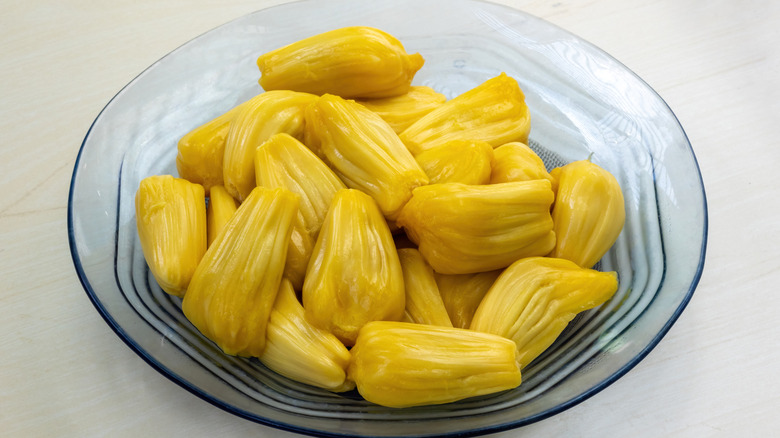
Next in line with its protein content is jackfruit, lending 2.8 grams of protein per cup. Thanks to its meaty composition, cooking with jackfruit is popular in vegan cuisine — think dishes like jackfruit tacos, pasta, and barbecue sandwiches. Just note the food's protein content (as well as other benefits) significantly drops when canned, so seek out raw jackfruit for optimal nutrition.