

Can You Freeze Food In Glass Jars Without A Shattered Mess?
We may receive a commission on purchases made from links.
Whether you're storing your weekly meal prep or looking to extend the shelf-life of your bread, the freezer can give your food months of extra life compared to the mere days you get from the refrigerator. But it's not as simple as just tossing everything in and hoping for the best. For example, leaving your food uncovered can cause it to catch freezer burn. High-water content foods, like cucumbers or leafy greens, are prone to losing their flavor in the freezer, and if you're careless with your glass containers, you risk dealing with a shattered mess.
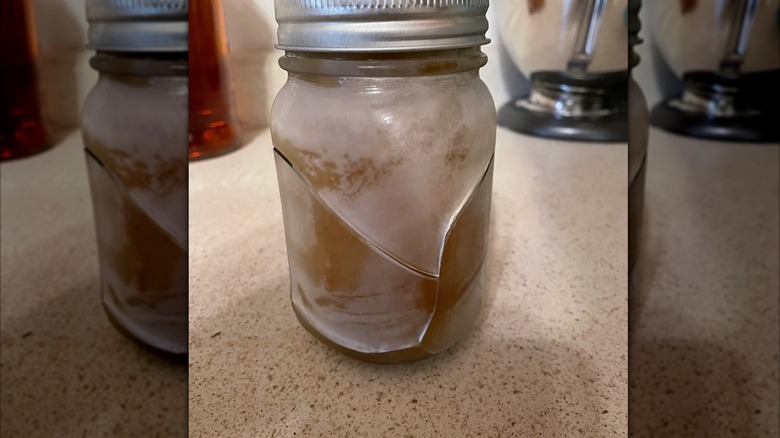
The main culprit behind glass jars shattering in the freezer comes down to science, specifically when it involves liquid leftovers like soups, stews, or stocks. When water freezes, it turns to ice and expands. If that expanding liquid has nowhere to go inside a glass jar, pressure builds up until shattering becomes inevitable. Fortunately, there are several easy ways to prevent this from happening.
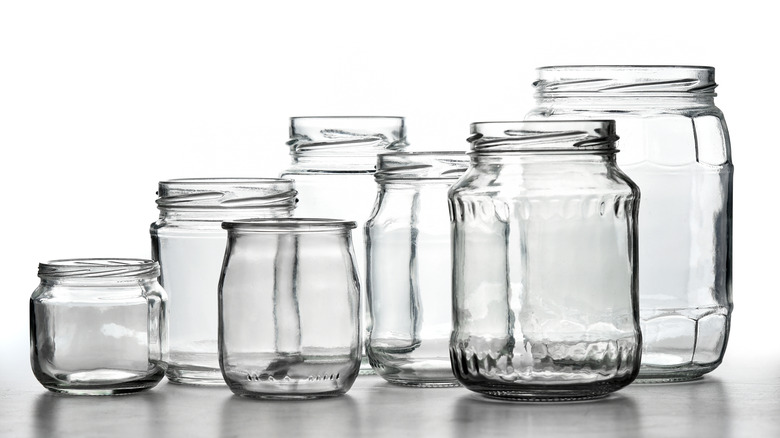
A common hack is simply not filling your jar too much. When you're pouring soup in, always account for the extra expansion space, which helps to relieve the pressure from the jar. We also recommend using straight-sided jars or wide-mouth mason jars with vertical walls rather than ones with curved necks. Unlike jars with "shoulders," these designs allow liquids to expand evenly during freezing, reducing pressure points and the risk of cracking. To further ease uneven pressure, make sure to freeze your liquids upright and remove the lid from the jar (you can screw it back on once the liquid is frozen).
Tips for freezing food in glass jars
While underfilling and hardy materials will most likely have you covered, there are several other features of a glass jar you should look for. Another simple yet effective tip is using the right kind of glass. Avoid delicate, fragile glasses and look specifically for freezer-safe jars made of tempered glass — brands like Pyrex or Kilner will have you covered.
Although expanding liquids are a common reason for glass shattering, another culprit is thermal shock. When hot foods are poured into a jar and placed directly into a frozen environment, the sudden temperature drop can cause the glass to crack or break. To prevent this, allow hot foods to cool before transferring them to a glass. Cooling also helps reduce condensation from steam, which can affect the shelf life of the jar's contents. Once you're ready to use your frozen food, it's important to thaw it gradually. One of Ina Garten's expert freezer tips is thawing food in the refrigerator the evening before. Thermal shock works both ways, so never try to forcibly heat a frozen jar.
Beyond being more environmentally friendly than plastic containers or zip-lock bags, glass jars are also one of the few chemically-free choices. Some plastics can leach chemicals into food, and unlike glass, they are porous, meaning that they absorb odors and can discolor over time. When stored correctly, glass jars offer superior durability and maintain the appearance and quality of your food, making them a superior choice for freezing leftovers.