

How To Fry Food In The Microwave – If You Have No Other Options
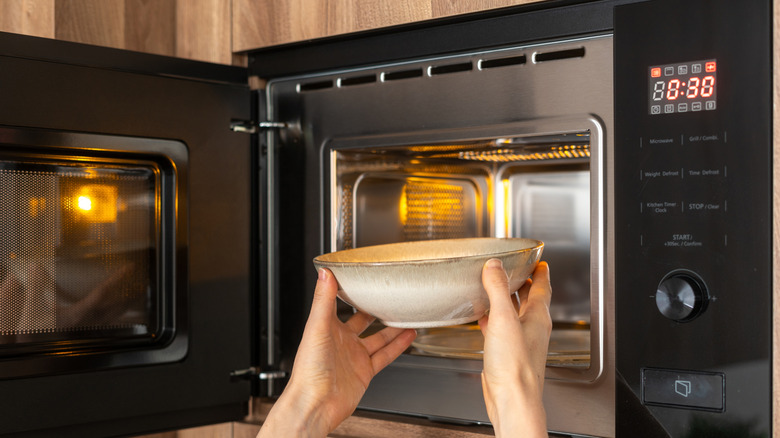
Your microwave has plenty of unexpected uses, and if you're in a pinch, it can even double as a fryer. While this isn't one of its more specialized functions, it can be effective in certain scenarios.
A microwave uses electromagnetic waves to make water molecules in food vibrate rapidly, heating them from the inside out. So how does this translate to "frying?" In practice, the food doesn't truly fry in the traditional sense, but added oil can heat up enough to lightly sear the surface. This makes the microwave frying technique best applied to small, thin items like fried onions to elevate a salad or garlic chips to scatter across a bowl of creamy cauliflower soup. Larger items that require deep-frying and super-hot oil temperatures should always be done on the stovetop.
To microwave-fry small aromatics, place them in a shallow bowl with oil and heat in short intervals, checking frequently to monitor progress. Safety is especially important here. Make sure to always cover the bowl with a damp paper towel, as the oil can spit as it heats, creating a mess inside your microwave. Keep a close eye on the oil as well. If its smoke point is exceeded, it can begin to smoke or even catch fire. For this reason, avoid low smoke-point oils such as unrefined oils or extra-virgin olive oil. Neutral oils like sunflower or canola are much safer options — but with that said, for the most reliable results and a truly crispy garnish, the stovetop remains the superior option.
More conventional uses for the microwave
While frying isn't the most effective — or safest — way to use the microwave, those looking for an unconventional use should try "roasting" a head of garlic. While it's not traditional roasting — just as you can't truly "fry" food in a microwave — the results are surprisingly similar. Slice off the top of the garlic head, season with olive oil, salt, and pepper, place it in a microwave-safe dish with a small amount of water, then cover and cook on medium for up to 10 minutes. When it's done, the cloves should squeeze out easily, making a perfect flavor base for soups and spreads. One tip: While garlic is usually wrapped in aluminum foil for oven roasting, skip that step here, as foil and microwaves don't mix.
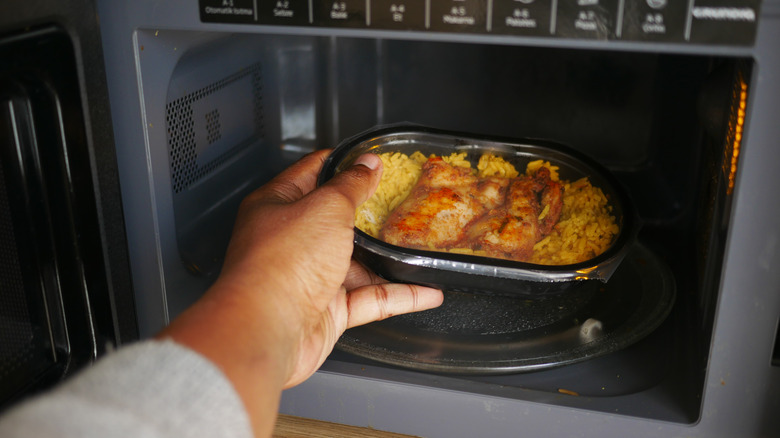
There are also plenty of conventional ways to leverage this handy gadget. One of the most useful functions of the microwave is reheating food, and with a few simple tricks, you can make leftovers taste almost as good as new. For example, high-moisture dishes like soups are great to reheat in the microwave, as they heat up evenly and don't dry out. Water also works wonders for reheating rice — simply sprinkle a few drops over the grains and cover it with a microwave-safe lid or damp paper towel to create a steam-rich environment. Remember to spread everything out uniformly to allow for even heating.