

How To Add An Egg To Ramen For The Creamiest Bowl
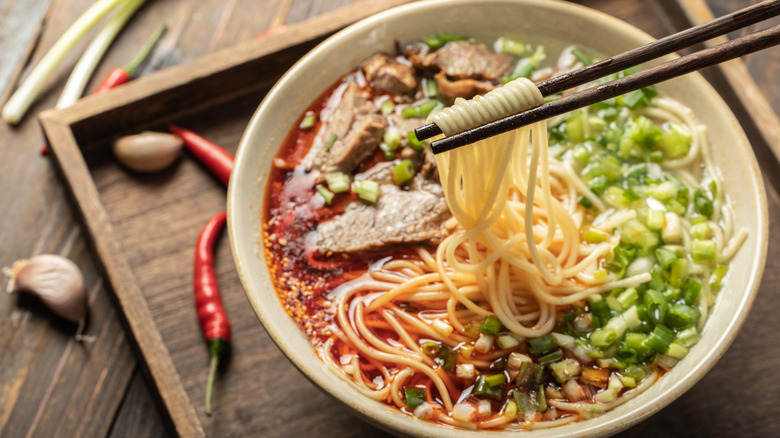
Few things beat a warm bowl of ramen, and the best part is that it's endlessly customizable. One of our must-have additions is beaten eggs, which can make the bowl feel so much creamier and richer, but there's a fine line between a velvety broth and lumpy soup. To learn how to perfectly incorporate eggs into ramen, Food Republic spoke with Maricel Gentile, owner of Maricel's Kitchen and author of "Maricel's Simply Asian Cookbook."
"The yolk carries fat[,] which softens sharp salt and deepens umami," Gentile explained. "The whites bring protein, which lightly thickens the broth as it sets." While this enhances the richness and body, egg proteins naturally denature and coagulate when exposed to high heat. When these proteins come in contact with a boiling broth or are added in too quickly, they'll clump together. This creates tough, scrambled bits floating around your broth instead of smooth, silky ribbons.
"The best way to add an egg without scrambling is to control heat and movement," Gentile told us. For the best results, she advised adding them when the soup is on a low simmer. One of the best methods to acclimatize your eggs is tempering. Slowly whisk a little hot liquid into the beaten eggs before adding them to the pot, which will gradually raise their temperature to prevent the proteins from coagulating. At the same time, Gentile also noted that the broth should be moving as the egg mix goes in. Using a ladle or a whisk, stir the broth in a circular motion to create a small vortex. Pour in a thin, steady stream to allow the eggs to form long, ribbon shapes rather than large clumps.
Tips and tricks for perfect ramen eggs
One tip to prevent your eggs from curdling is to mix cornstarch with cold water to create a homemade cornstarch slurry. Cornstarch is your secret weapon for smooth eggs as it creates a barrier between the egg proteins, preventing them from clumping together when exposed to the heat of the broth.
But more importantly, timing can make or break how your eggs settle into the broth. Maricel Gentile recommended adding the eggs only after the noodles are fully cooked. Adding them too early can cause two problems: The noodles may remain undercooked by the time the eggs are done, or they may finish cooking while the eggs overcook and become clumpy. To be on the safe side, you could even remove your cooked noodles before adding the eggs. But make sure that the broth is still warm, "If you add [the eggs] too late, the broth cools[,] and the egg does not set properly," Gentile added. For the best texture, she recommended letting the egg mix sit for about 30 seconds before serving.
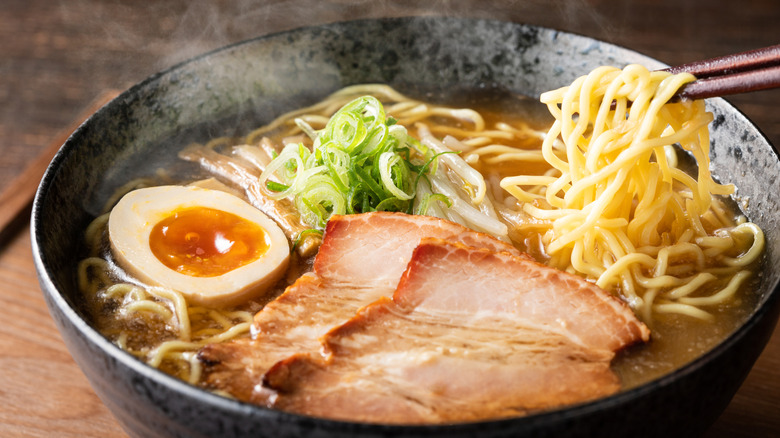
While adding beaten egg to your ramen is a great way to enhance flavor and texture, there are several alternatives if this method doesn't suit your tastes. One popular option is a Japanese-style onsen egg, a softly poached egg with a jammy yolk that melts into the broth when broken, adding richness without changing the texture. Another easy choice is adding in a perfectly soft-boiled egg with a runny yolk, taking them to the next level by giving them an Asian-style marinade. These methods are better if you're looking to preserve the broth's initial structure, and can be incorporated much more easily if you're worried about curdling.