

Combine Store-Bought Alfredo With Another Jarred Pasta Sauce For An Instant Improvement
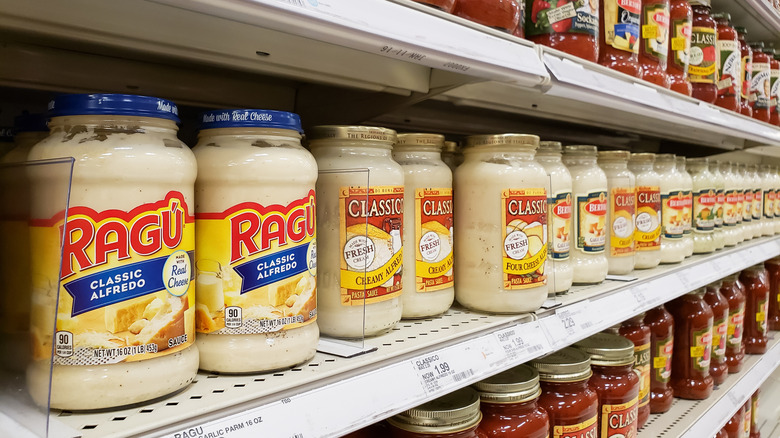
From the worst to the best store-bought alfredo sauce, there's always room for improvement. And when that improvement consists of nothing but adding a bit of purchased pesto, it's hard to think of a reason why you shouldn't elevate your easy, weeknight pasta dinner.
Alfredo is hearty and creamy, a perfect accompaniment to lean meats. However, while the flavors it has are great, they're consigned to heavy dairy tastes that limit the scope of its flavor profile. A store-bought jar of pesto is one of the easiest ways to upgrade store-bought alfredo, requiring only a single scoop to infuse the sauce with herbal savoriness. A tablespoon per jar of alfredo provides a hint of basil and earthy pine nuts, but you can always add more depending on your preferences. You can even reverse the order and upgrade store-bought pesto with a dollop of alfredo, depending on your tastes.
Dairy is a great emulsifier, so you won't have to worry about your pesto's oil properly blending with the rest of the sauce. Still, you won't be able to just stir them both cold and plop your mixture right onto hot pasta. In order to maximize the flavors of both ingredients and ensure they blend, you'll need to apply careful heat and plenty of stirring.
How to blend store-bought alfredo and pesto into a single sauce

A proper emulsion requires you to mix two liquids that are otherwise resistant to bonding together, like mixing oil and vinegar into a vinaigrette. The best way to do this is to ensure both ingredients are in a more liquid, rather than solid, state, and the best way to do that is with a saucepan on the stove.
Alfredo sauce right out of the jar is closer to a creamy cheese than a sauce, especially when you take it right out of the fridge. Bring it to just a barely noticeable simmer to avoid curdling the delicate sauce, then add your desired amount of pesto. If your proteins curdle, they won't want to blend with other ingredients, so control your temperature! Once everything's in the pot, whisk it vigorously until it's a uniform color and there are no obvious puddles of oil rising to the surface. This can take some time, but the end result is a far smoother and better-tasting sauce than if you'd just given it a quick stir with a spoon.
If you're running into trouble getting things to blend, try adding a bit of pasta water. The starches help bind oil and water together, acting as an easy hack for a restaurant-quality sauce. Just keep in mind that store-bought sauces tend to go heavy on the salt, so too much salted pasta water can ruin its flavor.