

Martha Stewart Reaches In Her Pantry For A Unique Way To Thicken Soup

If anyone deserves the title of ultimate lifestyle guru, it's Martha Stewart. From smarter kitchen setups to elevated everyday meals, she's packed with practical wisdom. Still not convinced? Take a look at the dishes she transforms using a single, unexpected ingredient. Stewart's approach often relies on simple additions you wouldn't normally expect to make such a big impact. Consider soup, for example. If you're out of your usual thickeners, she suggests saving a trip to the grocery store and reaching for something you've probably already got on hand: rolled oats.
That's right — rolled oats are actually a great natural thickener, who knew! The primary reason oats naturally thicken soups is due to their high fiber content (specifically, beta-glucan – a soluble fiber). When heated in soup, this dissolves into a gel-like consistency, adding the same thick, velvety texture that you'd expect after adding commonly used thickeners like a homemade cornstarch slurry. Oats are also great because they have a very mild, almost non-existent flavor. This means that they won't change the overall profile of your soup, unlike heavy cream, which invariably adds richness and, well, creaminess.
You might be wondering how to incorporate the oats into the soup. Technically, you could just add a handful of rolled oats into your soup and call it a day, but if you're not looking for chunks of oats floating around in your bowl, the best way to incorporate them is by blending. You could either add them to the soup directly, then blend them with the other ingredients, or add them to a food processor before and pulse until they reach a fine, flour-like consistency.
Other unconventional soup thickeners
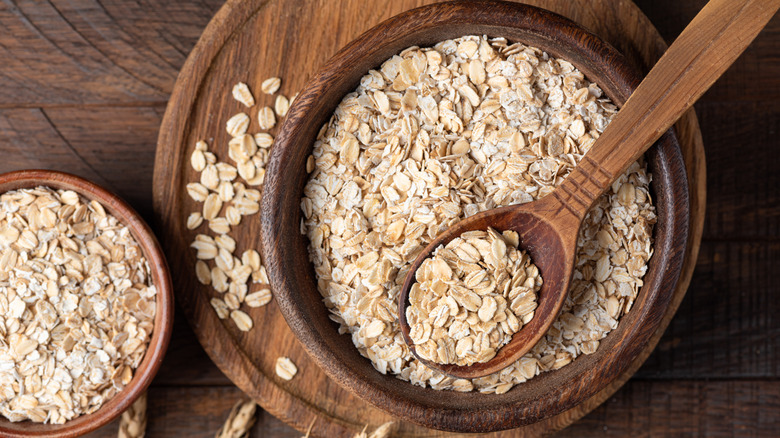
If you're in a pinch, oats aren't the only pantry staple that can be used to thicken your soups. There's actually plenty of unexpected thickeners out there, and many — like oats — can also add a bunch of nutritional goodness to your soups and broths.
Cornstarch is the holy grail of soup thickeners, and it works so well for one simple reason: starch. When heated in the liquid, the starch granules absorb water and swell in a process called gelatinization, giving the soup a thicker consistency. So if you're out of cornstarch, all you need to do is grab another starch-rich pantry staple, like rice. If you've ever washed rice, you'll have noticed its thickening power firsthand. The cloudy water is released starch, which is also what gives risotto its creamy texture. Finely ground rice powder can be seamlessly incorporated to thicken soups, or you can time your cooking perfectly to simmer uncooked rice in your soup for 20 to 30 minutes. Other starchy ingredients you might have lying about your kitchen include potatoes, pasta, or couscous.
Other common pantry ingredients that can thicken your soups while also adding heaps of nutrients include beans and legumes. They're also naturally high in starches and protein, which are released as they simmer — but it's really the liquid from the can that we're interested in. See, canned beans are pre-cooked, so all of their starches and proteins have already been released into the can water. This makes the liquid — also known as aquafaba — a natural thickening agent. Some of the most neutral-flavored sources of aquafaba include chickpeas or white beans, which also happen to go great in many soups like minestrone or a rustic Italian-style chickpea soup.