

Avoid This Super Simple Mistake When Making Shortbread
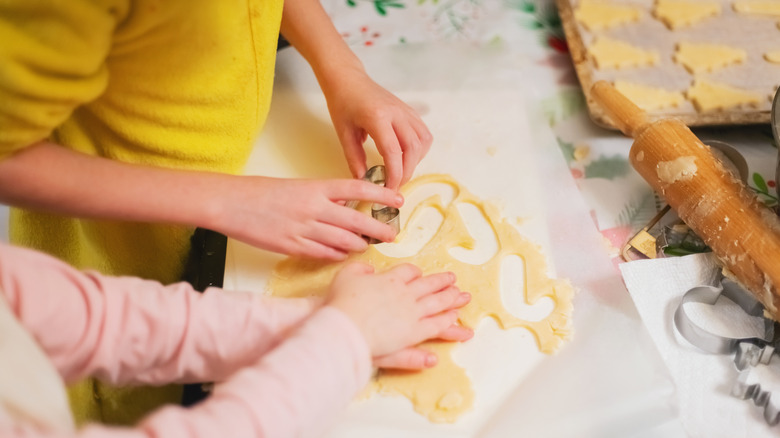
Successful baking is all in the details, even when crafting straightforward recipes like shortbread. The centuries-old Scottish sweet comes together using an easy-to-remember 3:2:1 ingredient ratio, consisting only of flour, butter, and sugar. Shortbread is set apart from other cookie doughs by its high density of fat, which lends the sweet its characteristic soft, crumbly texture — a perfect bite for teatime.
Yet despite requiring only three components, assembling shortbread comes with a common pitfall. To help explain this frequent mistake, Food Republic spoke with Jules Grasekamp, a dessert blogger at Bonni Bakery. According to her, "overworking the dough" often tarnishes a batch of shortbread, "especially if you're using a stand mixer or food processor."
Nowadays, it's all too easy to rely on electric tech to streamline baking, upheld by the belief that extra firepower results in a better-melded dessert. However, when crafting shortbread, a measured manual assembly shines, as "overmixing develops gluten in the flour," which leads to shortbread that's "dense, firm, or even a little chewy," says Grasekamp. "Stick to a traditional, low-tech mixing method," she urges, and the resulting shortbread texture will delight.
Approach making shortbread with delicate care
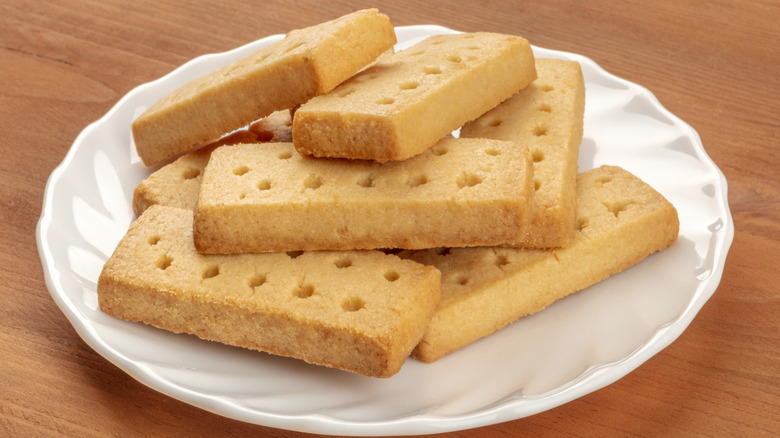
A batch of perfect shortbread cookies or fingers results from carefully assembling three common ingredients. As Jules Grasekamp points out, "there's nowhere to hide," meaning both the component quality and assembly technique require the utmost consideration. Subsequently, reach for a fatty, high-quality butter, the structured crystals of specifically granulated sugar, and a bag of reliable all-purpose flour for your shortbread.
Assembly doesn't take long, but every detail counts. "I always use room-temperature butter," says Grasekamp, although you could also consider grating your butter for truly decadent homemade shortbread. Briskly mix the fat with the sugar — avoiding any fluffiness — then integrate the sifted flour.
The dough formation stage is critical, and you should "mix only until it starts to come together, then gently bring it into a smooth dough," notes Grasekamp. Handle it delicately with your hands, noting that the more you work the mixture, the greater the risk you "lose that classic buttery snap," she cautions. Just like that, you're ready to roll out and then cut the shortbread into the desired shapes. Follow with some cooling time in the fridge, then bake the cookies to a delectably tender state.