

How This Simple Cleaning Mistake Is Damaging Your Kitchen Knives
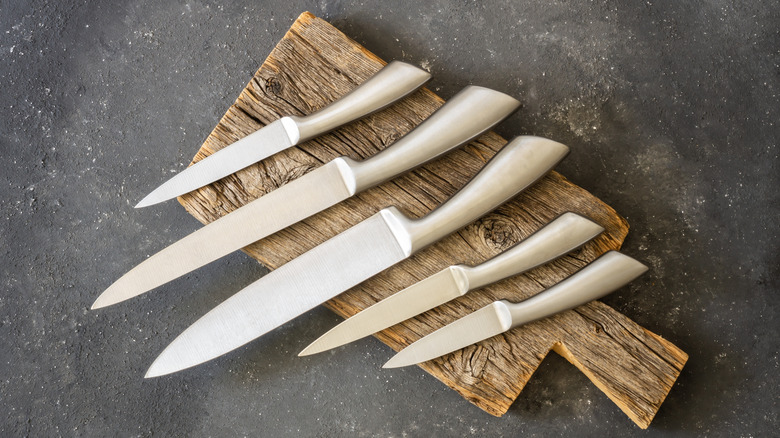
From storing knives in newspaper to avoiding scraping them on cutting boards, there are plenty of tips and tricks for preserving knives. But how you handle these essential kitchen tools when you're cleaning them can make all the difference in their longevity, according to Bill Joseph, founder of Frontier Blades. "The biggest mistake people make when cleaning their kitchen knives is leaving the knife in the sink to soak or burying under their dishes," Joseph said. "This 'sink soak' is highly detrimental and damaging for kitchen knives."
Joseph noted that high-end knives like high-carbon Damascus steel are particularly at risk because of their porous composition, leaving them prone to rust in mere minutes if allowed to remain wet. However, the condition of the blade isn't the only concern — leaving knives submerged in water can damage the handle, too. "Soaking causes the handle (usually made of wood) to swell," he said. "Thus, once they subsequently dry, they tend to shrink." Over time, this swelling and shrinking can result in cracked handles or a separation from the tang.
The key to ensuring your knives lead a long life in your kitchen is prompt hand-washing after using them, but never with steel wool or green scouring pads, which Joseph said can scratch the finish of the blade. Alternatively, he suggested laying a paper towel or kitchen towel moistened with hot water over the blade for only a minute before using a soft sponge to clean it. This "hot compress" method helps to loosen any food remnants, eliminating the need for more abrasive cleaning.
More ways to keep knives in good condition
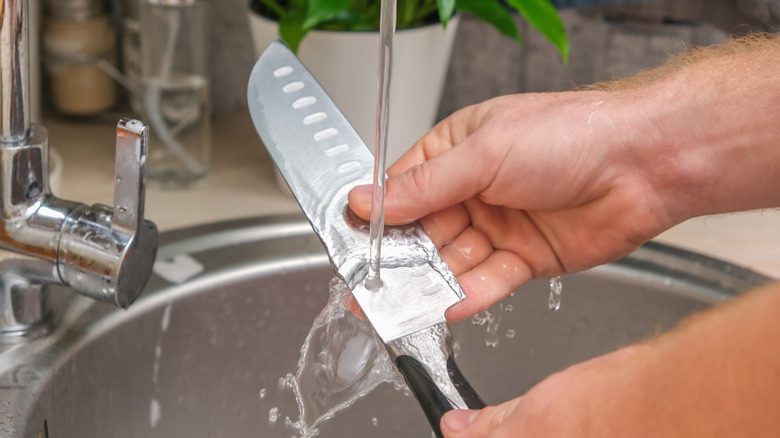
Using a dishwasher may be a great way to get wine glasses clean and using an aluminum tray can achieve the perfect sparkle on your silverware, but Bill Joseph offers the advice to keep your knives out of the convenient appliance. "We highly recommend avoiding using a dishwasher to clean your kitchen knives under any circumstances," he said. "We call the dishwasher the 'torture chamber' for knives."
Joseph explained that the reason dishwashers aren't ideal for knife-cleaning is manifold. He noted that the abrasiveness of detergents tends to dull knives' edges. Additionally, Joseph said that knives often get jostled around during the wash cycle. As they knock into other kitchenware, there's a high risk of the blade chipping. The heat and humidity can contribute to rusting, and the heat alone can loosen the glue in handles over time.
In addition to always hand-washing knives, there are a few other ways to keep them in tip-top shape. First, always dry knives immediately after washing. As Joseph described when discussing soaking, even a small amount of moisture can lead to the degradation of the handle and the blade. Then, once finished washing and drying, be sure to store them properly. While your kitchen drawer may be suitable for silverware and other kitchen tools, it should never be the home for your knives. Just like the dishwasher, knives stored loosely in drawers may move around, which can lead to breakage. Instead, opt for magnetic holders, sheaths, or knife blocks for safe storage.