

Lamb Or Mutton? The Key Factors That Make Them Unique
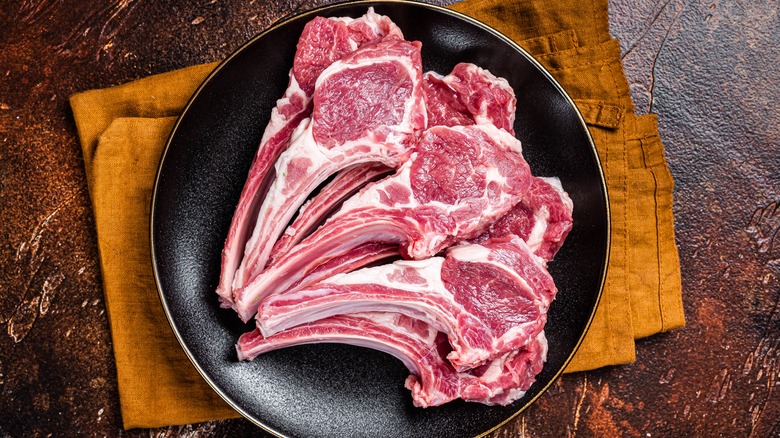
Although substantially less popular than beef or pork, sheep is a mouth-watering protein source backed by a rich culinary tradition. The animal is delineated into two meat types: lamb and mutton, each accompanied by unique qualities. Essentially, the two are distinguished by the animal's age, akin to the difference between veal and beef. Yet this straightforward marker comes with a breadth of intricacies, both in composition and in accompanying culinary traditions.
Meat sold as lamb is sourced from sheep one year of age or younger — down to as little as six weeks. On the other hand, mutton comes from animals about two to three years of age, oftentimes sourced from livestock raised for wool and milk. Furthermore, sheep consumed in the one- to two-year range (a rare category in the U.S.) is called hogget.
Lamb is far more common in regions like the U.S. and U.K., while mutton takes precedence in the Middle East, as well as Asian countries like Mongolia. Regional preference largely comes down to fat content. The older sheep used for mutton contain far more fat, which is also more densely textured, resulting in a bolder taste and tougher composition. Subsequently, these qualities translate to preferred dishes and accompanying flavors, making it important to tell the two meat types apart.
Lean lamb is mildly flavored and easy to cook
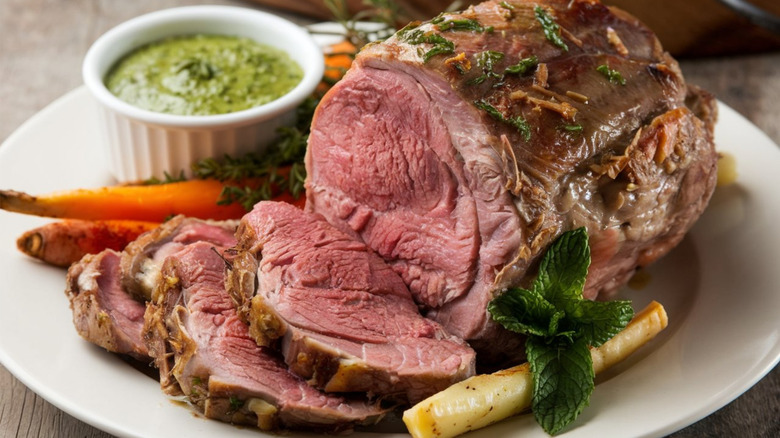
Employed lamb cuts cover a wide range, from an entire rack or leg to small chops or simply ground lamb. The level of gaminess differs depending on the part of the animal, with the lamb's feed also impacting the resulting flavor. Unlike mutton, lamb typically shines in high-heat preparations, its lean composition and less intense flavor necessitating less cooking.
For instance, a lamb leg is one of the best cuts to roast, while lamb chops are delicious seared or grilled. Lamb also mingles delectably with flavors when braised, especially with a fattier cut like the shoulder. Meanwhile, ground lamb turns out well when sauteed or simply shaped into meatballs. Cooks combine such varying techniques with further strategies to enhance the taste. Some may quickly marinate the meat to help prevent gaminess, or pair it with vibrant flavors, like in a rack of lamb with citrus gremolata.
These qualities make lamb more versatile than mutton, hence its more frequent appearance in grocery stores. The protein is a beloved part of cuisine in New Zealand and Australia — two major producers — as well as in the Mediterranean and the Middle East. You'll find the meat in traditional recipes like British roast lamb served with mint sauce, Greek kleftiko (roasted lamb with herbs and potatoes), and kawarma, a Levantine pairing of hummus topped with lamb.
Bold mutton enables robust cooking preparations
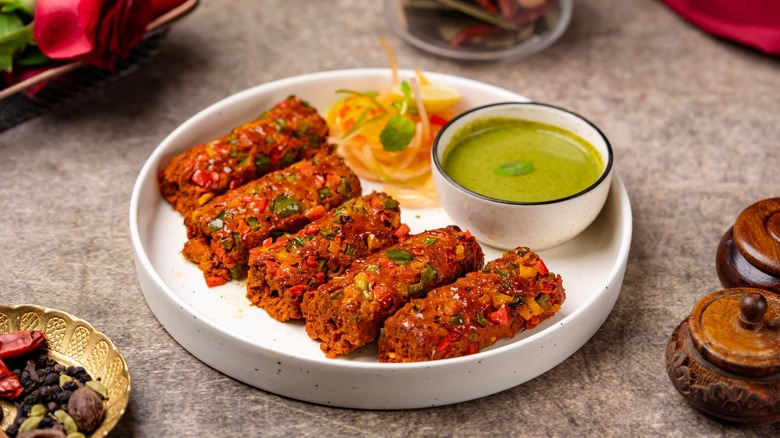
Conversely, mutton's dense fat content and strong, often gamey flavor make it better predisposed for slow-cooking styles. Most often, fat-laden cuts are matched with abundant aromatics, yielding richly flavored, tender meat. In South Asia, the meat is often slow-cooked with spices and then paired with rice, as in a Sindhi-style mutton biryani. Elsewhere in the region, the protein is marinated in yogurt and then slow-cooked into curries like spicy tomato mutton masala or fried onion-based korma. The meat can also be stewed alongside aromatics into a fragrant, liquid consistency.
Elsewhere, mutton can be barbecued, as in the Kentucky mutton style. When minced, the protein makes delicious, richly flavored kebabs. There are a few quick-cooking mutton cuts, like chops, which can be marinated and grilled, and minced mutton is often prepared into South Asian keema. Generally, though, mutton enables complex, richly flavored dishes in which lamb would lose its essence. This technique makes mutton popular in South Asian, South African, and Middle Eastern cuisines. With the right pairing of spice and time, it's a meat type that garners its own devoted fans.