

Don't Feel Intimidated To Make This Request At A Korean Bbq Restaurant
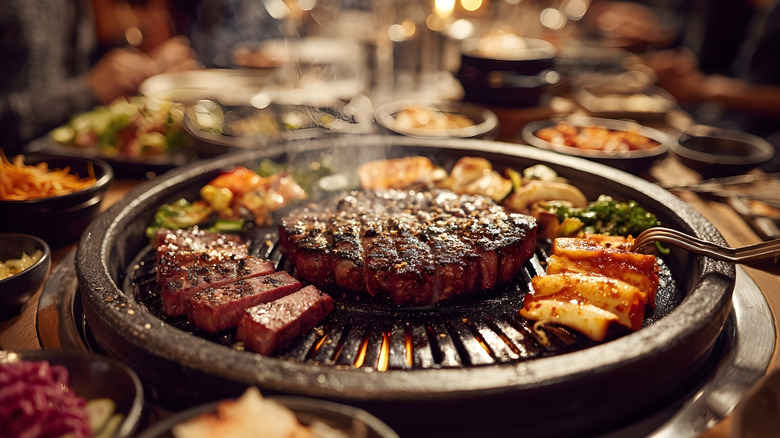
There are many differences between Korean and American barbecue, with even the restaurant experience itself a major distinction. Group dining is a cornerstone of the East Asian country's culture, and Koreans love to gather and grill their own meat table-side, accompanied by a sweeping selection of side dishes, drinks, and chatter. So enter one of these smoky, convivial eateries, and the setup can be equal parts animated and intimidating. As with other facets of South Korean dining, there's decorum to keep track of at such meat-centric restaurants — not to mention the fact you're expected to cook yourself. So to help navigate the process, Food Republic is fortunate for the guidance of Jessica Chan, a first-generation Korean-American food blogger at Jecca Chantilly.
According to Chan, it's totally normal to ask for help at a Korean barbecue restaurant. "First-timers should ask their server what the best way is to enjoy the meal," especially since restaurants offer varying specialties and add-ons. Once ordering is complete and a pile of proteins hits the table, it's also "acceptable to ask for help grilling the meat," explained Chan. Don't feel timid about requesting a particular level of doneness, and if you want to take over grilling yourself, that's not frowned upon either. Korean barbecue restaurants strive to make their flavorful cuts shine, so whether you go with bulgogi or kalbi, staff helping you cook is an anticipated part of the experience.
Note other nuances when enjoying Korean barbecue
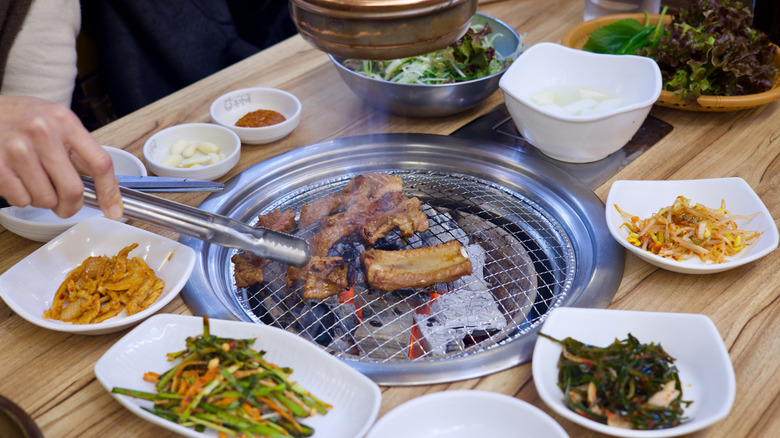
In addition to grilling support, Korean barbecue waitstaff can enhance the experience in many other ways. Feeling nervous that meat grease gets on your clothes? "Aprons are commonly available upon request," said Jessica Chan. Additionally, don't underplay the important role of side dishes in Korean cuisine. Just like with the meat, there's Korean barbecue etiquette you need for banchan: The side dishes are limitless, but "finish the banchan first before asking for more," Chan pointed out. Plus, it's acceptable to ask for refills of specific banchan, so no need to clear all plates before a re-up.
Furthermore, take note that Korean barbecue is often consumed in the form of a lettuce wrap called ssam. The dish follows a specific construction: "[A] piece of lettuce or perilla leaf, a piece of grilled meat, sliced garlic and/or peppers, and finally a dab of a spicy fermented soybean paste called 'ssam-jang,'" Chan outlined. So just like with the banchan, ask your waiter for a restock of components, or even specific assembly tips.
Drinking is a huge part of Korean culture, so beverage customs apply to barbecue, too. Chain says so-maek, a shot of soju mixed with beer, is a common tipple. It's expected that diners — rather than wait staff — pour the drinks, so don't be surprised when you "see diners mix beverages at the table." Per Korean custom, serve alcohol to others before yourself, and accept a glass with two hands. Note such intricacies, and you'll have a delicious and memorable barbecue experience.