

Why You Should Avoid Using Boiling Water To Unclog Your Kitchen Sink
We may receive a commission on purchases made from links.
Of the various plumbing areas in a home, the kitchen sink system is one of the most prone to developing blockages, due to its high-volume use and the types of things frequently poured into it. There are many things you shouldn't dispose of via your kitchen sink, even if you have a garbage disposal. Cooking oils are one substance that should never go down the drain, for instance, along with other kitchen waste like potato peelings and coffee grounds. Believe it or not, sometimes even water shouldn't go down your kitchen drain — not when it's at boiling temperature, at least.
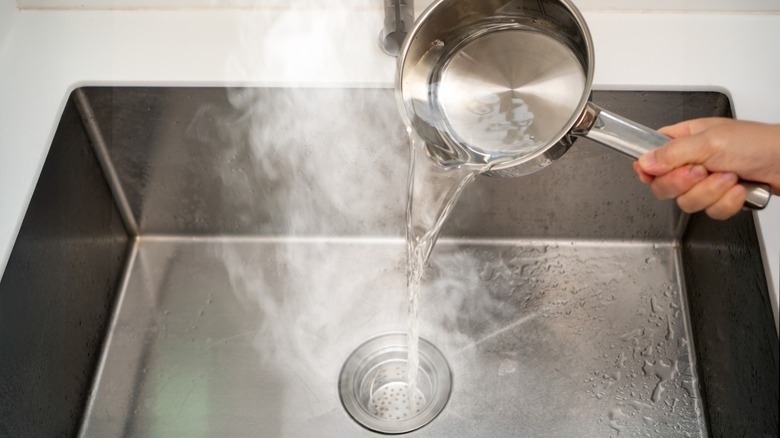
It's commonly held — and frequently passed on as advice — that pouring boiling water down a sink is an easy, chemical-free way to unplug a clogged drain. However, this oft-used tactic can actually harm your plumbing. While there's a small chance boiling water could break through a clog, depending on the type of obstruction in your pipes, it's more likely that the scalding-hot liquid will itself become stuck behind the blockage. If that happens, the standing water at boiling temperature can actually soften or outright melt the pipes and joints in your plumbing system if it has PVC components (which is one of the most common types of material used in home plumbing).
Water boils at 212 degrees Fahrenheit at sea level, and at lower temperatures in higher altitude settings. PVC can be damaged by temps as low as 140 degrees Fahrenheit, potentially softening or warping when subjected to those high temperatures. So, depending on the precise plumbing components in your system and the type of PVC they're constructed from, you could do serious damage with boiling water, especially if it remains stagnant behind a clog.
Better ways to unclog the kitchen sink
Even if your plumbing system has a higher temperature rating and can withstand high temperatures, pouring boiling water down the drain may simply loosen a blockage and force it to move further down your pipes. This will make removing the obstruction more difficult for a professional in the event you have to call one.
There are other home remedies you can try instead. While they may or may not be effective, these approaches at least won't cause any damage. A solution of equal parts white vinegar and baking soda, left to fizz in the drain for about 15 minutes, followed by hot (not boiling) water can sometimes unblock a clog. A mixture of salt, vinegar, and baking soda — poured in and left to sit for an hour — followed by hot water may also do the trick.
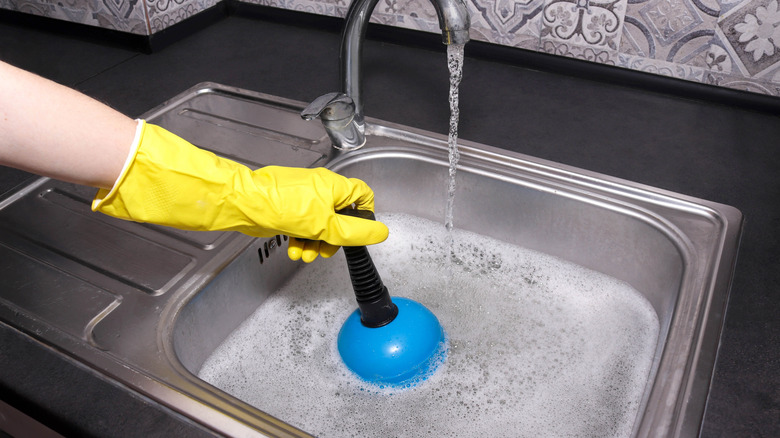
A plunger can sometimes be all you need to unstop the kitchen drain. You should use a cup plunger, not a flange plunger like you would use for a toilet. For a double sink, covering the drain on the opposite side will help form a stronger vacuum. When plunging a kitchen sink, be sure to use light force — don't plunge aggressively.
As with most things, though, the best remedy for clogged drains is prevention. Placing an inexpensive drain screen over your drain (this one from MR.SIGA should do the trick) goes a long way in keeping unwanted debris out of the pipes, such as eggshells and fibrous vegetable scraps that are particularly prone to creating clogs. It also prevents the common mishap of utensils going down the drain and into your disposal system.