
How Gordon Ramsay Prevents Watery Lasagna Every Time

If you're in a hurry and need dinner fast, a frozen lasagna is a solid shortcut. However, if you have the time, nothing beats the homemade stuff. To help you succeed, celebrity chefs like Gordon Ramsay are on hand with plenty of tips and tricks to prevent the ultimate culinary sin: watery lasagna. According to Ramsay, the key to avoiding a soggy mess is ensuring your sauce is "properly thickened" (via The Kitchn).
Ramsay recommends a two-pronged approach for a thicker, less watery lasagna. First, he browns some flour on a tray in the oven and then sprinkles it over the vegetables to help absorb some of the sauce's liquid. It is important that you toast the flour before using it in your lasagna, as the raw flavor needs to be cooked out for it to be palatable. You don't have to do this in the oven, either; the stovetop works just as well, and you can even toast it in the microwave.
Second, Ramsay — who is apparently Team Béchamel Sauce when it comes to his lasagna — also told The Kitchn that he adds "lots of cheese" to the mixture of butter, flour, and milk. This helps keep it thick and prevents it from splitting while baking, since split sauce can't be fixed once it's layered into a lasagna, as it typically requires whisking.
More tips for a thick lasagna
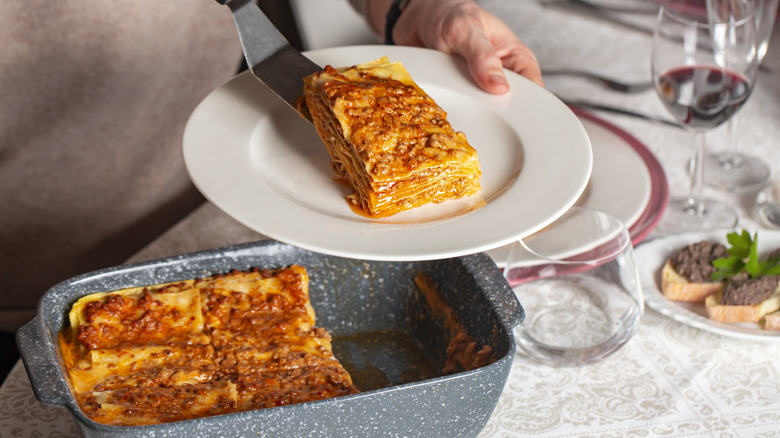
For the tastiest results, Gordon Ramsay told The Kitchn that he recommends avoiding fresh pasta and skipping the pre-boiling step for dry sheets. His reasoning is that dry sheets maintain a better texture once baked. They also help keep the lasagna "thick and tight" because their uncooked state allows them to absorb much more moisture. You don't have to use no-boil sheets, either (in fact, most pro chefs won't touch that lasagna shortcut). I have used regular lasagna sheets without pre-cooking them many times, and the dish has always come out perfectly — the key is to make sure every square inch of dry pasta is covered with sauce.
Finally, once your lasagna is done baking, try to resist the urge to cut into it immediately. When it's fresh out of the oven, everything is still extra wet and bubbling, but by allowing it time to cool, all those layers of pasta, sauce, and cheese will be able to set up, making the lasagna less soupy and soggy, as well as easier to cut through.