

The Common '50s Side That Is No Longer On Menus

Distinctly 1950s recipes range from a classic baked fish loaf to charming stuffed celery sticks. Yet few pack a unique textural composition quite like aspic – a once-popular food preparation now out of style in the U.S. Essentially a savory jelly, the dish is assembled using either pre-made gelatin or via a scratch-made bone-based stock, then flavored with various liquids, seasonings, or solid chunks of food.
In the American South, a classic variety of aspic is made with tomato juice. Nowadays, the food is a vintage side dish hardly anyone makes. Yet several decades back, such a dish often appeared at upscale buffets, on holiday tables, and in other festive contexts. With its bold, eye-catching red hue and unique tangy-spiced flavor, it has long occupied a memorable status.
Classically chilled into a bold red ring, tomato aspic packs in a variable (yet never bland) array of seasonings. In addition to the cornerstone red fruit, cooks mix in bold liquids like lemon juice, various vinegars, Worcestershire, and hot sauce, spiced with dry aromatics like cloves, bay leaves, celery seeds, and even brown sugar. Some craft a smooth composition, while others chop in proteins or vegetables for textural intrigue. It's like a Bloody Mary in solid form, captivating diners in both appearance and flavor.
Intrigue in tomato aspic peaked during the 1950s
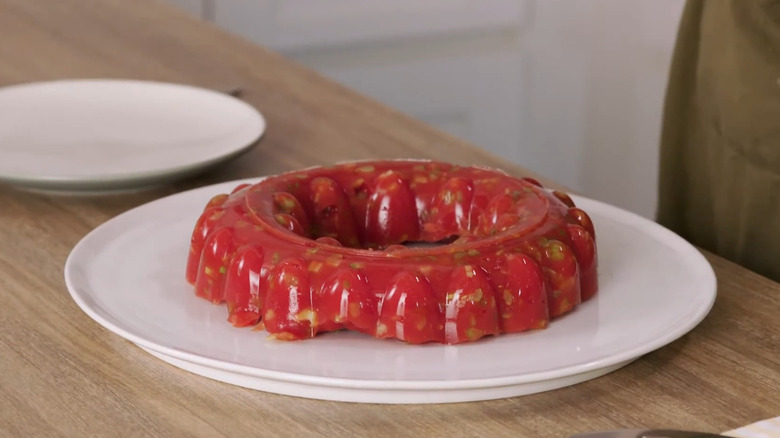
Aspics of varied compositions have long been around, with the earliest forms dating to 12th century Europe. Such a food style found its way to the U.S. in the late 19th century, with the 1897 invention of Jell-O spurring a proliferation of renditions. Tomato aspic emerged as a favorite among many savory-gelatin recipes, becoming a staple in cookbooks by the 1940s. The dish's popularity soared during WWII, as gelatin was a readily-available wartime ingredient.
Yet the tomato aspic's cultural peak was still to come: The food turned all the rage in the 1950s. During this decade, cooks loved transforming ready-made ingredients into striking table-side appetizers –- ideal criteria to place tomato aspic into the spotlight. The chilled food graced tables in attractive molded presentations, often spruced up with decorative greens or even a piped mayonnaise garnish. Furthermore, home cooks would often craft unique creative twists, chopping in seafood, crispy bites of cabbage, or unique spice medleys.
Much like no longer popular mint jelly, it was common to find tomato aspic at upscale restaurants or spiffy dinner parties. Yet over the next few decades, tastes changed, with a preference for fresh vegetable dishes over gelatinized ones. Other than a few regional pockets, tomato aspic has now largely disappeared from menus — although its unique appeal still circulates in memories.