

How Mid-Century Fridges Were Actually Smarter Than Today's Versions
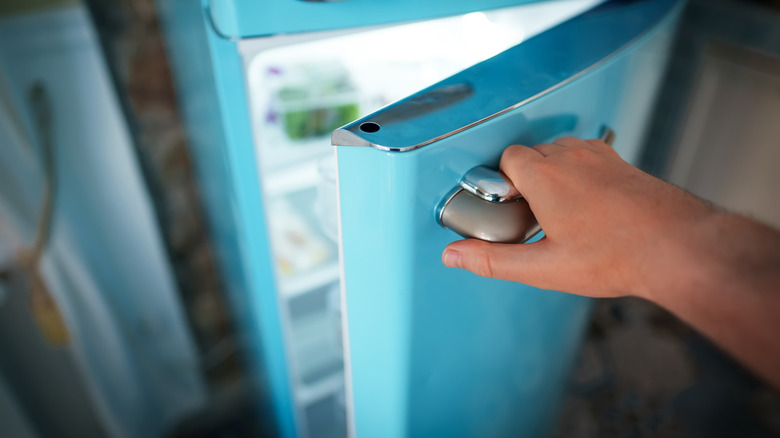
You might think the concept of refrigeration is relatively new in the grand history of human existence, but it's ancient. Hundreds of years ago, people all over the world used nature to keep things chilled — think rivers, ice transported from mountains, and snow insulated by mounds of hay. Then, in the 1800s, the groundwork for modern refrigeration was laid — and some might say it was perfected in the 1950s.
Sure, they didn't have real "smart" technology (in that they weren't, say, connected to the internet like so many of today's AI ovens), but these fridges were beasts — and we mean that in the best way. In the '30s, engineers introduced freezers to standard refrigerators, and within 10 years, fridges were relatively common across the country. Then: the '50s! Automatic ice makers and defrost features hit the scene, alongside a palette of custom colors. You had drawers — often removable — for just about everything, from softened (yes, softened, spreadable) butter to cheese to fresh produce.
You could swing out doors into shelves, making sorting (and cleaning) a breeze. Plus, they had humidity control. The shelves themselves would glide out, meaning you could reach the back just that much easier. No more mystery leftovers in Tupperware from eons ago left sitting as science experiments (how long does it take for half a slice of meatloaf to develop intelligence? The 1950s had no idea). Oh, yeah — your fridge probably had wheels, so you could simply roll it to move it. Need to clean the back? Easy. Want to mop a spill from underneath? No more pretending your floor stops at the fridge and living with the shame of knowing last month's Tuscan white bean soup is likely moldering under your refrigerator.
Some of the most popular refrigerator brands from the 1950s
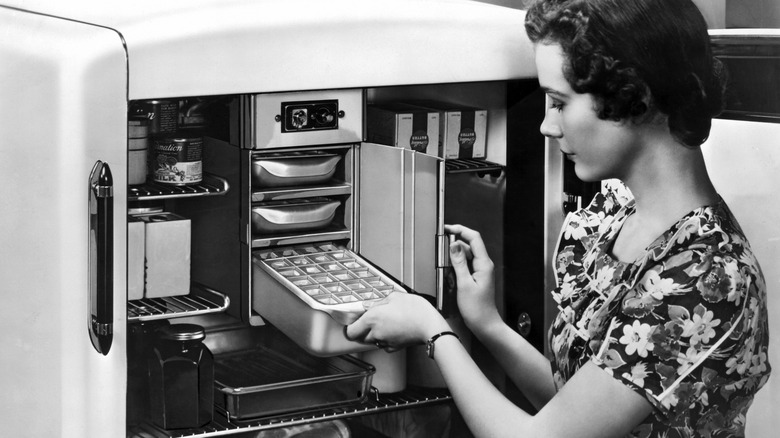
Now, some of the names that were popular back in the 1950s are still household names today, like Frigidaire and General Electric (GE). However, you might be less familiar with other giants like Philco, Westinghouse, and Kelvinator.
These last three had some big things in their favor. For example, Westinghouse was widely advertised by the popular cast of "I Love Lucy," where Lucille Ball and her then-husband, Desi Arnaz, showcased interesting features, like the fact that one Westinghouse model had a drawer in the middle with two compartments at different temperatures (one colder for meat, and slightly warmer for produce). Other Westinghouse models also had specific meat drawers designed to keep things fresh (sort of like how some modern refrigerators have cheese drawers).
For all us fridge-starers, Philco had a fantastic solution for not letting cold air escape as you gazed listlessly at your food, wondering what you had to eat: a clear internal door that allowed you to see inside while keeping things cold as you looked. Of course, Philco was also famous for its Conservador from the 1940s, an inner door with multiple shelves that offered even more storage.
Then there was Kelvinator's Foodarama. This monster of a fridge had two doors, a breakfast bar that held juice cartons and eggs, and shelves that could be pulled out. A door dedicated to ice cream? Yep. A banana drawer to keep your fruit cool, not cold? Why not, Kelvinator said.