

Why Rice Water Will Do Wonders For Your Tomato Plants
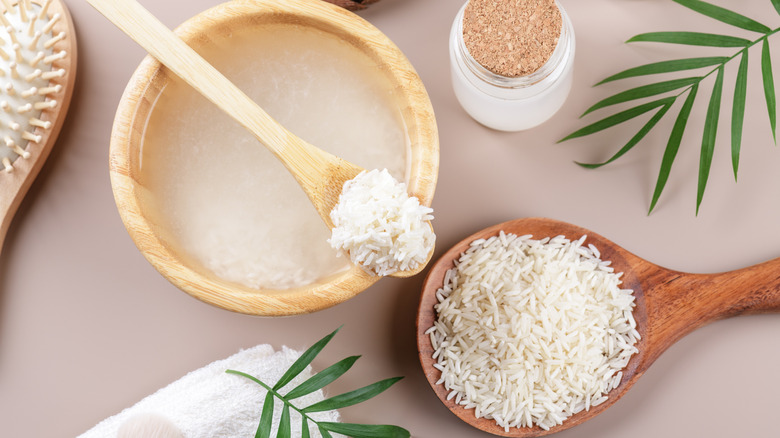
It's time to stop throwing out your rice water; it has a variety of known benefits, from Korean skincare to being used to thicken comforting soups and stews. Another pro of this versatile liquid is that it can help grow the biggest, most bountiful tomato plants. To find out more, Food Republic spoke with Steve Corcoran, CEO of Lawn Love.
According to Corcoran, rice water serves as a mild, natural fertilizer. While it contains trace amounts of N-P-K (nitrogen, phosphorus, and potassium), he noted that its nutrient profile also includes "iron, zinc, and calcium, as well as B vitamins, all of which also provide a health boost." However, while all these elements are beneficial to plants, rice water is by no means a concentrated source of N-P-K like a store-bought fertilizer, and its main benefit is actually from the starch — the by-product of the rice when it is washed. The starch is rich in carbohydrates that feed beneficial bacteria and fungi in the soil, which Corcoran noted also benefits the soil by "helping improve soil structure and allowing tomato plants to absorb nutrients better."
How to use rice water for your plants
Once you've strained your rice water, one of the best ways to boost its benefits is by fermenting it, which will introduce helpful probiotics into the mix. To do so, just let it sit in a jar at room temperature for a few days until a sour smell develops.
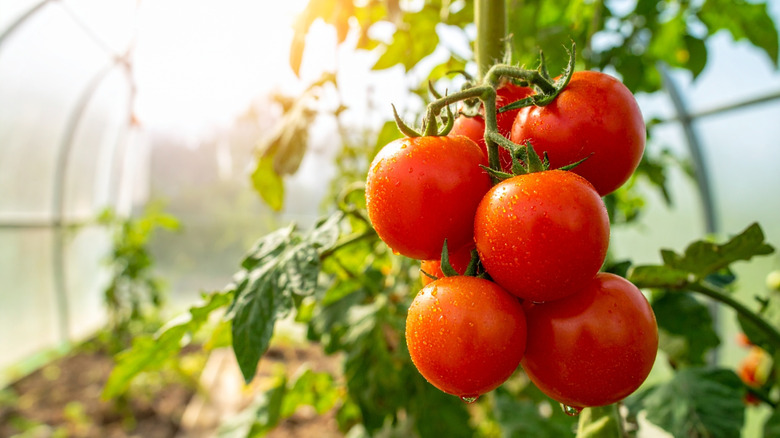
To introduce rice water to your tomato plants, simply use it like you would a liquid fertilizer, pouring it around the base of the plants. However, balance is key: overwatering can lead to root rot, so it is essential to dilute the rice water with plain water before application.
"The starchiness in particular can build up, which you don't want," Steve Corcoran explained. Because the starch in rice water feeds soil microbes, gardeners have noted that it can cause surface mold to thrive. While mulch is excellent for protecting tomato plants from soil-borne diseases, a heavy starch buildup can still attract pests that may damage or even kill growing plants.
While rice water in moderation is a great natural fertilizer, you shouldn't skip using regular water and proper plant care. For the best results, Corcoran recommends only using fermented rice water once every few weeks. Also, pairing it with a nutrient-dense fertilizer is known to maximize its variety of benefits.