

Michelle Obama Ate This Classic Sandwich For Breakfast Every Morning As A Kid
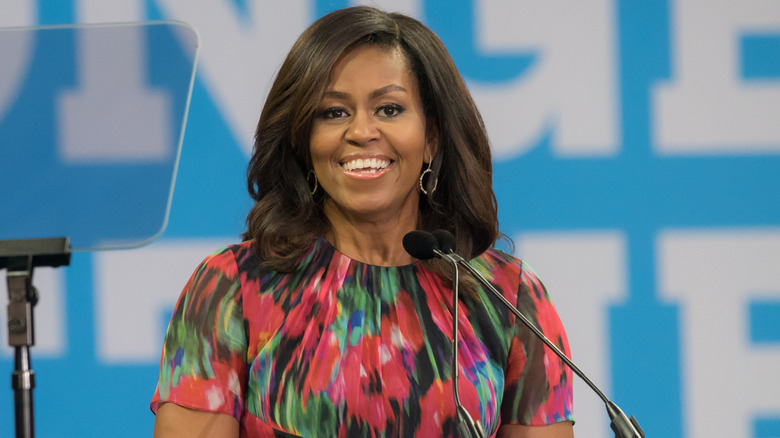
It isn't uncommon for children to be selective about what they eat, so when they want something they like over and over again, parents are often okay with letting them eat it. That was the case with Michelle Obama, who didn't like typical breakfast foods when she was growing up with her parents and older brother in Chicago. So for every day of her childhood, the future U.S. first lady started her day with a classic peanut butter and jelly sandwich.
Obama explained her former non-traditional wake-up meal on the "Your Mama's Kitchen" podcast: "We had big breakfasts because my brother, he's a growing athlete. ... Cereal, followed by scrambled or fried eggs, followed by lots of toast and bacon and link sausage. ... So breakfast was big. You know, I was at a time [when] my mother tried to force me to eat breakfast, but I was really stubborn. I didn't like bacon. I hated eggs." Instead of the usual breakfast suspects, she had a peanut butter and jelly sandwich. She said she was able to get her mother to agree to it by arguing that peanuts have protein and that people eat toasted bread with jelly in the morning all the time.
"And I literally ate peanut butter and jelly every morning for most of my life, literally until I was in college. That's when I sort of started liking eggs," she continued. She gave a particular shoutout to eggs Benedict. After she became first lady, her Let's Move signature campaign against childhood obesity included a focus on healthy eating. As part of that, she touted the importance of a nutritious breakfast, including a "Sesame Street" appearance where the muppet Grover swiped hers, which included oatmeal, yogurt, fruit salad, and low-fat milk (via YouTube).
All-American PB&J's history and nutrition
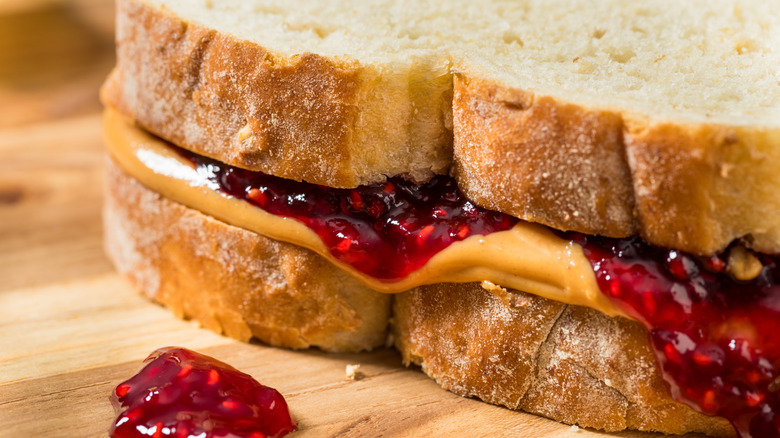
Americans' beloved peanut butter and jelly sandwich first appeared in a 1901 recipe in the Boston Cooking School Magazine of Culinary Science and Domestic Economics that featured an unusual flavor, calling for currant or crabapple jelly. It wasn't until a process was developed in the 1920s to make peanut butter creamier and less thick, however, that the nut spread began appearing in stores. Inexpensive sandwiches made with it became more popular during the Great Depression. But PB&Js really took off after World War II, when returning soldiers continued to eat the sandwiches they used to make with their rations of peanut butter, jelly, and sliced bread.
Michelle Obama was right in her youthful defense of her favorite breakfast's nutrition. It has 15 grams of protein, 13 grams of plant-based unsaturated fat, and five grams of fiber, according to the National Peanut Board. It can be made even more nutritious by using whole-grain bread, or swapping the jelly for sweet fruit like slices of banana or strawberry, or raspberries. More traditional breakfast foods can incorporate its flavors too, like peanut butter and jelly pancakes, oatmeal, muffins, and smoothies, or a sandwich with waffles starring in place of the bread.
As for Obama's relationship with PB&Js now, they've long since dropped from her meal rotation. She explained on the podcast that they hadn't kept anything with peanuts at home because their daughter Malia was allergic. But she also mused that she'd "kind of OD'ed" on them from all those years of daily morning sandwiches.