

What's The Difference Between Paneer And Tofu?
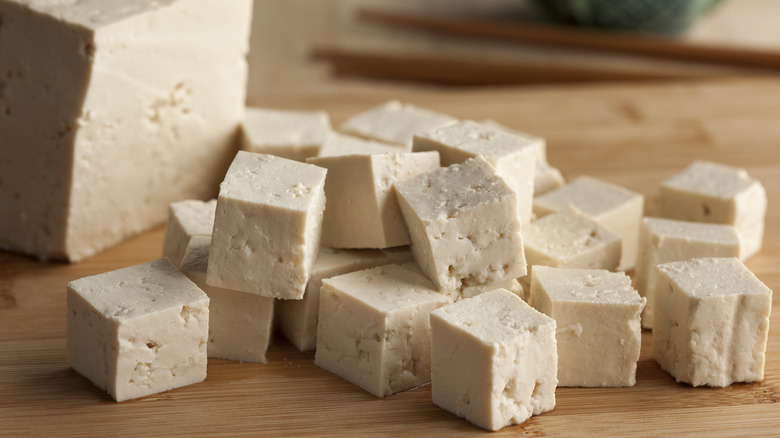
Asian cuisine boasts many delicious meatless protein sources, with paneer and tofu both popular modern favorites. Although hailing from different regions, the two foods share an intriguing number of parallels — and even some culinary interchangeability. They're often sold packaged in rectangular white blocks, with a similarly textured firm yet moist consistency. Even the flavor of the two shares reminiscent qualities: mild and lightly creamy. Both appear in traditional preparations and innovative new applications, with frequent appearances on vegetarian menus.
Yet despite such similarities, paneer and tofu are most prominently differentiated by their milk base. Paneer is composed of cow or buffalo milk, while tofu is crafted using soy milk, thereby making it a vegan foodstuff. This composition results in notable nutritional differences, with paneer containing more fat and protein per serving.
Furthermore, while paneer is essentially a regional type of soft cheese, tofu is a much more expansive food category. The soybean product is crafted into many varieties, ranging from fresh, pudding-like consistencies to fermented forms, as well as dried types. Tofu can be flavored with spices or even smoked prior to sale, and while the block shape is most common, it's not the food's only format. So while paneer and tofu may appear similar on the grocery store shelf, there are abundant distinctions to unpack.
Paneer is a dairy cheese common in Indian cuisine

Paneer hails from South Asia, with origins tracing back to the 16th century. The food blends both Persian and European cheese-making influences, making it a unique regional variant of young and firm cheeses like halloumi, queso panela, and feta.
The preparation process is analogous to other cheeses, employing cow or buffalo milk. Crafting paneer begins by separating curds from whey using an acid like lemon juice. The curds are then rinsed, drained, and compressed into a block shape. Paneer comes in fewer varieties than tofu, with buffalo milk-based recipes lending a firmer texture than cow-based ones. Traditionally, this cheese is not seasoned during preparation, since the structure of the finished paneer effectively absorbs added flavors.
Such characteristics make the cheese incredibly versatile. Paneer can be marinated with spices and then cooked in an oven, yielding paneer tikka. It's also a frequent vessel for enjoying curries, appearing in dishes like palak paneer — made with spinach — or matar paneer, crafted with a spicy tomato sauce. Plus, the cheese makes for tasty stir-fries like pan-fried fresh paneer and spinach, and it appears in traditional Indian desserts like chhena poda — where the cheese is baked alongside aromatics and nuts. Also like tofu, the food is now reimagined outside Indian contexts, forming delicious grilled cheese sandwiches (make one with garlic naan!) or serving as a filling in burritos.
Tofu is a popular soybean based vegan product
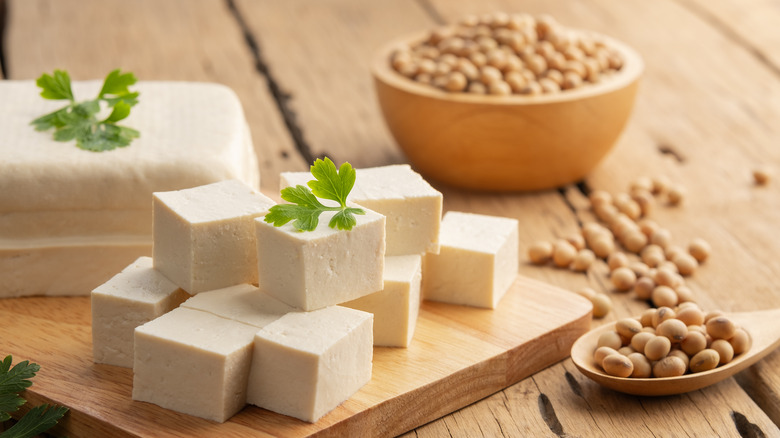
Tofu is one of the most widespread vegan products, with a storied culinary history tracing back millenia. The food is made from soybeans, using a production process similar to paneer. A salt or acid coagulant is added to soy milk, separating the liquid into soy-based curds and whey. The curds are then molded into solid blocks and optionally pressed, with the amount of liquid and protein determining the tofu type. Varieties like soft silken tofu differ due to the lack of pressing, while extra-firm tofu is the most rigid. The preparation process also yields adjacent products like tofu skin, a protein sheet that forms atop hot soy milk.
Tofu appears in many Asian cuisines, with notable usage in Chinese, Japanese, and Korean cooking. Combined with its wide-ranging composition, this results in a breadth of tasty recipes. Applications range from stir-fries to braised dishes, boiled preparations in soup, fully deep-fried recipes, and even cold tofu salads. Much like paneer, tofu can be the centerpiece of a dish or play a supplementary role — such as when folded into a fish stew or used in dishes like mapo tofu with crispy sausage or minced meat. You'll also find tofu in desserts, whether in a traditional cold pudding called douhua or as a repurposed modern ingredient in baking. With its malleability and delicious composition, it's no surprise that tofu is so globally widespread.