

This Fruit Looks Like A Tomato But Actually Tastes Like Honey
We may receive a commission on purchases made from links.
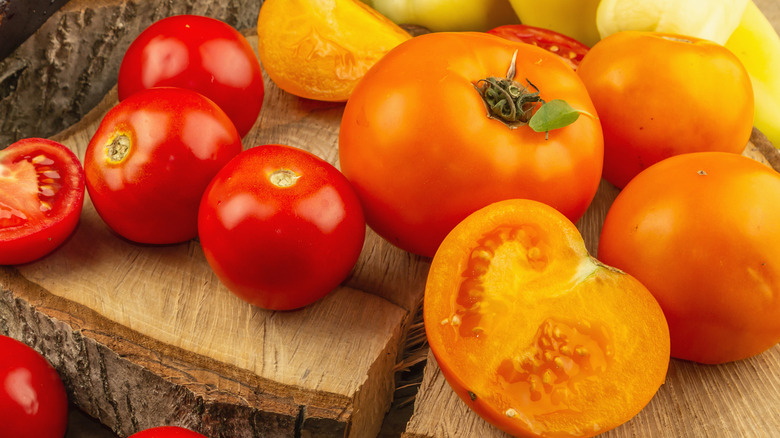
If you've never had a persimmon before, biting into one for the first time can be an ... interesting experience, to say the least — particularly if no one tells you what to expect. For starters, there are several different varieties of the tasty fruit, but if you happen to pick up a Fuyu at the grocery store, you might mistake it for a tomato. After all, it has a rich, orange hue reminiscent of a Sunray or Golden Jubilee, and it's squat with a flat bottom, just like a typical beefsteak.
However, while you generally want your ripe tomatoes to have a little give, non-astringent persimmon varieties, such as Fuyu, are able to be enjoyed when they're still pretty firm — they might even remind you of an apple, as they can be quite crisp. And, gosh, are they delicious. Sweet and honey-like, their profile only becomes more gloriously syrupy as they further mature (and they'll soften up a bit, too).
The best part is that Fuyu are incredibly versatile. You can eat them raw as a snack (no need to peel the skin — though some folks prefer to), dice 'em up and serve them in a grain bowl (they'd also be great in a grilled peach and arugula salad), layer slices in a fruity oatmeal parfait with Chantilly cream, or experiment with your own culinary creations. They'll fit right in with any recipe that could use a note of sugary lusciousness.
Wait for persimmons to ripen to unlock their sweet, honeyed flavor
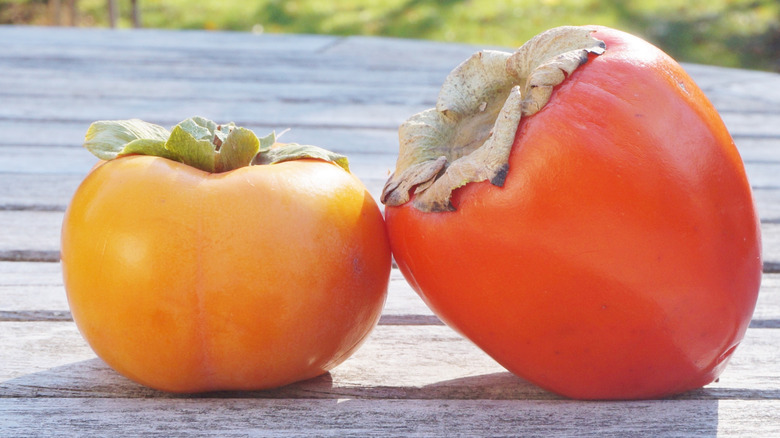
You know how in the classic children's book, "If You Give A Mouse A Cookie," the mouse gets a taste of the sweet stuff and keeps coming back for more? Yeah. A similar craving might happen once you taste a Fuyu persimmon — you're likely gonna want to try other varieties. While they don't all look the same, most persimmons are rich, sweet, and nectar-like ... as long as they're ripe.
Hachiya persimmons, for example, are more oblong and often a deeper orange than their Fuyu counterparts. While you can technically eat them raw (most people avoid the skin), you must wait for them to ripen — and to an exceptionally soft state, at that — before digging in. They should feel like pudding encased in a peel, and yield so much when gently squeezed that you worry they'll burst. Otherwise, they're inedible; their tannic profile will have you puckering your lips. When ripe, however, Hachiya are juicy and sweet, and make excellent candidates for jam and purees used in baked goods. They also taste heavenly when paired with some simple vanilla ice cream.
Another astringent variety is the Saijo. Its name literally translates to "the very best one" in Japanese, so you know this small, egg-shaped fruit — which features hints of mango and brown sugar — is the epitome of sweet decadence. Wait for it to feel soft and custardy before eating its interior with a spoon or blending it into a smoothie for a dose of honeyed sunshine.