

Here's Why The Property Brothers Prefer Induction Stoves Over Gas

Jonathan and Drew Scott, the twin-brother duo known as the Property Brothers, have spent decades building, remodeling, and selling homes. The pair is all about promoting practices and products they feel are best for consumers, and they've collectively become a trusted voice in the real estate and interior design worlds. They're not shy about steering folks clear of trendy kitchen features they aren't fans of or design choices homeowners may ultimately come to regret, like kitchen countertops they think you should avoid. These days, another kitchen feature has come up on the brothers' radar as something homeowners should avoid: gas stoves.
The Scott brothers are very vocal about the health dangers of cooking with gas appliances, though they strive to avoid fearmongering or consumer-shaming language. Instead, they focus on promoting alternatives. In the case of gas stoves, the option the HGTV stars advocate as being superior is induction cooking.
Gas stoves have been found to emit unsafe levels of nitrogen dioxide, carbon monoxide, and other pollutants, and, according to a 2024 study for Science Advances, gas stove emissions have been linked to childhood asthma and COPD, – while a 2023 study for Environmental Science & Technology shows they emit high levels of benzene, which may be linked to cancers like leukemia. Induction ranges, on the other hand, don't use fossil fuels to cook food and thus do not produce such emissions.
Induction stoves operate by creating heat inside cookware, rather than on a stove's surface. Beneath the cooktop, copper wiring conducts electricity that generates a magnetic field, which prompts corresponding electrical activity in pots and pans that contain ferromagnetic metal. In other words, food isn't cooked by heat transferring from a cooktop to a pan — the heat is generated entirely within the cookware itself, turning pots and pans into their own heat sources. Less energy is used in the process, and no fossil fuels are present to emit pollutants into a home.
Shifting priorities for the Property Brothers
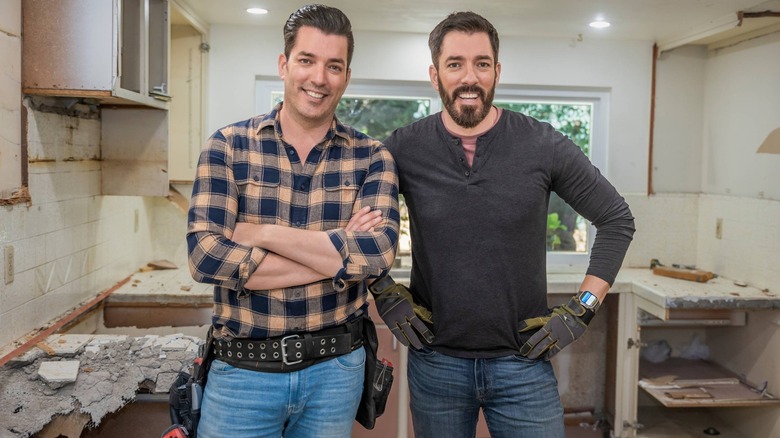
In recent years, the Property Brothers' priorities have expanded to include a focus on eco-friendly building and design practices and educating homeowners about implementing sustainable practices in their houses. Nowadays, the Scott brothers are big on showcasing green-friendly home design products on their award-winning television shows and via their other endeavors, and sustainability-boosting appliances like induction stoves feature big.
In addition to being a safer choice from a health standpoint, induction stoves get a green light from the Property Brothers because they're a more sustainable choice than traditional kitchen stoves — induction cooktops are more energy efficient and leave a smaller carbon footprint.
They further offer features that ultimately make cooking more efficient. Induction stoves are able to cook food faster and facilitate more precise temperature control, and they also distribute heat more evenly. They virtually eliminate the all-too-common problem of food overcooking from lingering heat once a stove has been turned off, as the transfer of heat ends instantly once an induction stove is shut down.
The notion that gas stoves make food taste better is a myth, but the efficiency of an induction stove may actually result in a superior final result when you're cooking. This is due to the more even heat distribution and greater overall control, helping cooks avoid common mishaps like burnt food and reduced flavor from add-ins (like oils or herbs) cooking out before a dish is done. Faster cook times can also result in greater retention of nutrients and flavor in food. It all adds up to a culinary option the famous real estate twins are eager to endorse.
Other ways induction stoves are potentially a safer choice
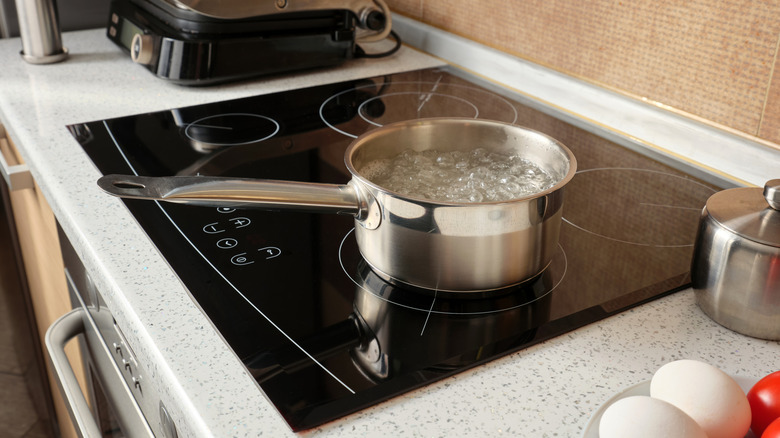
In addition to reducing potentially hazardous pollutants associated with fossil fuel-based cooking, induction stoves can be a safer choice in other ways. While in use, an induction stove's cooktop stays cool to the touch. This means children and pets — and anyone else — can't sustain burns from a recently used cooktop that hasn't cooled down yet. There is also zero risk of anything that drops onto the stove's surface, like a dishtowel, catching fire from an open flame, as it can with a gas range.
When your home has a gas range, there's an inherent risk of pets and children accidentally turning it on, and even adults do so by bumping into front-facing knobs. This can result in dangerous carbon monoxide exposure or house fires. There have been instances of dogs setting their owners' homes on fire by turning on gas stoves in their attempts to get food left on the cooktop or by just curiously sniffing the cooking surface.
With an induction stove, in contrast, if someone accidentally turns on the stove (or a curious child does it intentionally), nothing will happen if the special cookware isn't on the burner, and the surface won't become hot regardless. Some induction appliances even have automatic features that will reduce the heat or turn off the stove altogether if it detects unsafe temperature levels. So, if a pan is on the stove and the burner is activated, the sensors would detect any unsafe increases in temperature if the pan began approaching the point of actually catching fire.