

How To Grow A Vegetable Garden Right In Your Kitchen With An Egg Carton
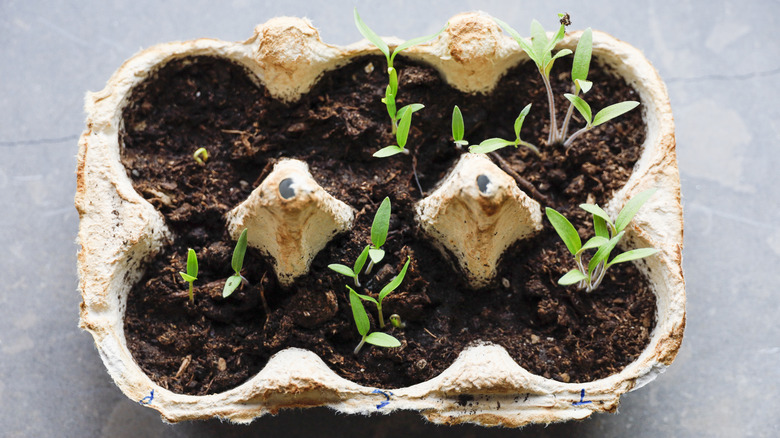
While you can turn just about anything from a coffee tin to a teapot into an indoor planter, there's an even easier, more versatile way. Michael Clarke, landscape architect, horticulturist, and founder of Yardwork, told Food Republic that all you need is an egg carton, a bit of soil, and a few seeds to get started.
"Choose a paper/cardboard carton since they're biodegradable, breathable, and can be planted directly into the soil later," Clarke explained. "Poke 1–2 holes in the bottom of each cup using a pencil or scissors for drainage and fill the cartons with a seed-starting mix rather than garden soil, since it's lightweight, sterile, and well-draining." Egg cartons are even cheaper than gardening trays and are great for planting either in pots or in the ground. All you have to do is tear off the individual sections and stick them in the ground. Plus, you can cut them into your desired shape ahead of time to fit into just about any space.
Clarke noted that once you have your seeds settled, it's just a matter of getting the soil a bit moist, and then lightly misting it every day or using the water bucket hack to keep the soil at the right water level. Provided you keep your seeds no lower than 65 degrees Fahrenheit and give them six to eight hours of sunlight, you can either prep seeds for a sturdier long-term home or even keep them growing right on your windowsill.
What plants grow best in egg cartons
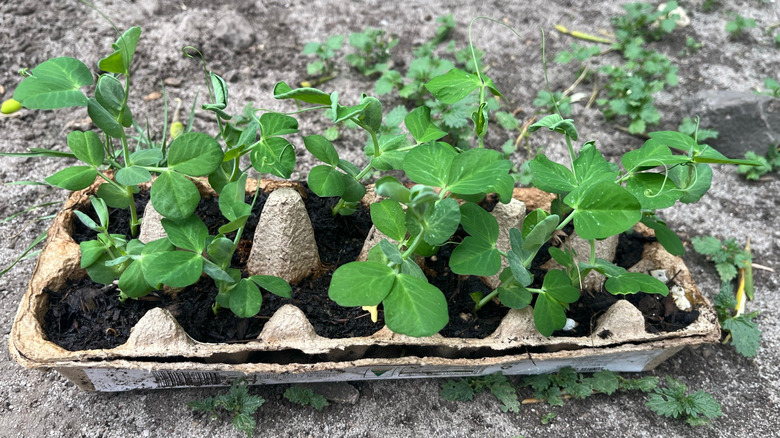
While you can start any plant in an egg carton, every seed's needs change as it grows. Most herbs and vegetables need transplanting after two to four weeks, but Michael Clarke assured us that there are a handful of options that you can harvest directly from an egg carton.
"Microgreens[,] like radish, broccoli, and mustard, thrive in shallow soil and can be harvested fully in 10–20 days, making them the simplest and most productive choice for egg cartons," Clarke said. You'll want to keep the carton's lid closed while the seeds germinate to provide a more moist environment. You'll also want to keep your cartons on a tea towel to soak up any excess water. Once your greens sprout leaves and their roots start to push through the bottom, feel free to harvest or transplant them at your leisure.
"Some vegetables can be started in egg cartons but must be transplanted when seedlings grow their first true leaves," Clarke told us. "These include leafy greens like lettuce, spinach[,] kale, radishes[,] and green onions/scallions." Even the easiest garden vegetable to grow doesn't do well in an egg carton for more than a week or two. Just about anything that produces fruit or needs more than an inch or two of space benefits from starting in a carton, but you'll need to have a home for it later on.