

The Old-School Appetizer That Was Common At Tiki Bars In The '50s
Perhaps one of the most iconic retro appetizers to emerge from mid-century America's fascination with all things Polynesian was rumaki. Traditionally, this delicious hors d'oeuvre was made from chicken livers and water chestnuts wrapped in bacon, then marinated in a sweet-savory soy and ginger sauce. Often served bite-sized and on a skewer, this dish embodies tiki-cuisine: bold, Asian-American fusion with dramatic presentation.
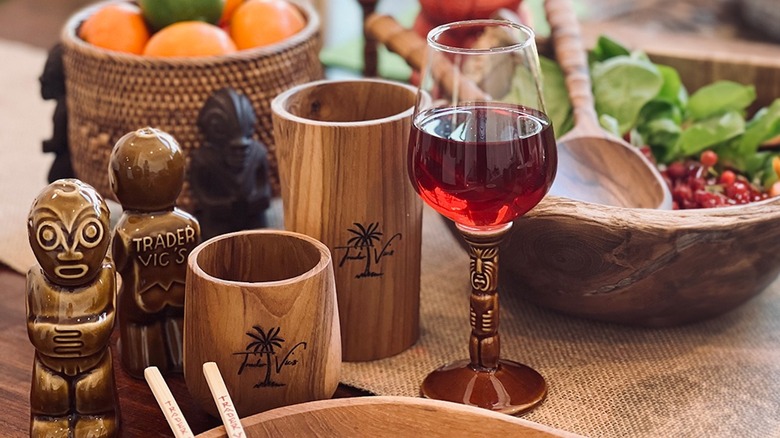
Rumaki's origins can be traced back to America's first tiki bar, Don The Beachcomber, in the 1940s, but many credit its widespread popularity to Trader Vic's. Founded by Victor Bergeron in the 1930s, the chain featured an eclectic mix of kitschy tropical décor, pan-Asian cuisine, and bright, tropical cocktails, and was one of the most influential pioneers of Polynesian-themed dining in the United States. Trader Vic's is also often credited with the creation of the mai tai, which remains one of the most iconic (and tasty) cocktails of that era.
While rumaki is closely associated with Trader Vic's, its popularity spread far beyond the chain, which is how it made our list of old-school appetizers popular in the 1950s. The dish evokes nostalgia for grandmas making it back in the '60s and '70s, and while it's much less common today, you can still find it being served at select local spots. Although Trader Vic's still exists today — with its strongest presence in the Middle East — online sleuthing of its Dubai menu turned up no mention of rumaki. This suggests that, like most other aspects of tiki culture, the dish has unfortunately been left behind in the '50s.
How to make rumaki
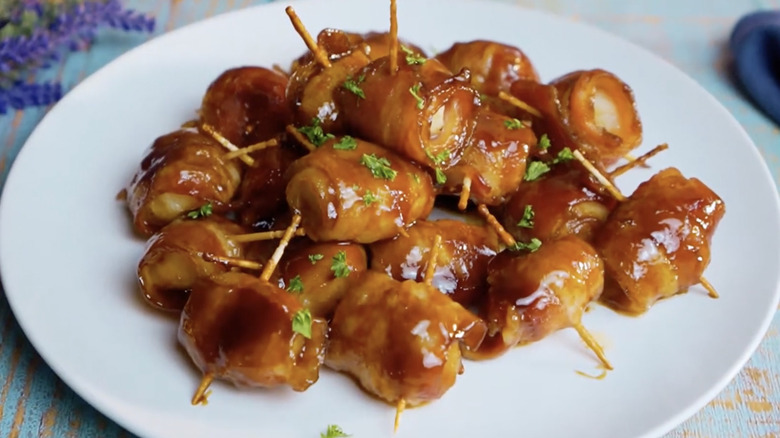
When making rumaki at home, you can take it in several directions. You could go the classic 1950s route, or if you're feeling inventive, give it a modern twist to suit contemporary tastes. The traditional recipe is pretty simple: wrap chicken liver and water chestnuts in bacon. The part where you'll find plenty of variation is in the marinade. Most recipes call for a sweet soy sauce base, often paired with ginger, while others incorporate spicier or more savory elements like cayenne or Worcestershire sauce. For the best results, aim for a marinade that strikes a balance between sweet and savory — reminiscent of a teriyaki-inspired flavor.
The main ingredient in rumaki — chicken livers — has become divisive, largely due to shifting eating habits over time. Following World War II, organ meats like liver and other offal gradually fell out of fashion, despite being highly nutritious and rich in flavor. Today, pâté is perhaps the most recognizable way people consume chicken livers. But if they don't suit your taste, you could substitute small cubes of chicken thigh or breast — or even use marinated tofu, mushrooms, or pineapple.
For vegetarians, rumaki can understandably feel quite meat-heavy. But don't let that put you off — there are plenty of ways to create a plant-based version while still capturing the dish's signature flavors. Using the same marinade, you could wrap vegan bacon or thinly sliced roasted vegetables around your chosen substitute, and add a touch of liquid smoke to replicate those bacon-like notes. And most importantly, don't forget to finish your homemade rumaki with the little cocktail sticks!