
10 Taco-Making Mistakes You Might Be Making (And How To Fix Them)
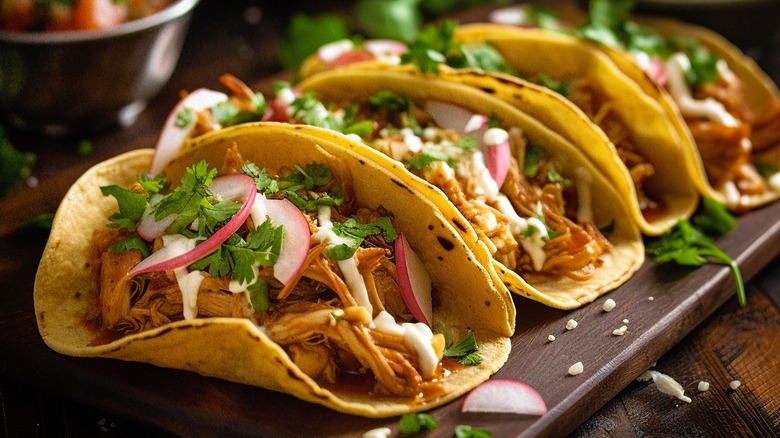
Tacos seem simple enough. Grab a tortilla, slap some meat and toppings on it, and call it dinner. But with that attitude you're shortchanging yourself. A whole world of taco deliciousness exists beyond the basics, and a few simple tips and tricks can take your tacos from "yeah, that was food" to "holy moly, I need to make these again tomorrow."
We talked to two experts who know tacos inside and out. Nayomie Mendoza is owner of Cuernavaca's Grill, which was founded by her parents. It's become a staple in the L.A. culinary scene and is known for fresh, authentic Mexican dishes. Oscar Diaz is a two-time James Beard semifinalist and executive chef at North Carolina-based eateries Little Bull and Aaktun. His "Pocho" cuisine blends his family's Mexican heritage, his Chicago roots, his experiences working in several Michelin-starred kitchens out West, and the flavors of the South.
Mendoza and Diaz shared with us the most common mistakes they see people make when it comes to tacos, along with simple fixes that will transform your taco game. We'll cover everything from how to avoid your tortilla getting soggy to choosing the best salsa to prepare with your protein. Let's get into it.
The salsa is competing with the protein
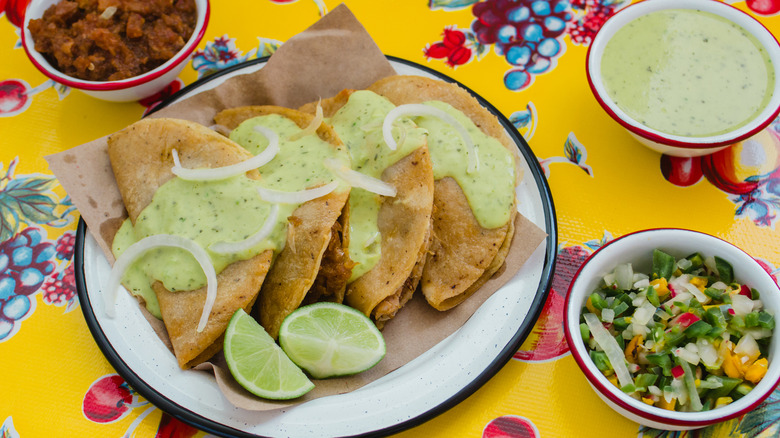
It's tempting to reach for your favorite salsa every time you make tacos, but if you're not thinking about how it pairs with your protein, you might be doing your taco a disservice. Nayomie Mendoza wants you to understand just how important salsa is to the overall taco experience. "Salsa is not just a topping," she explains. "It is a flavor guide, and it can honestly make or break a taco." Not only does the right salsa add heat or tang, it also balances the protein, brings out its best qualities, and ties all the elements together.
So how do you choose the right salsa? Mendoza offers a simple guide: "If the filling is rich, you want a salsa that brings brightness and acidity. If the protein is lighter, you can go bolder with heat or smokiness." Looking for ideas to put this into action? You could try this recipe of tacos al pastor and pineapple salsa, where slow-braised pork is paired with a tangy tequila-soaked pineapple salsa. Or, have a go at some catfish tacos with smoky chipotle slaw.
Oscar Diaz agrees that balance is everything. He reminds us that quantity matters just as much as the type of salsa you choose. "With the salsa, you want enough that you can taste all the ingredients and not drown them out." The goal is for every component of your taco to shine. The protein should be the star; the tortilla should provide structure and flavor; and the salsa should enhance both without taking over the show.
Overlooking the importance of the tortilla
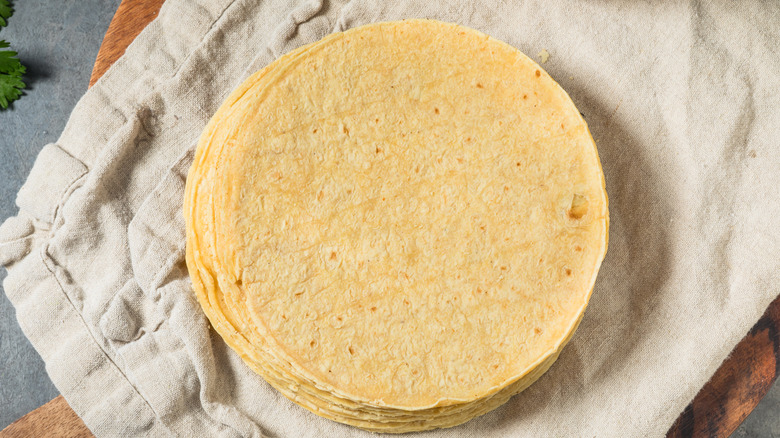
Nayomie Mendoza tells us that people don't realize how much the tortilla holds the flavor of the whole dish. Using tortillas that are too processed or have no real flavor takes away from the richness that Mexican food is known for. She's noticed that some people choose tortillas for convenience rather than for the actual dish they're making. "Even with store-bought, there are tortillas that feel closer to our culture because they have better texture, aroma, and that warm corn or flour flavor we grew up with," she explains.
So how do you fix this? Well for starters you should be making your own. But if that isn't doable there are a few things to consider. First, seek out the good stuff. Your best bet is a local tortilleria where the tortillas are made fresh. That's obviously not feasible for everyone, so the second choice would be to go to a Mexican market. If you're buying from a grocery store, read the ingredient label. If you see a long list of additives and preservatives put it back on the shelf. Not only is it going to taste like cardboard, it's going to be a lot less healthy for you.
Next, think about what you're making. Are you going for corn or flour tortillas? Corn tortillas are the traditional choice for most regions of Mexico. They have a lovely nutty and distinct taste and are more healthy for you, containing less calories but more nutrients than their flour counterpart, such as fiber and magnesium. Flour tortillas have a much milder taste and are more sturdy. But whichever one you go for, just choose a good quality one. As Mendoza puts it, "When you choose a tortilla that has that depth, the whole taco changes. You can taste the tradition in every bite."
Using jarred salsa
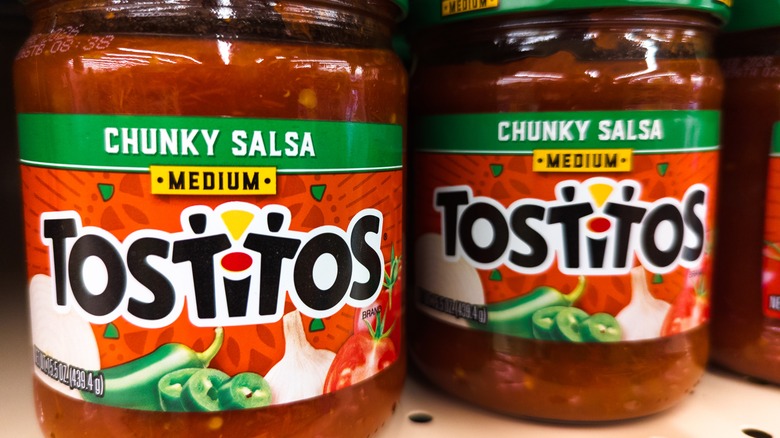
Sure, jarred salsa is convenient, and some are better than others, but in no way can it compete with the vibrant, bright flavors of fresh salsa made with quality ingredients. Nayomie Mendoza agrees. "Salsa should taste fresh," she says. "Even the simplest ingredients like roasted tomatoes, chiles, garlic, and cilantro can create something beautiful when treated with care. You do not need a complicated recipe. You just need good ingredients and the intention behind the flavor."
You have absolutely no excuse when making your own is so easy. A super simple one to start off with is a salsa verde cruda (cruda meaning raw), which involves just blending up tomatillos, serrano chillies, onion, garlic and salt. Want something more smoky? Try a charred tomato salsa with skillet charred tomatoes blended with roasted garlic and onion, fresh cilantro, lime, and a dash of honey.
It also stores well. Fresh salsa will last around three to seven days in the fridge. Having a container of fresh salsa on hand is the perfect excuse to make tacos every night of the week or to experiment with new recipes. Try spooning it over grain bowls, scrambled eggs, grilled chicken, or even roasted vegetables. Once you have fresh salsa in your kitchen, you'll find yourself reaching for it constantly.
Scrimping on spice
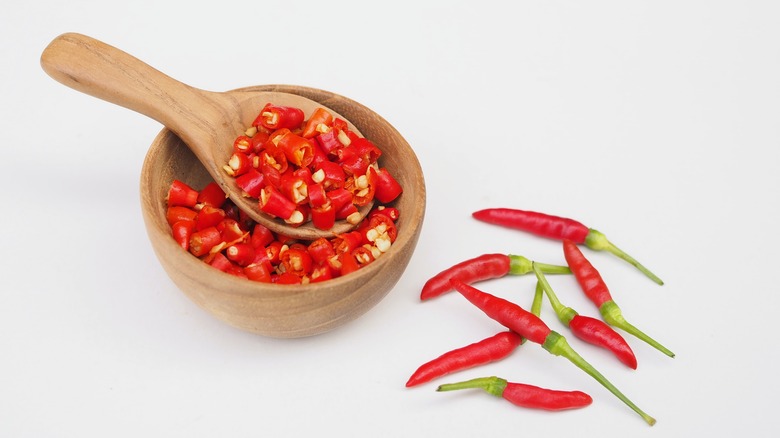
Making tacos without any heat? You need to sit down and think about your life choices. We're joking, but also not really. Even if you're spice-sensitive, you have to add a subtle little kick of something mild. Otherwise your taco is going to be really flat and one-dimensional.
Nayomie Mendoza is clear about the role of heat in a great taco. "Whether it is spicy or mild, you always want a little kick," she explains. "That touch of heat is part of the soul of a good salsa. It wakes up the flavors and brings life to the taco." You don't need to blow your head off with extreme heat. Just a little kick makes a difference. It awakens your palate and makes every other flavor more pronounced. Without it, tacos can taste dull, no matter how good the other ingredients are.
Oscar Diaz takes this principle even further. He's not afraid of heat, and he encourages you to embrace it too. "I myself am a double salsa kind of guy," Diaz says. "I like a good tomatillo salsa and a spicy red salsa combo! I like to bring the heat, and I wanna sniffle a little too!" Follow Diaz's approach and play around with multiple salsas. Combining different types of heat builds layers of flavor that make your tacos way more interesting.
Overcrowding the taco
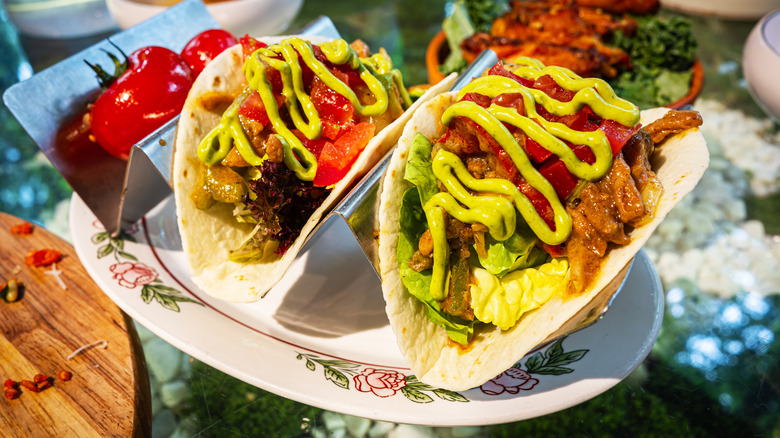
Nayomie Mendoza tells us how to assemble a taco properly. "Start with a good tortilla, add the protein so it sits comfortably and is not overcrowded, then add your salsa so it blends right into the warmth of the meat," she explains. "Finish with your fresh touches like cilantro, onions, or lime. A taco should feel like one complete bite, where you taste the tortilla, the protein, and the salsa all together."
Oscar Diaz agrees that we shouldn't be too heavy handed with the meat filling. "I think that the balance in a taco is to not overstuff it with meat," he says. "You want a good balance between tortilla and protein so that they play well together." Diaz also emphasizes that toppings should enhance the taco, not overwhelm it. "As for the cilantro and onion, you want to put enough so that there is a crunch that adds a little texture and freshness."
When everything is piled on, the flavors blur together into an indistinct mush. You miss the nuance of the seasoned protein, the earthy corn flavor of the tortilla, and the bright punch of the salsa. So remember to practice restraint. Use a moderate portion of protein — just enough to cover the center of the tortilla without spilling over the edges. Add your salsa thoughtfully. Sprinkle your onion and cilantro lightly so they add texture and freshness without taking over. And finally, a squeeze of lime should be the final touch.
Unbalanced flavors
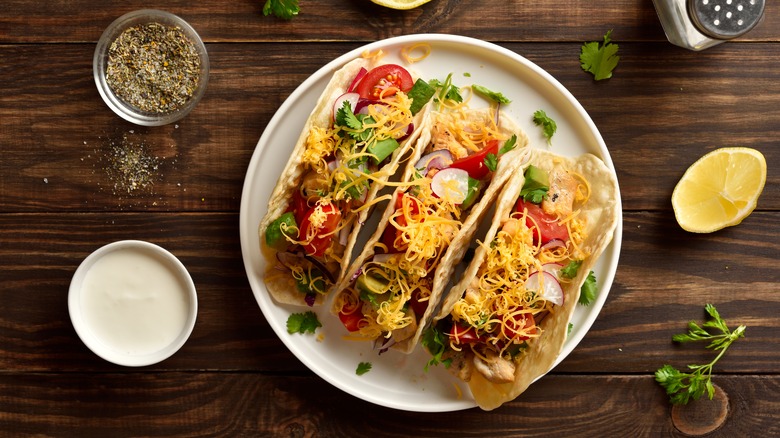
Nayomie Mendoza gives us her take on authentic Mexican cuisine. "Our flavors are meant to complement each other, not overpower each other," she says. "Another thing I notice is people adding too many ingredients at once," she says. "Yes, Mexican food is layered, but it is still very harmonious. You want the protein, the tortilla, and the salsa to come together in one bite. When the filling is overloaded or has too many competing flavors, it loses its authentic rhythm, what our food is really known for."
So how do you achieve that rhythm? Start by understanding that each element of your taco has a specific role. Mendoza breaks it down simply: "The filling should bring warmth and depth. The salsa should bring brightness, acidity, or heat. The fresh toppings like cilantro and onion should add a little crunch and freshness. When all three speak together, the taco feels complete."
Mendoza also emphasizes that balance means no single element should dominate. "You never want one element to overpower the others," she says. "The protein should shine, the tortilla should support it, and the toppings should lift everything without getting in the way." If your salsa is so spicy that you can't taste the meat, the balance is off. If you've added so much sour cream that it coats your mouth and dulls everything else, the balance is off. Every ingredient should enhance the others, not drown them out.
Not letting the protein rest
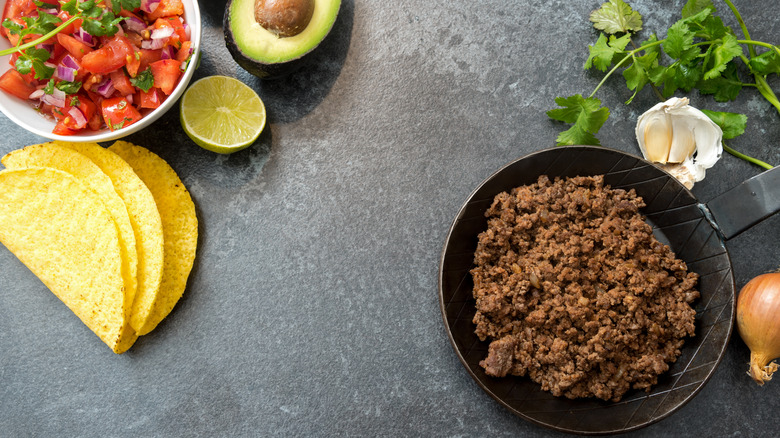
We get it. Your meat is done, your tortillas are ready, and you just want to eat. The temptation to go straight from pan to taco is strong. But if you skip letting your protein rest, you're setting yourself up for a soggy, falling-apart mess.
Nayomie Mendoza has a tip that most people overlook. "Let the protein rest for a moment before you assemble the taco," she says. "When the meat settles, the juices stay inside instead of spilling into the tortilla, and the flavor becomes deeper and richer." This is a small step that's easy to over look but difference it makes is huge.
How long should you rest it? A few minutes is plenty. You're not resting a whole brisket here. Just give your meat a moment to chill out before you start building tacos. Use that time to crack open a beer, pour some wine, or get your toppings organized. The wait is worth it.
Not warming your tortilla
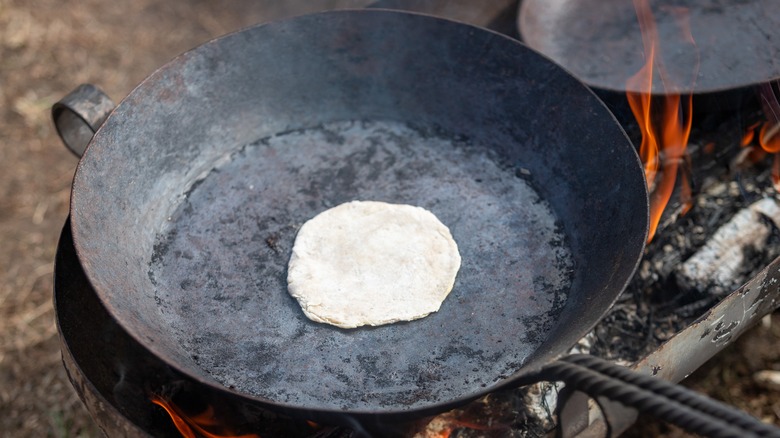
"A mistake that comes to mind is using a flour tortilla straight out of the package," Oscar Diaz says, "like not warming it up or anything." You've spent all that time browning your meat and creating the perfect salsa, and now you're going to wrap it up in something stiff and flavorless? A tortilla that's somehow both rubbery and cardboard-like at the same time? Come on.
Nayomie Mendoza explains why we shouldn't skip this essential step. "Warm your tortilla in a way that brings it back to life," she says. "Even with store-bought tortillas, a quick heat on a comal or skillet makes the aroma come through and completely changes the texture. It wakes everything up."
Diaz lets us in on a fantastic tip of his. "Use beef fat or lard to dip the corn tortillas in, then heat them," he says. "It not only makes the tortillas hold up better, but the flavor imparted is on point." And please do it on the comal, skillet or pan. You can't get that slight char in a microwave or oven. The tortilla needs direct contact with the hot surface to develop those toasted spots that bring out the flavor.
Using mediocre ingrediants
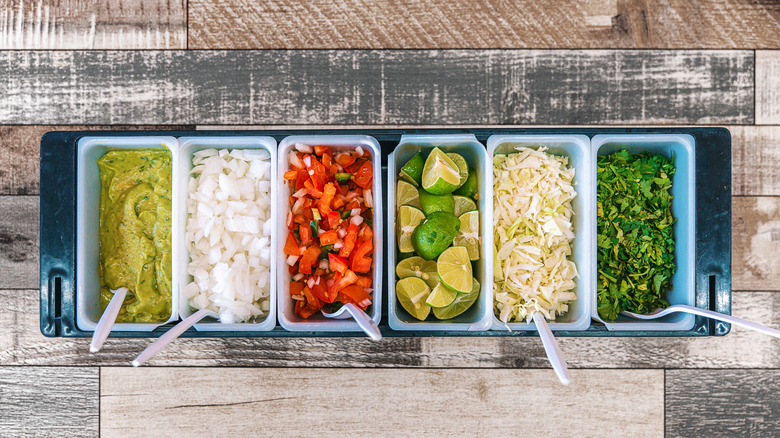
Oscar Diaz is pretty laid back about how people make tacos. He believes tacos are for everyone, and there's no wrong way to enjoy them. But even he has his limits. "The yellow and white cheese mix and bottled or canned hot sauce are kind of a bummer," he says. He's right, that pre-shredded cheese blend tastes like plastic, and canned hot sauce tastes like vinegar. You can do a lot better.
For Nayomie Mendoza, being mindful about ingredients is the most important thing when it comes to tacos. "You just need good ingredients and the intention behind the flavor," she says. You don't need to hunt down rare heirloom chiles or import cheese from Oaxaca, but a put a little effort into getting some quality ingredients.
Improving your ingredients doesn't have to break the bank. Swap that cheese blend for real cheese. Queso fresco and cotija are traditional and affordable. If you want melty cheese, get a block of good quality cheddar or Monterey Jack and shred it yourself. It takes two minutes and tastes about a thousand times better. Use homemade salsa; fresh tortillas instead of the ones that last six months on the shelf; and fresh cilantro and limes. Quality ingredients show respect for the dish, respect for the people eating it, and respect for the tradition behind it.
Rushing the process
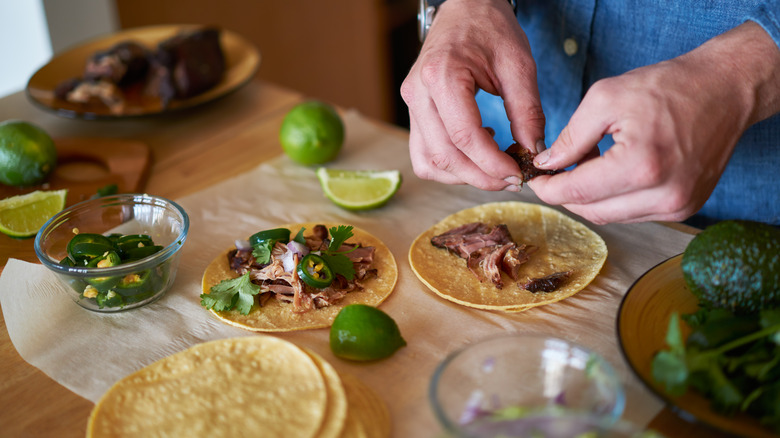
"One mistake I see sometimes is people rushing the process. Even the simplest taco deserves a moment of intention," Nayomie Mendoza explains. "Think of the taco stands with the longest lines. That is never accidental. There is intention behind everything they do, from the way the meat is seasoned to the salsa they choose to the tortilla they warm. People can taste when something is made with care."
Mendoza goes deeper here. "Another thing is forgetting that tacos tell a story," she says. "They carry tradition, memory, and culture in every bite. When people treat them like just another quick meal, they miss the beauty of it. A good taco is not complicated, but it is thoughtful. That intention always shows in the final flavor."
People notice when food is made with intention. They might not be able to put their finger on exactly what's different, but they know. The flavors are more cohesive. The textures work together. Everything just tastes better.