

This Classic Italian Cheese Has A Whopping Amount Of Protein

Let's face it, it doesn't get much better than cheese; it's the perfect filling for quesadillas, topping for pizza, and tastes divine paired with wine and crackers. On top of that, a lesser-known perk of cheese is that it packs plenty of protein, which is an essential amino acid used for building and repairing tissue and creating new cells, hormones, and enzymes. While the most obvious sources of protein are meats like steak or chicken breast, cheese holds its own too — though the amount of protein can significantly vary depending on the type. In particular, hard cheeses, cottage cheese, Swiss, and cheddar are super high in protein, with one of the most protein-dense cheeses being an Italian classic: parmesan.
According to the USDA, per 100 grams of grated parmesan there are a whopping 30 grams of protein. The aging and cheesemaking process removes most of the water, which reduces the moisture content and concentrates the milk proteins, such as casein, into a hard, dry cheese, giving it an exceptionally robust protein profile. Other examples of popular protein-loaded hard cheeses are Pecorino Romano and Gruyère. So whether purchased in a block or pre-grated, all three are great meat-free alternatives for those looking to hit their protein goals.
How to incorporate parmesan for protein
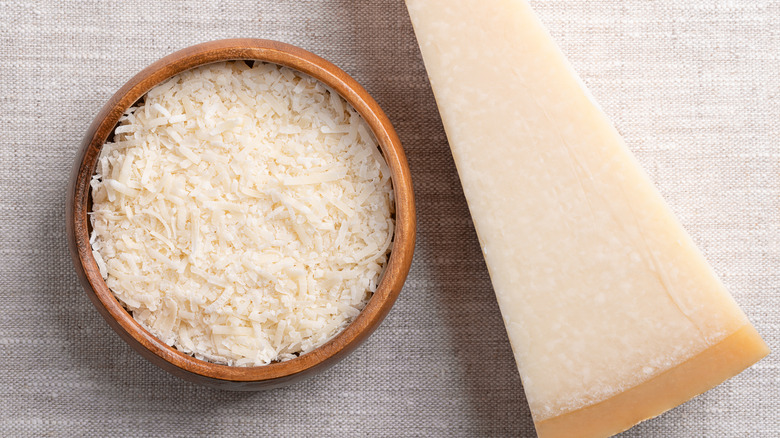
Parmesan is undeniably packed with protein, but this doesn't immediately make its delivery protein-efficient. Typically, it's grated on top of pasta dishes like penne alla vodka (or "Disco Pasta") to add an umami kick, or the hard parmesan rind is added to sauces to infuse them with a deep, creamy flavor. But small sprinkles of parm aren't going to significantly boost the protein of your dish, so you'll have to get a little creative.
One of the best uses for parmesan is as part of a breading. Whether you're making a golden chicken escalope or some breaded tofu slabs, adding the grated cheese into the breading mix is a great way to add salty flavors and deliver a crispier texture. Similarly, parmesan is also a great addition to homemade meatballs, which adds depth as well as binds the ingredients together. Just mix ground beef with breadcrumbs, extra parm, and eggs and you'll have yourself a creative, high-protein twist on Italian-style meatballs.
Another way to seamlessly incorporate extra parmesan into your dishes is by whipping up a pesto. The sauce already incorporates the cheese, so by adding more you'll only be making it ultra-savory. You can store homemade pesto for up to two weeks in the refrigerator. It's incredibly versatile and can be used as a protein enhancer in bright pastas, sandwich spreads (pesto can elevate a grilled cheese), or green salad dressings.