

Marinate Fish In A Splash Of This Zesty Beverage For A Major Flavor Boost (It's Backed By Science)
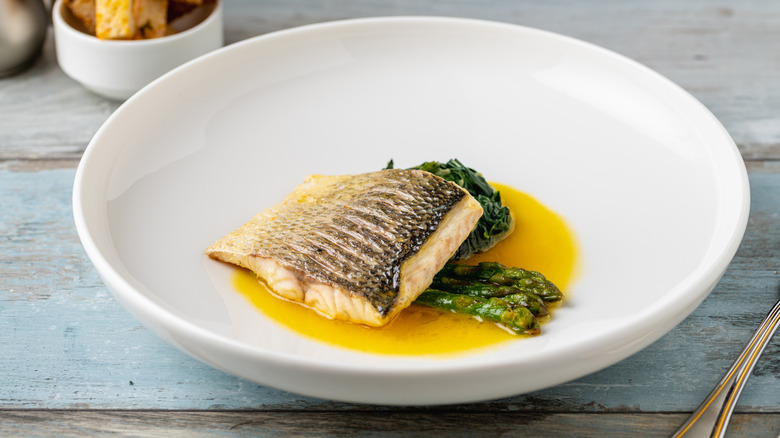
Fish is already packed with flavor, but whether you're roasting, grilling, or pan-frying, a quick marinade can take it from a simple weeknight dinner to a restaurant-worthy masterpiece. There are countless different directions you can take, but if you're looking to boost both the flavor and texture, all you've gotta do is pick up a carton of orange juice. And yes, it's backed by science. In a 2026 study by Foods, a little citrus juice boosted the taste of sea bass. It improved the texture and changed the chemical composition, so the fish tasted better.
There are already plenty of reasons why it's a good idea to marinate your fish. For starters, it helps keep the fish moist, and any added oil helps the delicate skin from sticking to the pan. Also, many popular fish possess a clean flavor that acts as a blank canvas for a marinade to work its magic. It's no secret that acid is the backbone of a good marinade. Like lemon and lime juice, orange juice contains citric acid, and its low pH starts breaking down the proteins on the surface of the fish, giving it a softer, more delicate texture.
But while orange juice certainly helps tenderize fish, tender can quickly turn to mushy. Another hazard of pairing fish with acid is that acid alone can effectively "cook" it without any heat; it causes the proteins to denature — this is exactly how a ceviche works. To hit the sweet spot of flavor and texture, fish only needs around 15 to 30 minutes to marinate at most. Firm fish like swordfish or oily ones like salmon generally tolerate acidic marinades better than lean, flaky ones like cod or sea bass, but it's still essential to keep the length of the marinade short compared to beef, pork, or poultry.
How to pair orange juice and fish together
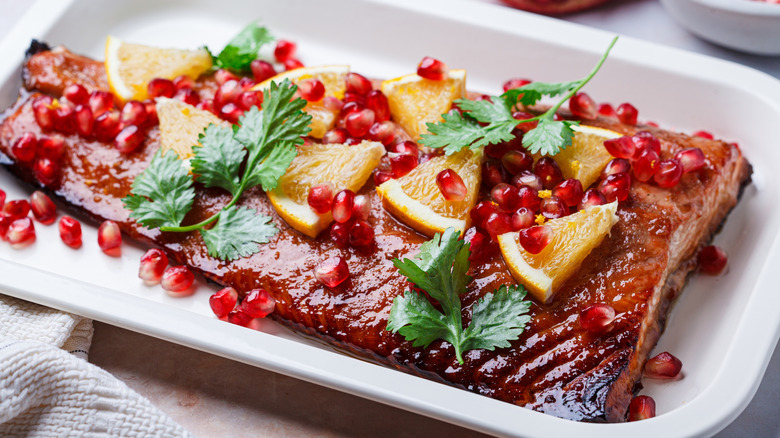
Orange juice is a potent source of citric acid, so it's best to temper it before pairing it with fish. Beyond turning the flesh to mush, a high amount of undiluted acid can leave your fish tasting harshly sour. The general rule of thumb is one part acid for every three parts fat — here, extra-virgin olive oil works wonders to keep the fish tasting delicious while simultaneously bringing even more nutrients into the mix. With that in mind, however, if you plan to use a high-heat cooking method, it's best to swap extra-virgin olive oil with high smoke-point alternatives.
Another popular way to dilute orange juice is to pair it with soy sauce, which softens the acidity while the sweet citrus and salty umami balance each other perfectly. You can further boost this Asian-inspired marinade with freshly grated ginger and minced garlic for a fragrant kick, plus a drizzle of toasted sesame oil for nutty depth.
Orange juice is also high in natural sugars, which isn't too compatible with methods like grilling or pan-searing. Sugars caramelize quickly, which adds delicious flavor in moderation, but they can just as easily burn, ruining your fish, scorching your pan, and likely setting off the smoke alarm in the process too. Rather than rinsing off your marinade entirely, give the fish a light pat to dab away the excess and cook over medium heat; a watchful eye will also help keep you out of trouble. It also pays to reach for fresh-squeezed orange juice over cartons sold as concentrate, which typically pack far more sugar and make scorching a much more realistic risk.