

Scrambled Eggs Are 10x Creamier & Fluffier With One Boxed Ingredient
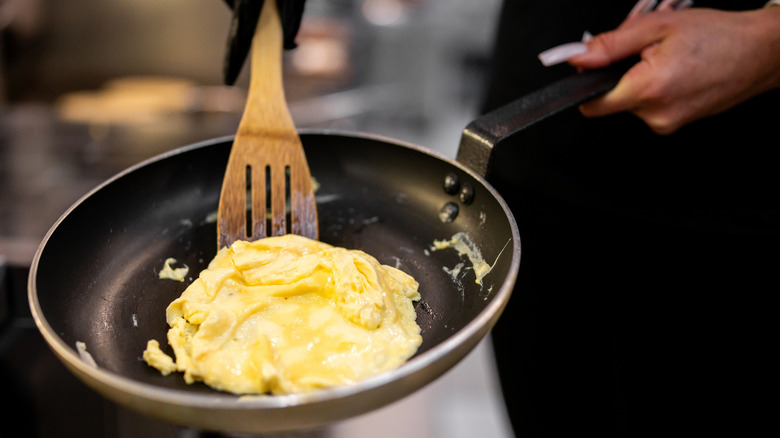
When you make scrambled eggs, heat, fat content, and your tools often require you to make them either fluffy or creamy, not both. However, powdered milk is an interesting ingredient that can help you bridge the divide, imparting richness and enabling volume, provided you use it correctly.
Powdered milk can be made from skim milk, whole milk, and buttermilk, but all are essentially just milk with the water taken out and converted into a soluble powder. When it comes to water versus milk in scrambled eggs, folks typically favor the latter because it gives a bit of extra richness and flavor. However, it can weigh them down, unlike water, which steams to fluff up the little curds into pillowy softness. While you can't just add water to powdered milk eggs because you'd just be using milk with extra steps, it does allow you to employ other tricks that increase the fluffiness, giving you the best of both worlds.
Powdered milk is also quite a bit more convenient since it's shelf-stable and dry. Not only does it last longer than regular milk, but you can also toast the powder to lend a nutty savoriness similar to browned butter. Roughly a tablespoon per three eggs is all you need to achieve serious flavor. Nonfat varieties typically last much longer than full-fat varieties, which tend to have a shorter shelf life. Freezing it can extend its shelf life even further, so it's an easy and cheap ingredient to keep on hand.
Tips for making scrambled eggs creamy and fluffy with powdered milk
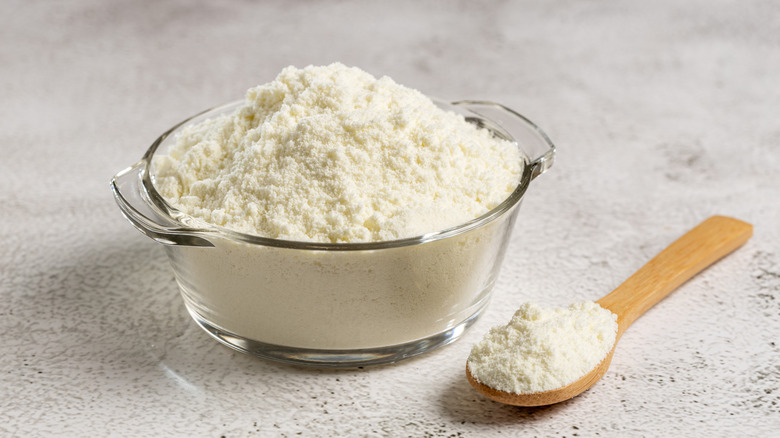
The biggest benefit of powdered versus liquid milk is that it adds milk solids without adding extra water. This helps you avoid making your scrambled eggs too watery and is why, while it may not make them fluffy on its own, it also won't inhibit other tricks. There's no shortage of expert tips for restaurant-quality eggs, but try focusing on ones that add a bit of extra air and/or cook them quickly for the best results.
You'll want to thoroughly incorporate your powdered milk, but luckily, a thorough whisking also helps introduce some air into the eggs. The goal is to make your mixture paler and more voluminous, looking as if you added extra liquid. The mason jar hack of shaking your eggs is not only easier than learning a fancy technique, but also helps ensure your powder is dispersed properly. If you're making a ton, you can even repurpose a protein shaker bottle and let that little metal whisk ball do the heavy lifting for you.
Slowly bringing your eggs to temperature is a French style that gives them a creamy, porridge-like consistency. However, this also slowly coagulates the proteins and prevents them from fluffing up properly. The key is to cook them fast enough that their natural moisture steams, but not so hot that they turn rubbery. Full-fat milk powder can help contribute to a tender texture and, when used in conjunction with moderate heat, help produce eggs that are moist but fluffy, creamy but firm.