

Skip The Foil: A Better Way To Make Baked Sweet Potatoes Creamy & Caramelized
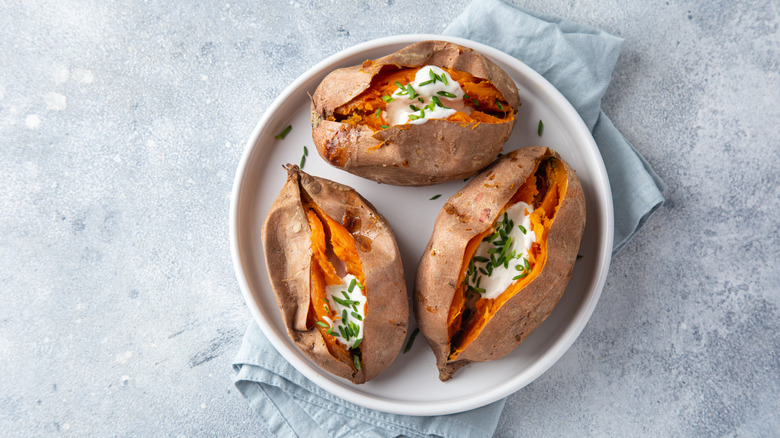
Classic baked sweet potatoes are an easy, no-fuss side dish thanks to the heat-protective properties of foil. But if you want that next-level caramelized, roasted flavor, you should cut them in half first and let the oven bring out the best in your sugary tubers.
To caramelize sugars, you need two things: high enough temperatures (typically at least 320 degrees Fahrenheit) and a lack of excess moisture. Foil may prevent your potato from drying out during a long bake, but it also traps moisture, while an uncut potato retains its moisture quite well. By placing your sweet potatoes cut-side down on a baking sheet, you give the flesh direct contact with a hot surface, caramelizing those sugars while still allowing the rest of the vegetable to soften. The end result has significantly better flavor with the same creamy texture, all thanks to a quick cut!
While you can ditch the oven for sweet potatoes and opt for an air fryer instead, the key to this method is exposing as much of the cut surface of the tuber to direct heat as possible. Since air fryers often have a grate rather than a solid, flat bottom, you won't get quite the same amount of caramelization. Your best bet is to lightly oil the cut surface and stick with the oven this time, providing just enough protection to prevent burning but not so much that you'll miss out on flavor.
Simple tips for faster, sweeter results
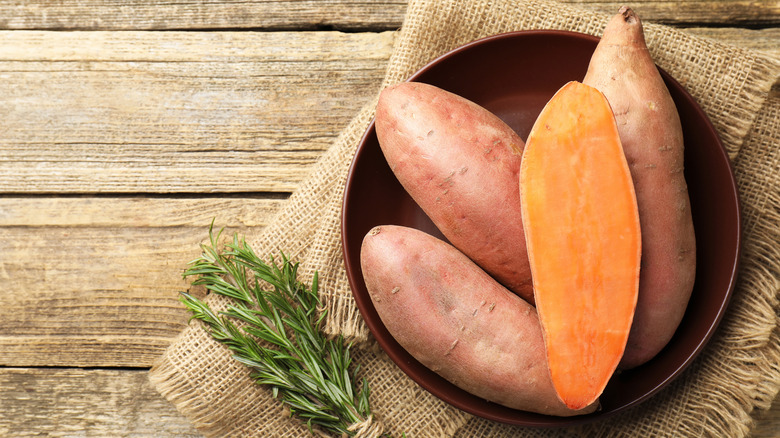
This method is great for enhancing flavor and works with just about any variety, from traditional Garnet sweet potatoes to milder, crunchier Murasaki sweet potatoes. Still, the added heat exposure requires a bit more monitoring and the right shape for the best results, or else you risk burning or undercooking them.
Whole sweet potatoes wrapped in foil often take around an hour to bake at 400 degrees Fahrenheit, but these can take closer to 30 or 40 minutes. While it may be tempting to crank up the heat and speed things up even more, there's a delicate balance between temperatures high enough to caramelize the bottoms and low enough to allow the remaining flesh to soften. If you're lining your pan, you'll also want to use parchment paper rather than foil. This provides a bit of insulation, and the sugars are less likely to stick to parchment as they roast.
If your sweet potatoes are too wide, the bottoms may burn before the rest of the flesh becomes tender. For this trick, your best bet is to buy longer, rather than wider, vegetables, as these offer a better ratio of surface area to thickness and give you even more caramelization. Be sure to also find ones that are fairly uniform in shape so you only have to make a single lengthwise cut to prepare them. Just as cooking inconsistently shaped spuds is a major mistake when making baked potatoes, it can severely impact your results with sweet varieties.