
For More Caramelized Baked Potatoes, Make Them Danish-Style
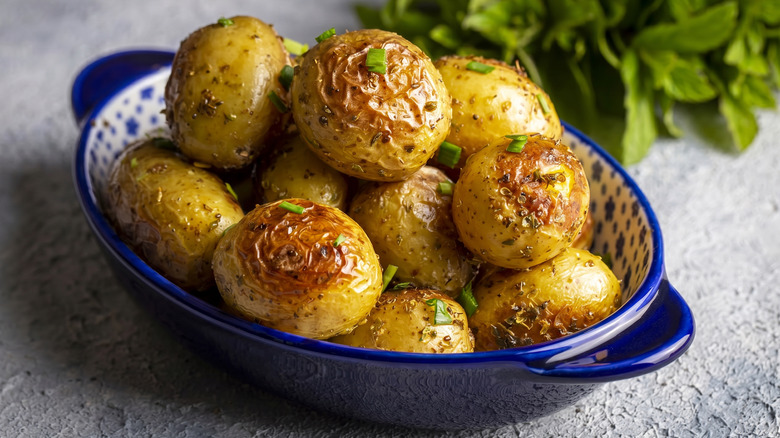
Warm, cozy, and the perfect blank canvas for toppings, there are few things in life more comforting than a batch of freshly baked potatoes. One thing we've noticed, though, is that most toppings tend to lean heavily toward the savory side. Sure, potatoes' mild, earthy flavor pairs perfectly with salt and savory seasonings, but we'd argue that sweet flavors deserve a little more love, too. If you're looking to step out of your comfort zone, or simply have a sweet tooth, borrow a recipe from the Danes and try brunede kartofler.
@runandeatwithjack In Denmark, a Christmas dinner is not complete without these glossy, sweet, delicious potatoes – Brunede Kartofler (Browned Potatoes). It's a combination that I found intriguing; potatoes and caramel. It could never be bad really, but I was surprised at just how good it was and could totally imagine them on my Christmas dinner. Give these a try if you fancy adding a new side to your spread this Christmas. Ingredients (3-4 servings) Small waxy potatoes – 500g White sugar – 100g Butter – 30g Salt – To taste Flakey sea salt – A sprinkle to finish Method Score the potatoes to help with peeling later. Add to a pot of cold, salty water, bring to the boil and cook until slightly underdone. Mine took around 10 minutes from boiling, the potato should still have a bit of resistance when putting a knife through it. Shock in icy water to halt the cooking process. Peel the potatoes carefully to maintain their shape, use the score lines to start from. Heat the sugar on low to medium heat and avoid stirring until melted – keep a close eye here and control your heat, take your time. It's really easy to burn the caramel and end up with a bitter flavour. Once melted add the butter and stir vigorously until combined into a smooth caramel. Add the potatoes, toss to cover and cook on low-medium without stirring to get some crispy edges, flip every so often until your desired cook level is achieved. Pate, and optionally top with flakey sea salt. #christmaspotatoes #brunedekartofler
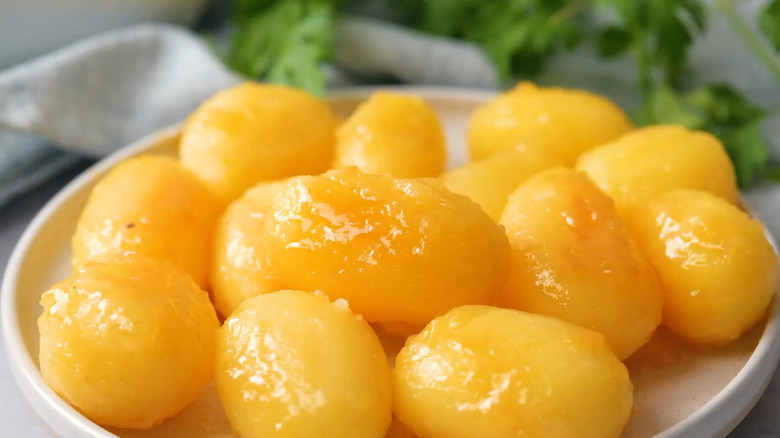
Glossy, sticky, and gloriously sweet, brunede kartofler, which translates to "browned potatoes," prove that potatoes can hold their own in the sweet-savory department. This might be your first ever encounter with the dish, but over in Denmark, these caramel-coated potatoes are a Christmas dinner staple, traditionally served alongside roast duck or pork, red cabbage, and a rich brown gravy. Their sweetness offers a welcome contrast to the savory flavors that dominate Denmark's festive fare.
Where many holiday recipes call for hours of preparation and a laundry list of ingredients, brunede kartofler keeps things remarkably simple. All you need are small, cooked potatoes, sugar, and a small knob of butter. To amp up the sweet-and-savory contrast, home cooks will occasionally sprinkle a dash of sea salt over the finished potatoes. The key to this recipe is to keep the heat moderate and turn the potatoes carefully so the caramel glaze clings to their surfaces, creating a sticky outer layer without burning. The natural mild flavor of the potatoes allows the rich, intense flavors of the caramel to shine, and you could even argue that brunede kartofler could make for a delicious dessert in their own right.
Tips for making perfect brunede kartofler
When making brunede kartofler, or any potato dish, choosing the right variety is perhaps the most crucial step. With countless varieties available, the decision can quickly get overwhelming, which is why potatoes are generally grouped into three categories: starchy, waxy, and all-purpose. It's here that brunede kartofler diverge from your typical baked potatoes.
Baked potatoes are usually made with starchy varieties like russets, which develop a light, fluffy interior when cooked. For brunede kartofler, however, waxy potatoes are the superior choice — think new potatoes, fingerlings, or baby potatoes, to name just a few. They're typically smaller and are known to hold their shape well during boiling and cooking, making them ideal for coating in caramel without having to worry about them falling apart upon hitting your plate. Their smooth, firm texture also provides lovely contrast to the sticky glaze. And because they're small enough to cook whole, they can be quick to boil, helping keep the overall preparation time down.
With the potatoes sorted, the next thing to focus on is the caramel. Making it from scratch is surprisingly simple, but if you're not vigilant, things can go south in a hurry. Simply put, caramel forms when sugar is heated, and its molecules begin to break down, transforming the white crystals into a golden-brown color, with a syrupy consistency and deeper, more complex flavor. The trick here is knowing when to stop. There's only a very narrow window between beautifully caramelized sugar and a burnt, bitter mess, so keep the heat at a medium-low — and since there is no added water, stir consistently. Caramel can change color quickly, and a watchful eye is your best defense against taking it too far — golden-brown is perfect, but once it starts turning brown, immediately remove your pan from the heat.