
Skip Salmon: A More Sustainable Fish With Mild Flavor & Fewer Calories
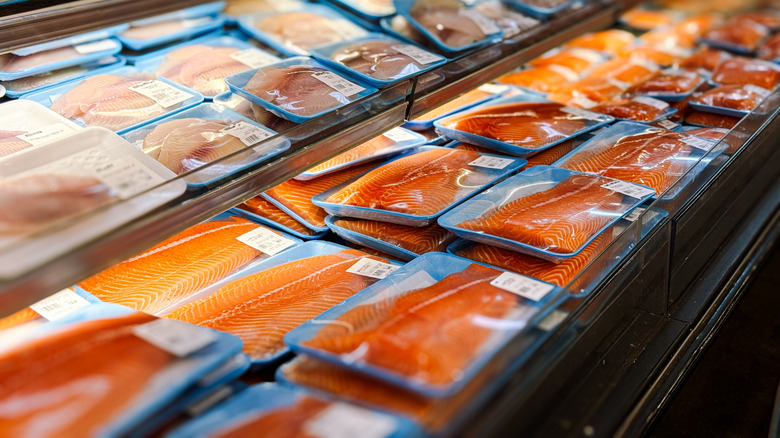
Salmon is one of the most popular fish today, and its production has increased significantly since 1980 to meet demand. There are several reasons for this, especially its many health benefits. Salmon has several nutritional properties that contribute to its popularity, including its high protein content — 22 grams per 100-gram serving — and the fact that it is rich in omega-3 fatty acids, which can help maintain a healthy heart. That's why it's often recommended by healthcare professionals as part of a nutritious diet. However, there is another species of fish that has similar properties but a much milder flavor than the perfectly pink-colored seafood many people are familiar with.
Arctic char is a species of fish that thrives in some of the coldest waters on Earth and is found around the Arctic Circle. It is related to salmon and trout and has traditionally been part of the diets of Inuit peoples, Indigenous inhabitants of the Arctic. Just like salmon, it can migrate between fresh and salt water. It also tends to have fewer calories than farmed salmon, which is the most common variety found at supermarkets (though there are some guides for finding the best versions).
As an added bonus, Arctic char is a powerhouse of vitamin D, providing 77% of the recommended daily amount. Its milder flavor also makes it more versatile in many recipes, as it won't overpower the other ingredients, and it's one of the best fish to cook straight from the freezer. But there is another aspect of Arctic char that may make you want to choose this fish: its sustainability.
Why Arctic char wins on sustainable seafood ratings

There is a lot of controversy surrounding the way salmon is produced, and many people take issue with farmed salmon because of some of the practices employed in the industry. The Monterey Bay Aquarium established its Seafood Watch program in 1999 to help consumers make more sustainable decisions about the seafood they purchase and consume. As part of these efforts, it established a rating system that evaluates seafood based on eight different factors, from its habitat to the transparency of the data available for assessment. Both Arctic char and salmon earn a "Best Choice" rating, but Arctic char scores slightly higher overall, with a 7 compared to salmon's 6.7.
While this difference may seem trivial, there are a couple of key factors that may influence which fish you choose to purchase. For starters, some salmon farming operations use chemicals, including antibiotics, that may leach into the ecosystem. The potential presence of chemical residues in the product itself may be enough of a deterrent for many consumers. However, the fact that these practices can affect populations of other fish species may also impact the variety of sustainable seafood you can get at the supermarket. Furthermore, the feed given to farmed salmon may also impact the environment, as it can include other species of fish.