

The Simple Technique To Make A Dirty Martini Taste Better Than At A Bar
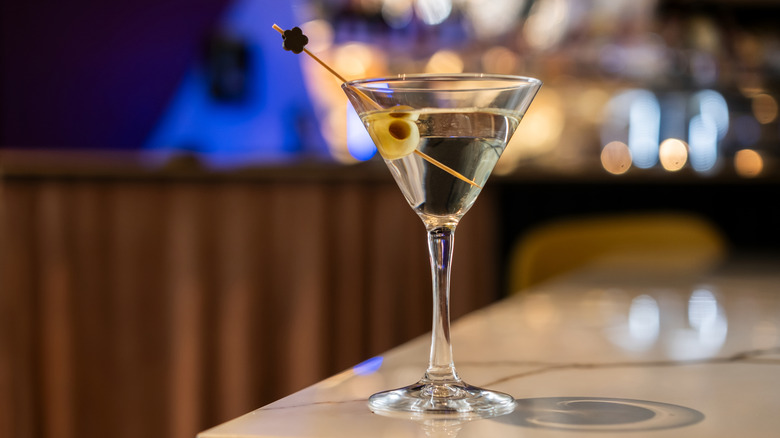
If you're out at a bar and want to look like you know your stuff, there's no better drink to order than a dirty martini. It takes the classic gin-vermouth combo and adds a splash of olive brine, giving the drink a salty, savory edge that has made it a hugely popular order. It's the ultimate symbol of quiet luxury with an equally glamorous history, and, most importantly, can still be super boozy. So if you want yours to go down smoother, serve it in a frozen glass.
The temperature of alcohol makes a huge difference in how it tastes. The gin or vodka in a martini starts at around 40% alcohol by volume (ABV), and even after dilution from stirring it with ice and the addition of vermouth, the finished drink typically hovers at around 28% to 30% ABV. The olive brine certainly takes the edge off, but you're still drinking something strong. Here, a frozen glass comes in clutch because it keeps the martini cold, softening that harsh alcohol burn while keeping the salt and brine flavors sharp. The martini is also designed to be drunk relatively quickly, but sipped. A frozen glass, rather than one that's merely chilled, keeps your drink colder as you nurse it. Otherwise, as it warms, the brine loses the crispness that makes it so appealing, and the alcohol becomes more noticeable. Let it reach room temperature, and you're essentially sipping a salty shot.
Beyond making it more approachable, cold changes both the taste and texture of the tipple. Gin is famous for its botanical notes, primarily from juniper, and when cold, these flavor notes can taste more cohesive and restrained. The texture also turns slightly more viscous, giving the drink a luxurious mouthfeel worthy of its reputation.
Knowing martini jargon ensures a customized cocktail every time

To those not well acquainted with the martini, its two components can make it seem like a far simpler affair than, say, a Long Island iced tea or a Bloody Mary, with their laundry lists of ingredients. What sets the martini apart, however, is its distinctive vocabulary. You might remember James Bond ordering his "shaken, not stirred," or have heard someone ask for theirs "extra dirty" or "filthy." Knowing your way around this jargon makes it far easier to order a martini to your exact preferences.
Perhaps the most important terms to know are wet, dry, and bone-dry. A bone-dry martini contains little to no vermouth, just ice-cold gin or vodka. Bartenders can achieve this by swirling dry vermouth around a chilled glass to coat it, discarding the excess, and then pouring in the spirit (a process called an "in-and-out"). It's a great choice for those who like their martinis unashamedly heady and boozy. A dry martini, on the other hand, incorporates a very small amount of dry vermouth. Finally, as you may have guessed by now, a wet martini often uses a 3:1 ratio of spirit to vermouth, for a softer finish.
Then there's the language of flavor modifiers. Ordering a martini "dirty" traditionally meant adding a splash of olive brine, but these days, with martinis in hot demand, "dirty" takes on many forms, and it's not unusual to see pickle brine, feta brine, or even MSG martinis available. You can even order it "extra dirty," which contains a considerably higher proportion of brine (another useful way to soften the edge). One less common — but seriously underrated — request is "burnt," which adds a small splash of smoky single malt Scotch for a richer, deeper, and far more complex flavor.