

Forget Ribeye: Bobby Flay Recommends A Cheaper Steak Cut For Philly Cheesesteak

From the iconic fish cake hot dog to the utterly indulgent hoagie, Philadelphia is home to some of the best food innovations of all time. And in a city renowned for its eclectic street food scene, few dishes compare to its Philly cheesesteak.
For those yet to be acquainted with this beauty, the sandwich features a long, crusty Italian roll filled with melted cheese and thinly sliced beef, served with or without onions. It might look simple, but the taste is truly out of this world. Though it got its start on the streets, it's since become a staple for home cooks, too. One popular debate centers on the best kind of beef to use, and although legendary Food Network host Bobby Flay uses strip loin in his own recipe and suggests ribeye as another top choice, he also champions an often-overlooked cut for home cooks: sirloin (via Food Network).
One of the most attractive things about sirloin has got to be its price. It comes from hard-working muscles in the cow's hindquarter, making it leaner and generally less expensive than luxury cuts like the ultra-marbled ribeye or famously tender filet mignon. It also comes with the added benefit of being loaded with protein. But the same leanness that makes it economical is also what makes it shine in a Philly cheesesteak. In a sandwich swimming in rich ingredients like melted cheese and onions, it's easy for the beef itself to get lost. Instead of having a rich, buttery texture, the extra muscle tissue gives sirloin a powerful, beef-forward flavor. Even better, because there's less fat to render, the already rich sandwich feels more manageable, and you don't have to worry about excess grease causing it to fall apart halfway through eating it.
How to cook sirloin for a Philly cheesesteak
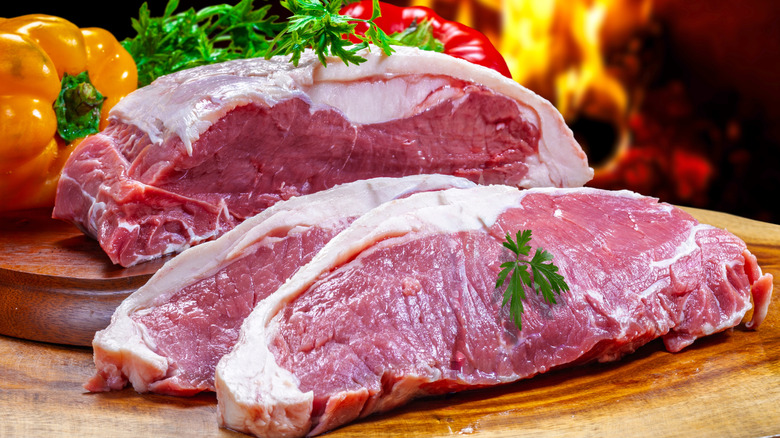
You might be surprised to learn that sirloin veers away from the cut traditionally used in a Philly cheesesteak: well-marbled ribeye. Ribeye is one of the fattiest cuts available, and its abundant marbling melts during cooking, keeping the meat ultra-juicy. Succulent steak is always a must, but it's especially important here since the steak is sliced ultrathin and cooks incredibly fast. That poses a slight challenge for sirloin, which has less marbling to protect it from overcooking.
Usually, the steak is partially frozen, sliced thin, added to a griddle with caramelized onions, and then mixed together, with melty cheese placed directly on top. If you want to play it safe with sirloin, we recommend saving the chopping for later. Instead, give the steak a quick sear on each side until it reaches your desired doneness. Then, add your layer of onions and let them cook in the rendered fat. You could even add a splash of red wine or some beef stock to deglaze the pan for an even richer flavor.
Once the steak is cooked, let it rest. This allows the meat to retain more of its juices when sliced. After at least five minutes, slice the steak using a very, very sharp knife. Because the steak isn't frozen, it will be harder to achieve perfectly thin ribbons. Just try your best to slice it as thinly as possible. You should always slice steak against the grain. This shortens the long muscle fibers, making tougher cuts like sirloin far more tender and easier to chew. Then, simply mix and chop it together with the onions, and follow the usual steps for a top-notch Philly cheesesteak.