

Apple Pie Vs Apple Cobbler: Here's The Actual Difference
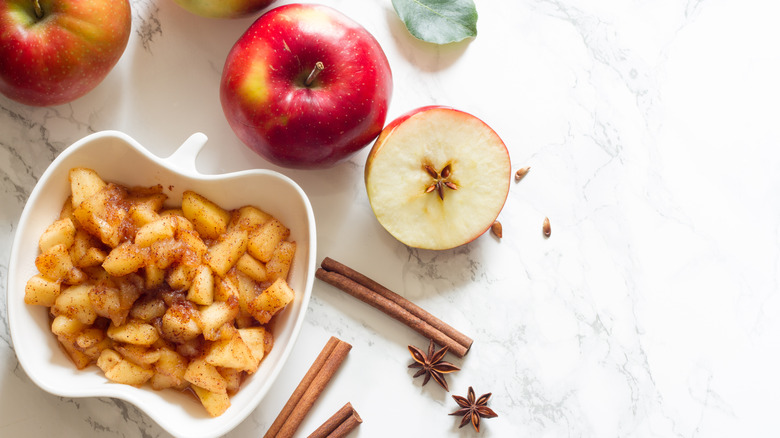
Apples make for a terrific dessert base, shining in applications ranging from tasty turnover recipes to crumbles. Yet few bakes showcase the fruit in a more classic style than an apple pie or cobbler. There's a magic to the pairing of frehsly-baked dough and warm spiced fruit; no wonder the desserts are such a tried and true option — even if apple pie isn't technically American.
Both bakes center around a silky-textured fruit filling, which can incorporate varying types of apples, mixed with sugar and warming spices like cinnamon. Bite into either a pie or cobbler and the apples are front and center — the two dishes serve as terrific vessels for pommes. Yet it's the encasing dough that sets the desserts apart.
An apple pie comes with an underlying crust, a sturdy layer of pastry that supports the filling. Traditionally, bakers also cover the top of the dessert with dough, either shaped into a lattice or a whole intact layer. Meanwhile, a cobbler is softer and crumbled, consisting of a biscuit-like pastry scattered atop the apples. While a pie is a slice and serve dessert, a cobbler is spoonable, often enjoyed alongside ice cream. Both involve a tasty sweet apple filling, but their foundational dough lends a distinct character.
An apple pie is all about the underlying buttery crust
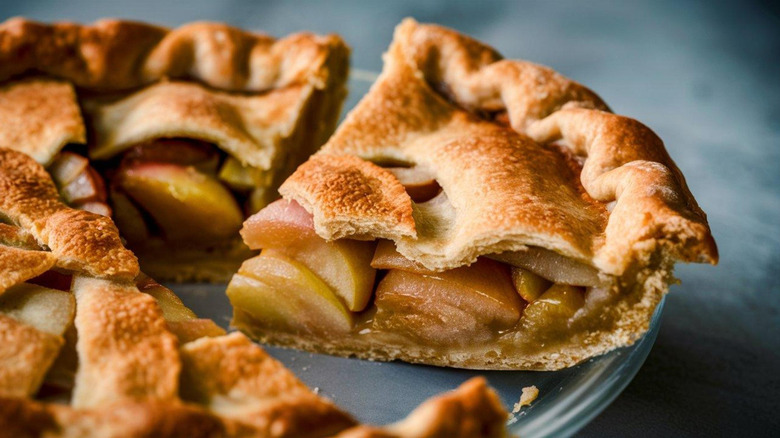
Few American dishes come more classic than apple pie — the dessert goes back centuries. In contrast to an apple cobbler, a flaky and buttery pie crust defines the dish. The dough should be adequately durable to support a (generous) quantity of apple filling, yet not dry to the taste. Rolled out from a simple combination of butter, flour, sugar, salt, and cold water, an apple pie dough offers minimal rise, unlike a leavened cobbler. A few modifications, like using gluten free flour or adding more dough layers, can alter the consistency.
An apple pie crust is rolled out into a baking tray shape, with some excess left to pinch over the sides. The apple filling is thickened just a touch further for pie than a cobbler, thereby helping the dessert to hold its shape. Occasionally, you'll also see apple pie recipes that include a crumble atop, lending them more visual semblance to a cobbler. However, it really all comes down to the underlying dough, which serves as a central distinction between what's pie and what's not. It's a preparation that traces back to the Middle Ages, and turned iconically American in the 1950s – a long-lasting classic that likely won't fade anytime soon.
Expect a crumbled biscuit topping on an apple cobbler
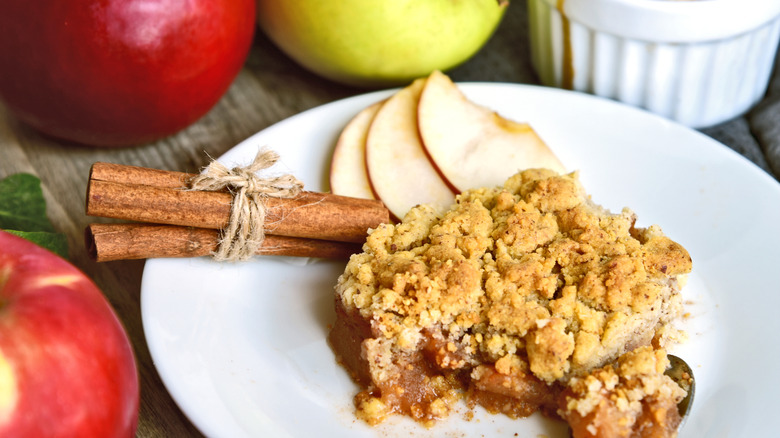
An apple pie may be known for its crust, but a cobbler is all about the doughy topping. The dessert employs biscuit-like lumps strewn across the filling, forming an irregularly distributed doughy layer atop. Unlike the sturdier pie crust, the topping consists of a leavened flour, milk, and butter batter, which rises into a delightful fluff.
Texturally, this leads to a completely different pie-eating experience. Unlike a pie's pairing of crust and filling, the cobbler falls apart into a soft medley of dough and fruit. Spooned onto a plate, the sweet won't hold its shape, making for tender bites.
It's a rustic template that welcomes many riffs; a few simple differences distinguish an array of baked apple desserts. An apple crisp trades the biscuit topping for crisped rolled oats in flour, forming a crunchier streusel atop the filling. There's also the even more simple apple crumble, which offers a butter and flour topping on the fruit. Meanwhile, spread a crisp dough throughout the filling, and you get a Brown Betty.A pie is constrained by its crust; a cobbler welcomes many textural variations.
And despite the apple pie's modern all-American mythical status, it's actually the cobbler that was invented in the U.S. The dessert was first mentioned in an early 19th century Kentucky cookbook, and continues to be associated with Southern culinary tradition. Both the apple pie and cobbler now serve as cornerstone autumnal sweets, ready to enjoy alongside a hot mug of tea or a few spoonfuls of ice cream.