

Are Sprouted Sweet Potatoes Safe To Eat?
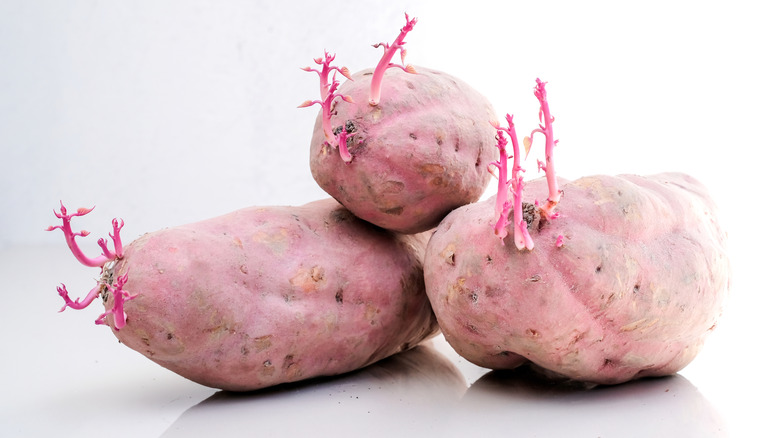
It's pretty obvious when certain foods are unsafe to eat. Although there are many other signs and certain, more nuanced, hints, you'll know your seafood is spoiled if it smells funky or has a slimy texture. And it's easy to tell when an egg is bad because it will smell of sulphur, or the color will be off once you crack it open. If produce is moldy, mushy, slimy, or far too soft, you probably don't want to consume it. But what about sprouted sweet potatoes — when they have germinated and begun to grow into whole new plants? It is perfectly safe to eat sprouted sweet potatoes, as long as they are still firm and don't show other signs of spoilage.
White potatoes can develop glycoalkaloids when they sprout — poisons found in members of the nightshade family. But, unlike the white ones, sweet potatoes aren't nightshades at all (they're actually related to morning glories), so they don't have the same glycoalkaloid risks. To prepare sprouted sweet potatoes you can simply break off the growths by hand or cut them off with a knife. Once the tubers have started growing, however, you're probably better off peeling them than cooking them in the skin because they will have formed a tough layer where the sprouts originally sprang from the flesh. From there, you can just cook them however you normally would. You don't want to let them grow too long, however, because, as the sprouts develop, they draw sustenance from the potato itself, which will eventually become tough and desiccated and not nearly as appetizing as a fresh, plump one.
How to keep sweet potatoes from sprouting and how to know they're safe to eat
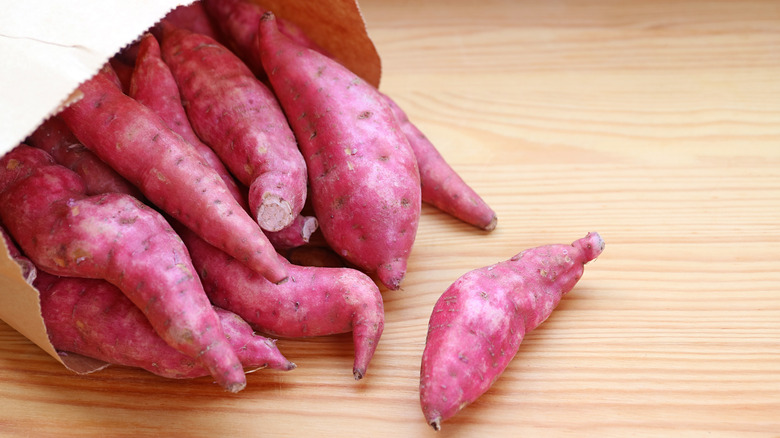
Staving off sprouts starts with picking the best sweet potatoes at the store. Sweet potatoes are, essentially, still-living root vegetables, so they will continue to grow, even when pulled out of the ground. They are more likely to sprout in warm, humid areas, so it's best not to store them on top of the fridge or next to the stove, and you should keep them away from sunlight. Good airflow will also keep them fresh longer, so a paper bag inside a cool, dry drawer or cupboard is ideal. Don't store them in the fridge because the lower temperature can affect their cell structure, causing them to lose flavor and form white spots on their skin. You should definitely keep them away from fruits and veggies that produce ethylene gas, like apples and onions, because it will cause them to mature more quickly and grow sprouts faster.
Even with proper storage, however, they will eventually begin to grow. If your sweet potatoes feel a little underweight and rubbery, you might not want to cook them. These may even still be safe to eat, but they're going to be super tough and not have much taste at all. But when you see mold on the exterior or leakage coming from the inside, you definitely want to throw them out. If they are soft and shriveled with a sour smell, they're spoiled, and you should chuck them. But if your sweet potatoes are nice and firm, just have a few sprouts growing out of them, there's nothing to be concerned about.